
Frost Lee
We first met Frost in the kitchen of Voyage, where he serves as Chef de Cuisine. His shift was coming to an end, and he was tidying up the kitchen, looking cheerful and refreshed. He greeted us with a bright smile and immediately asked about the meal that he and his team of chefs had worked so hard to prepare. Tall, with a warm and striking face, Frost looked more like a film actor stepping away from a completed scene than a chef. Yet watching his swift, confident movements in the kitchen, I quickly returned to my original thought: this must be an exceptional chef.
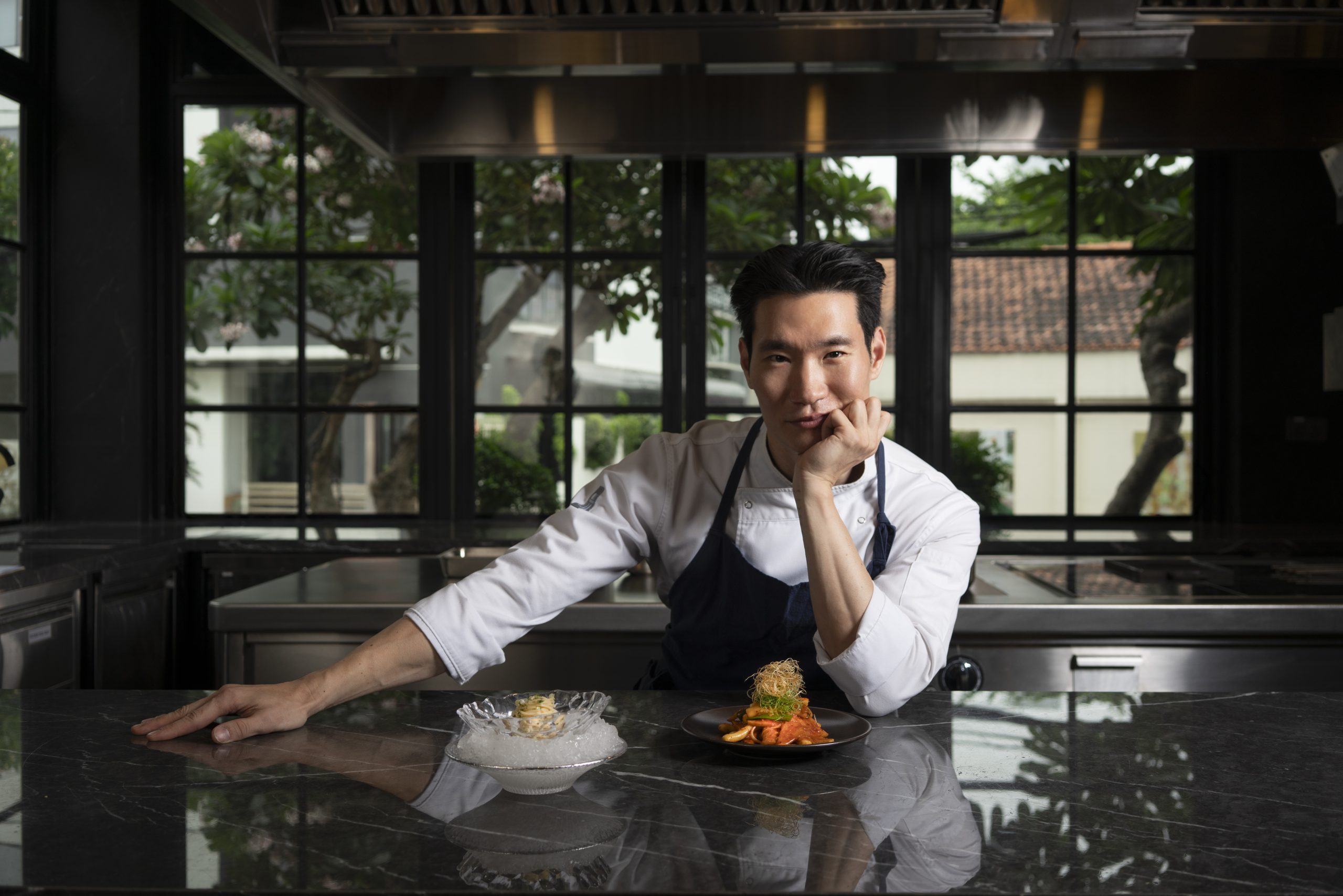
Happiness Is Completing the Mission
The second time I met Frost was on his day off, yet he was still dressed in his chef’s uniform and working hard in the kitchen he knows so well. With his familiar warmth and attentiveness, he cooked while carrying on a conversation. Frost told us that he had never imagined becoming a chef, but looking back on his life, he realized that much of it had been connected to the food and beverage industry. He cooked while serving in the military, began his career as a dishwasher, and was fortunate enough to become a kitchen apprentice in Australia.
The moment he stepped into a professional kitchen, Frost immediately realized how much he loved the work because, in his view, the kitchen resembles the military: everyone pushes one another to give their best, moving together in a shared rhythm to accomplish a mission. It is exciting and stressful, yet deeply satisfying when the goal is achieved. He eventually returned to South Korea to study Western cuisine before moving to Singapore for work.
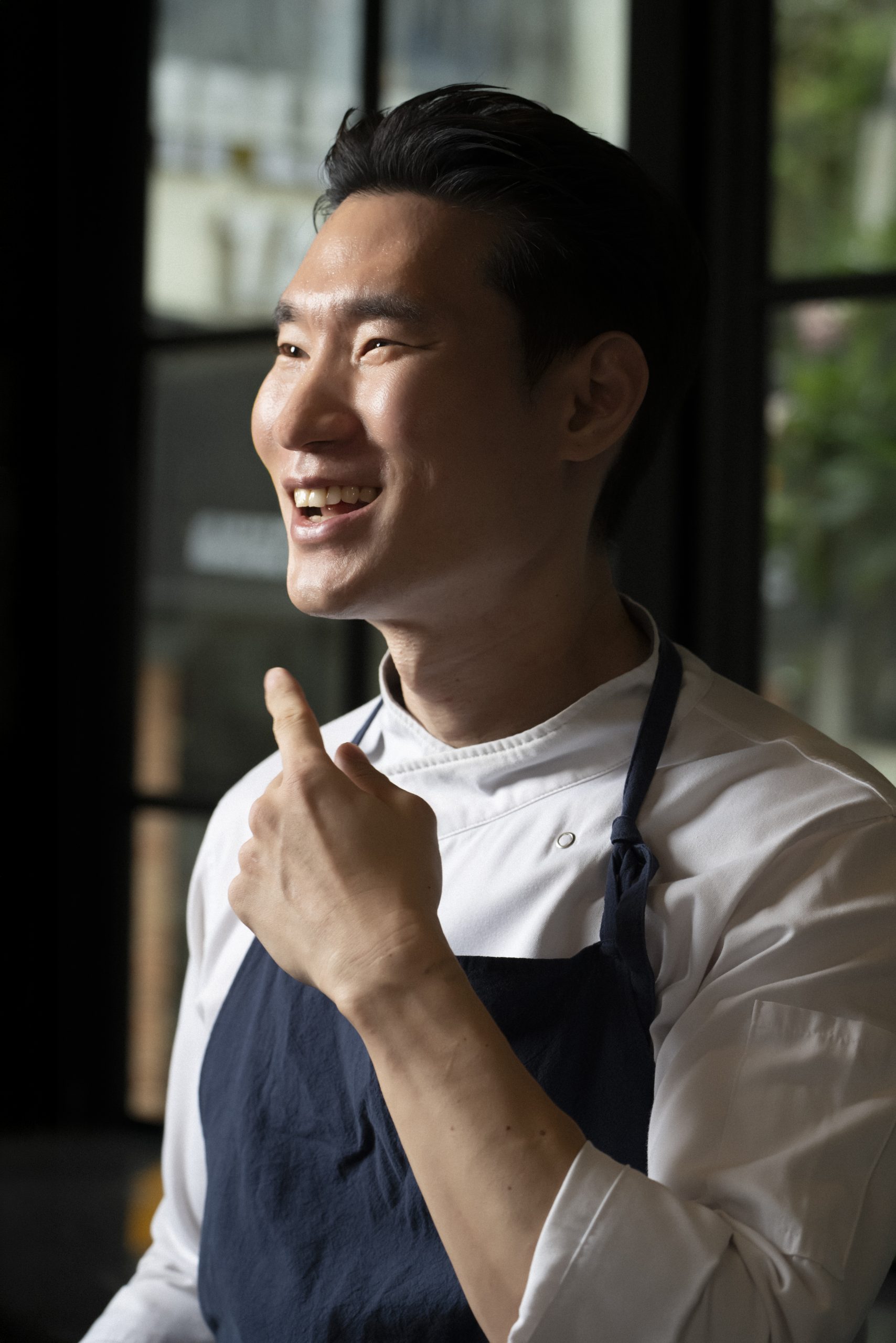
In Australia, Frost was only a dishwasher and apprentice, so he carried fewer responsibilities and approached work with a relatively relaxed mindset. Singapore was completely different. Employed and paid as a professional chef, he had to work relentlessly to perform at the highest level. At first, he struggled to keep up with the demands of the job. He went to work feeling anxious every day and endured immense stress, along with many tears. Looking back, Australia helped shape the course of his life, while Singapore was a lesson in endurance. Yet after nine years, Singapore forged the person he is today: resilient and patient.
Speaking about his personal life, Frost says he enjoys living alone. It is not necessarily because he is introverted, but because he has a particular rhythm and order to his life. He describes himself as an extremely simple person whose days revolve around work, going to the gym, and reading books. He also enjoys wandering through local markets. What brings him the greatest happiness each day is completing ordinary tasks: waking up, going to the gym, preparing his lunchbox, going to work, getting ready for service, and cooking for guests. These repetitive actions, together with the everyday ups and downs that accompany them, form a rhythm he has sustained over time and deeply cherishes.
Frost has defined happiness for himself through discipline. It is precisely this quality that drew him to the professional kitchen, an environment he compares to the military. In many ways, it seems this profession was made for him.
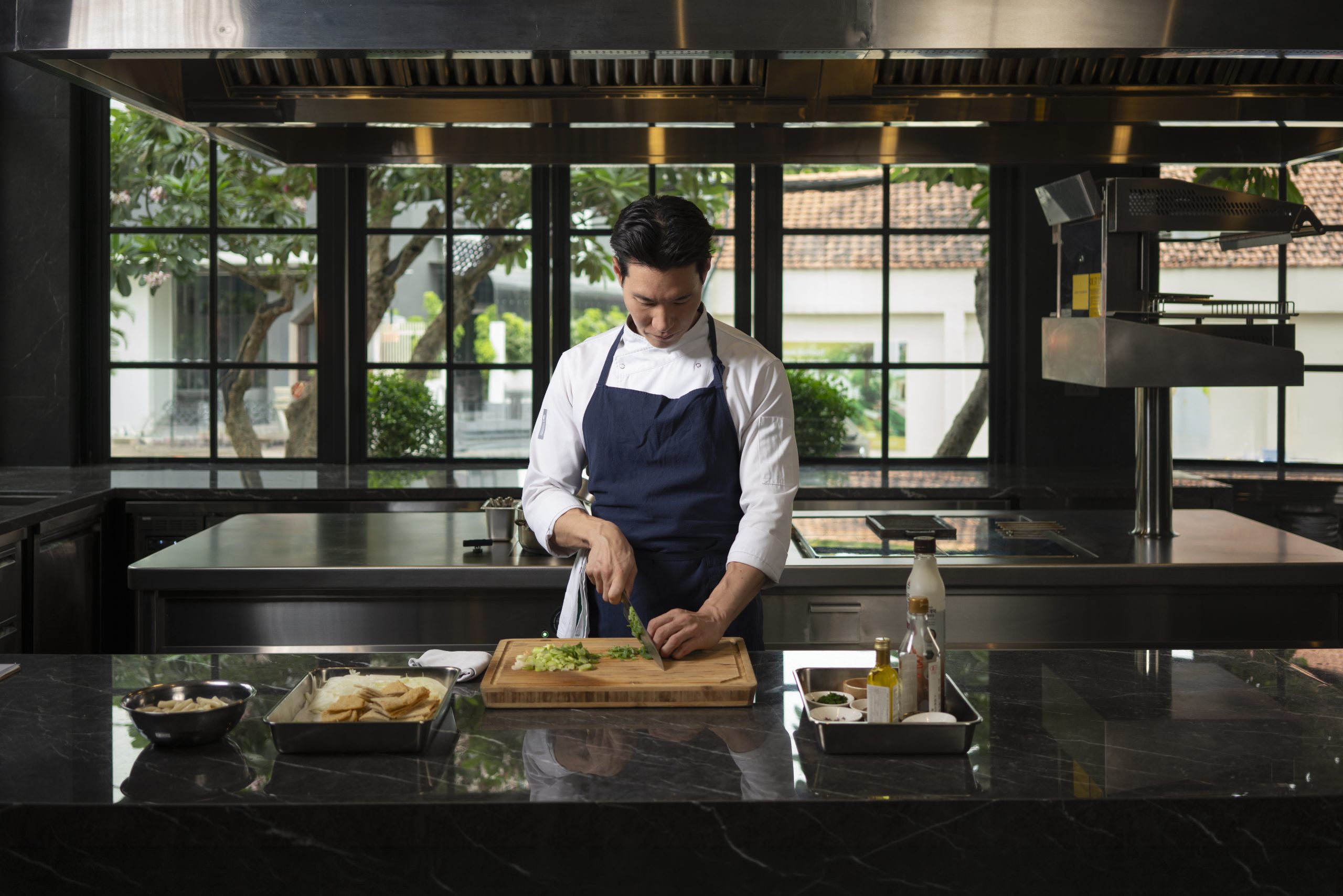
A Love for the Flavors of Home
Although Frost has spent many years working in international culinary environments, he still carries a deep love for Korean cuisine in his heart. Whenever he closes his eyes and thinks of home, he remembers his mother: “My mother often apologized because she did not consider herself a good cook. But I always remember her doenjang soup and oxtail soup. Perhaps it is because I could feel her love through those meals that, no matter how inconsistent the dishes were, I still remember them.”
He was born in Gunsan, a city in North Jeolla Province situated along the southern bank of the Geum River where it meets the Yellow Sea, a region famous for its banchan (side dishes). Frost’s eyes light up and his hands move animatedly when he describes his ideal dining table: “No matter what, there should always be at least two side dishes on the table, not counting soup and kimchi. That’s why when I eat at restaurants, I always have to restrain myself from ordering too many dishes at once.”
His memories of Korean cuisine are inseparable from banchan, which is why he has a particular fascination with fermented foods. “We eat kimchi every day, but how exactly is it made? What reactions occur, and what results emerge when different primary ingredients are used? Beyond kimchi, there is doenjang, gochujang, fermented seafood, and many other products. Building a fermentation laboratory is one of my goals.”
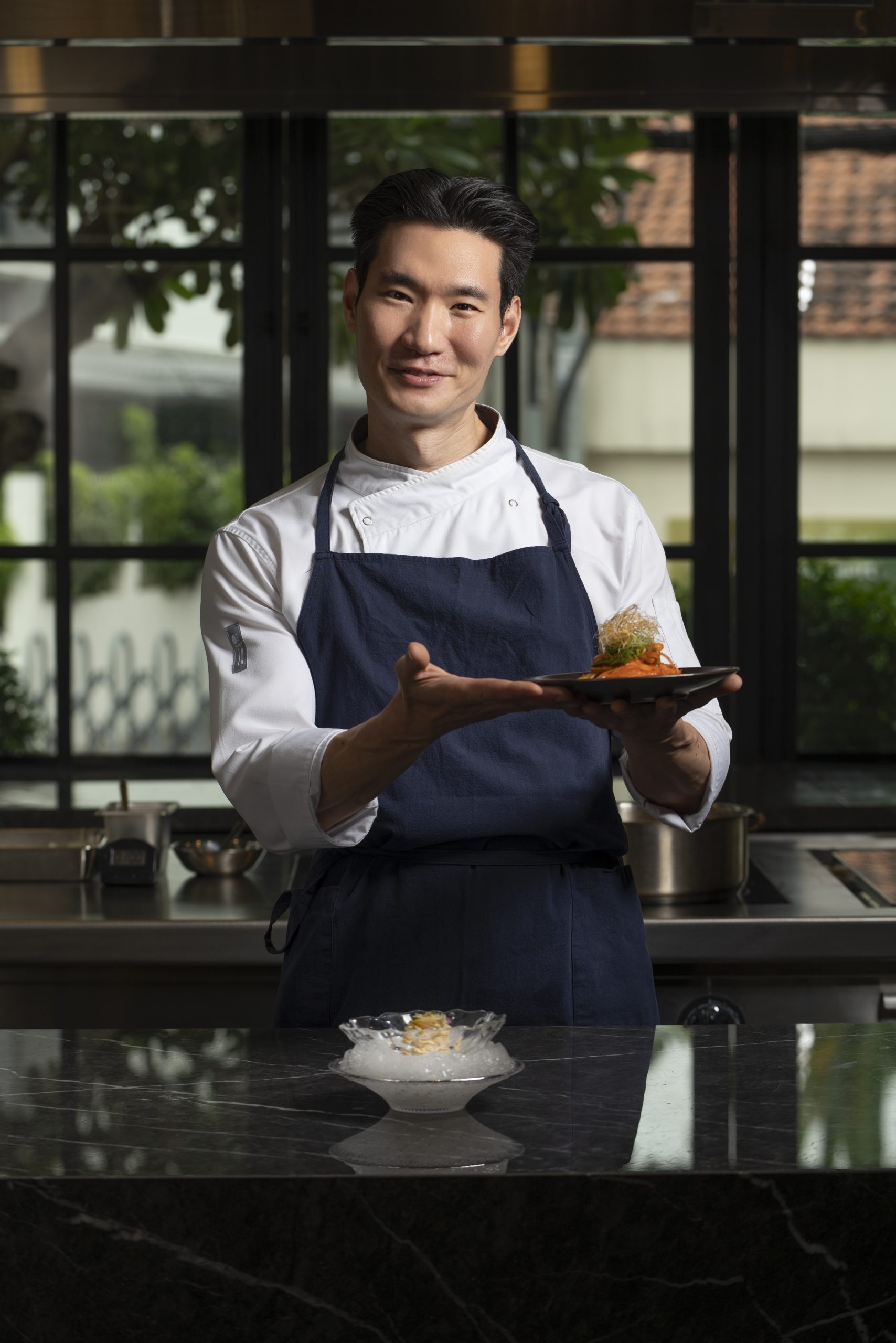
That day, Frost treated us to tteokbokki, Korea’s beloved rice cakes, and dongchimi cold noodles reimagined in a fusion style using spaghetti. He explained, “I have never met anyone who truly dislikes tteokbokki. Even people who claim they don’t like it often want another serving after tasting a proper version. It is a street food that brings comfort and ease.” Frost’s cold noodles were especially memorable, carrying a delicate acidity while leaving behind a deep, lingering flavor from radish mixed with fermented radish brine.
In Korean cuisine, radish water generally refers to two main types: the sweet-and-sour brine used for pickled radish (chicken-mu), or the salty fermented liquid from dongchimi (water kimchi). Pickling brine typically follows a 1:1:1 ratio of water, white vinegar, and sugar with added salt, while dongchimi broth is a fermented salty brine traditionally consumed in winter and commonly used for noodle dishes. The noodles also incorporate shio kombu, a seasoning made from kombu seaweed simmered with soy sauce, mirin, and salt before being dried and finely sliced. Rich in savory umami flavor, it is often enjoyed with rice, noodles, salads, or as a seasoning ingredient.
The historical evolution of cold noodles in Korea is fascinating, as recorded in The History of Korea at the Dining Table by culinary researcher Youngha Joo: “By the late 1920s, more than forty cold noodle shops operated north of Cheonggyecheon in Seoul. The signs at their entrances resembled those of beef-bone soup or loach soup restaurants, but beside each sign stood a towering pole topped with a bundle of long paper streamers fluttering in the wind. The image resembled strands of buckwheat noodles emerging from a noodle press.
Eating cold noodles during winter was a familiar custom among people in Pyeongan and Hwanghae Provinces during the late Joseon period. However, for cold noodles to truly deserve their name, ice was required. During winter, the broth made from dongchimi naturally froze in the cold weather, eliminating the need for ice. In midsummer, however, preparing cold noodles became more difficult. During the Joseon Dynasty, officials responsible for ice storage under the Ministry of Rites preserved ice harvested from the frozen Han River for later use.” Frost presented the noodles in an elegant bowl molded from crushed ice, beautifully reinforcing the spirit of the dish. He also thoughtfully prepared a bottle of makgeolli, the traditional rice wine that, in his view, completes the meal in true Korean fashion.
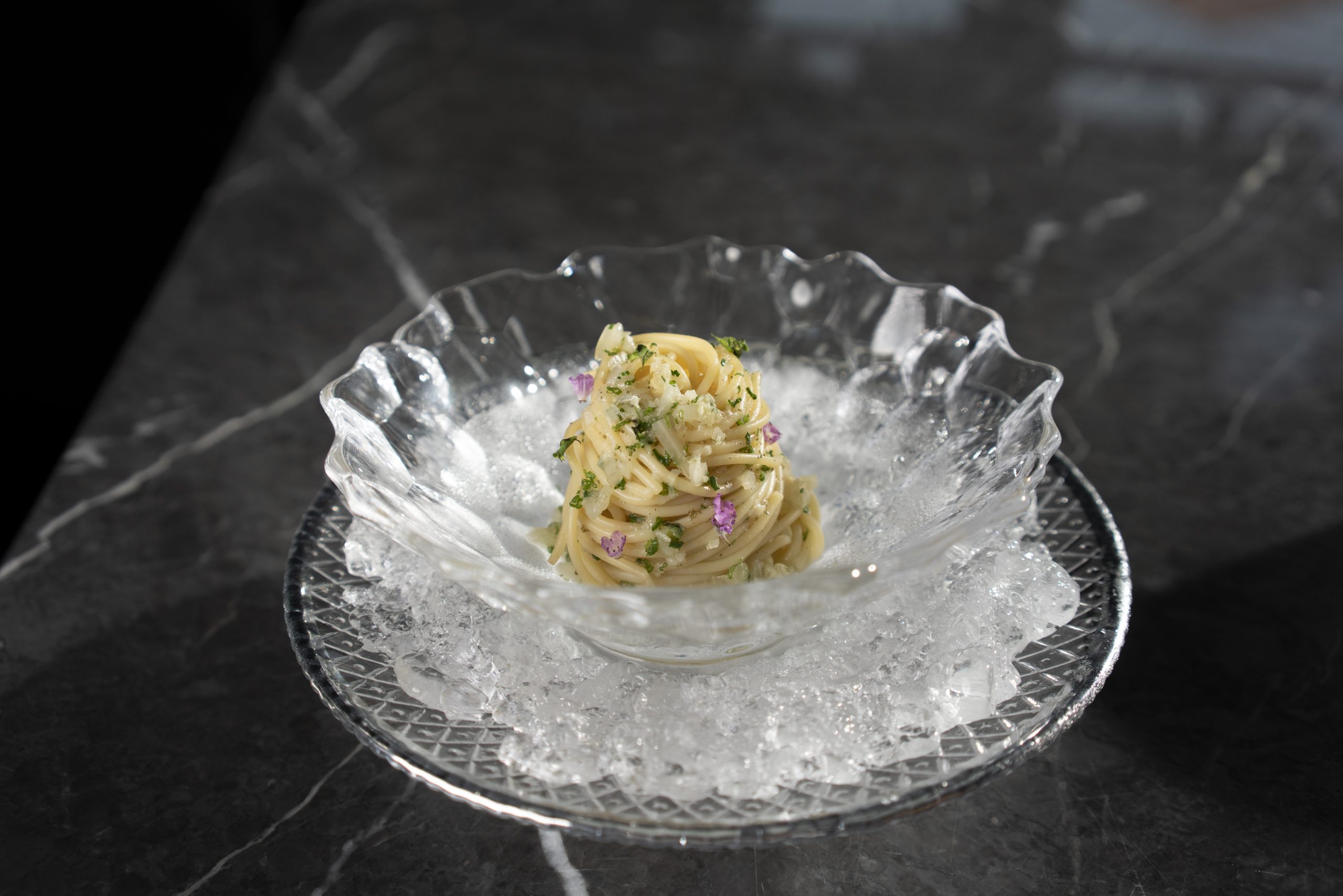
Korean Cold Noodles
Ingredients:
- 50g finely chopped Korean radish
- 80g Korean radish brine
- 30g spaghetti
- 10g shio kombu
- 20g vinegar
- 20g fish sauce
- 40g finely chopped chives
- 15g truffle oil
Method:
- Cook the noodles, then transfer them to ice water to cool.
- Keep chilled and pat dry.
- Mix the chopped kimchi radish with the radish brine.
- Add the truffle oil. Ensure the mixture coats the noodles evenly.
- Toss everything thoroughly.
- Twirl the noodles into a neat bundle and serve on a chilled plate.
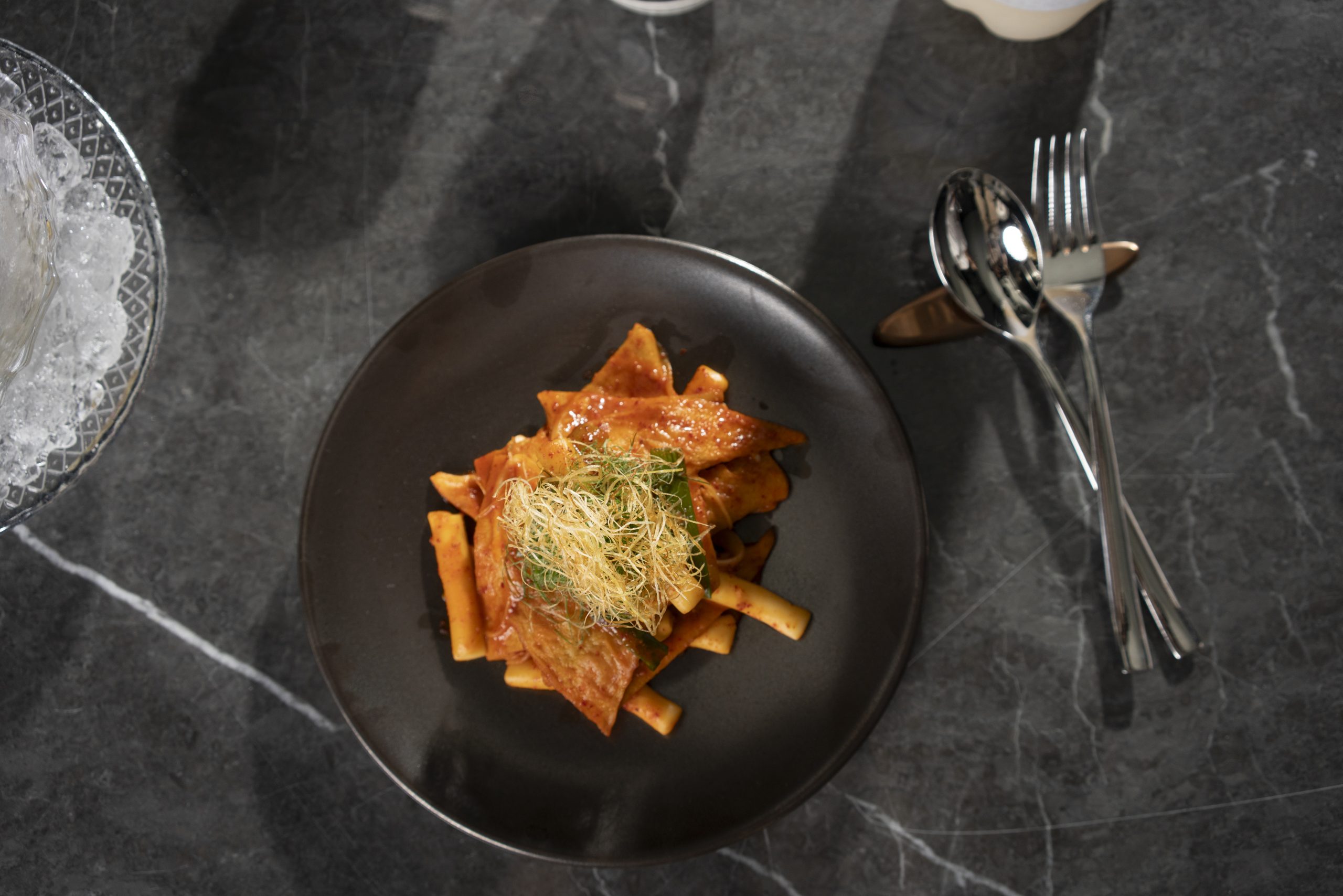
Tteokbokki with Fish Cake
Ingredients:
Spicy Sauce:
- 4 tbsp Korean red chili powder
- 3 tbsp sugar
- 2 tbsp gochujang (Korean chili paste)
- 2 tbsp soy sauce
- 2 tbsp oyster sauce
- 1 tbsp cooking oil
- A pinch of ground black pepper
For the Stir-Fried Rice Cakes:
- Dried rice cakes
- Leek (cut into 4–5cm segments)
- Onion (thinly sliced)
- Fish cake (cut into bite-sized pieces)
- 600ml chicken stock
- 1 tbsp sugar
- 1/3 tbsp salt
- 1/2 tbsp minced garlic
Method:
- Prepare the sauce by combining the chili powder, sugar, gochujang, soy sauce, oyster sauce, cooking oil, and black pepper. Sauté the leek in a hot pan until fragrant.
- Add the fish cake and onion. Pour in the chicken stock.
- Add the sugar, salt, and minced garlic.
- Cover and bring to a boil, then reduce to medium heat. Add the rice cakes, cover, and simmer for 1–2 minutes.
- Stir in the prepared sauce.
- Remove the lid and continue cooking over low heat for another 4 minutes.
- Once the rice cakes are tender and well coated in sauce, remove from heat and serve.
- Mozzarella cheese may be added if desired.
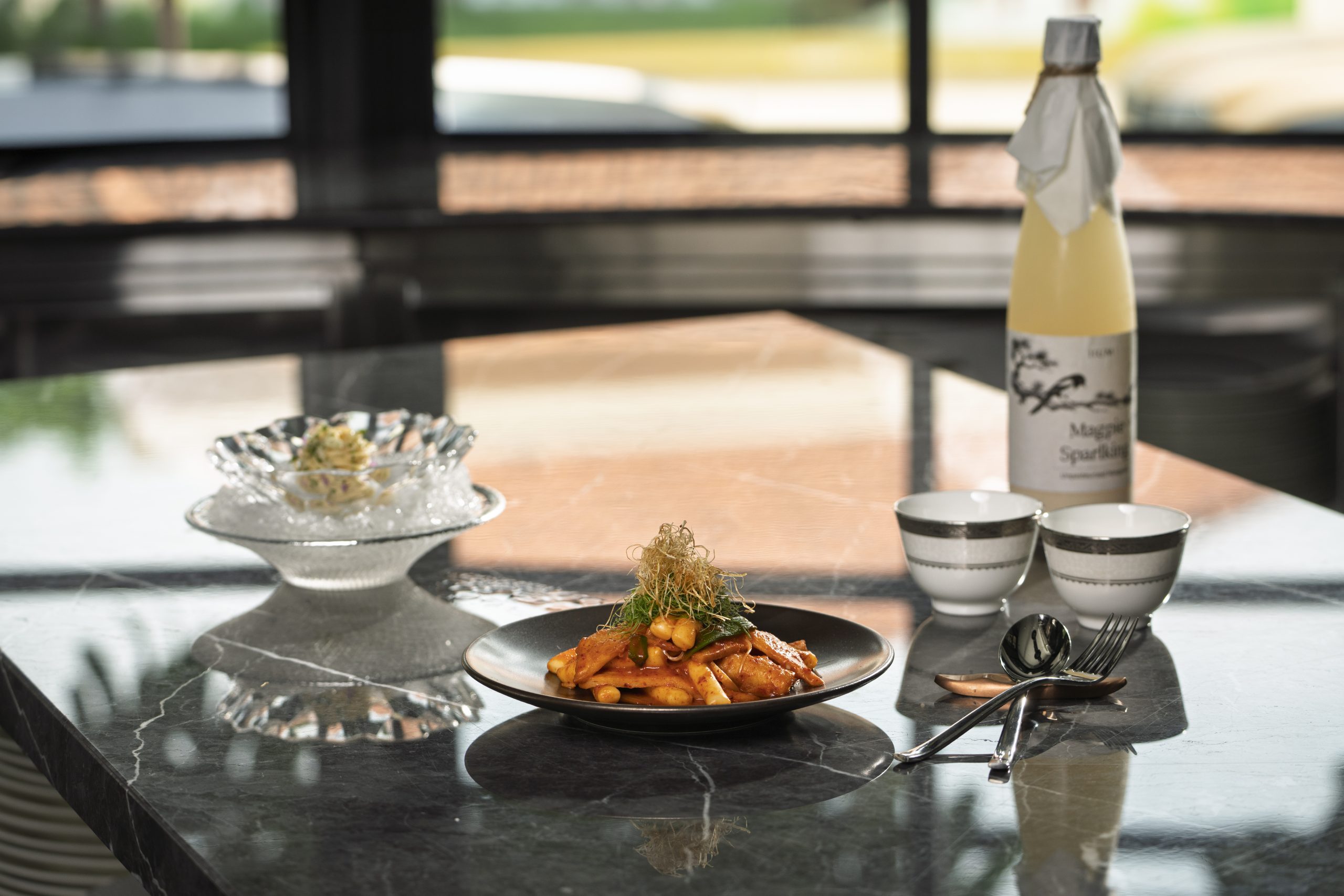
Born in South Korea, Frost began his journey in Australia before discovering his profound passion for the culinary arts. Over more than a decade in Singapore and four years in Vietnam, he refined his craft across a wide range of dining environments, from boutique restaurants to luxury hotels and Michelin-starred establishments: Saint Pierre – 2★ (Singapore), Whitegrass – 1★ (Singapore), and Akuna – 1★ (Ho Chi Minh City). He currently serves as Chef de Cuisine at Voyage (Ho Chi Minh City), a restaurant specializing in omakase fine dining.
Published in Đẹp Magazine, Issue 306
Words and Images: Nhà Có Hai Người


