Lai Châu
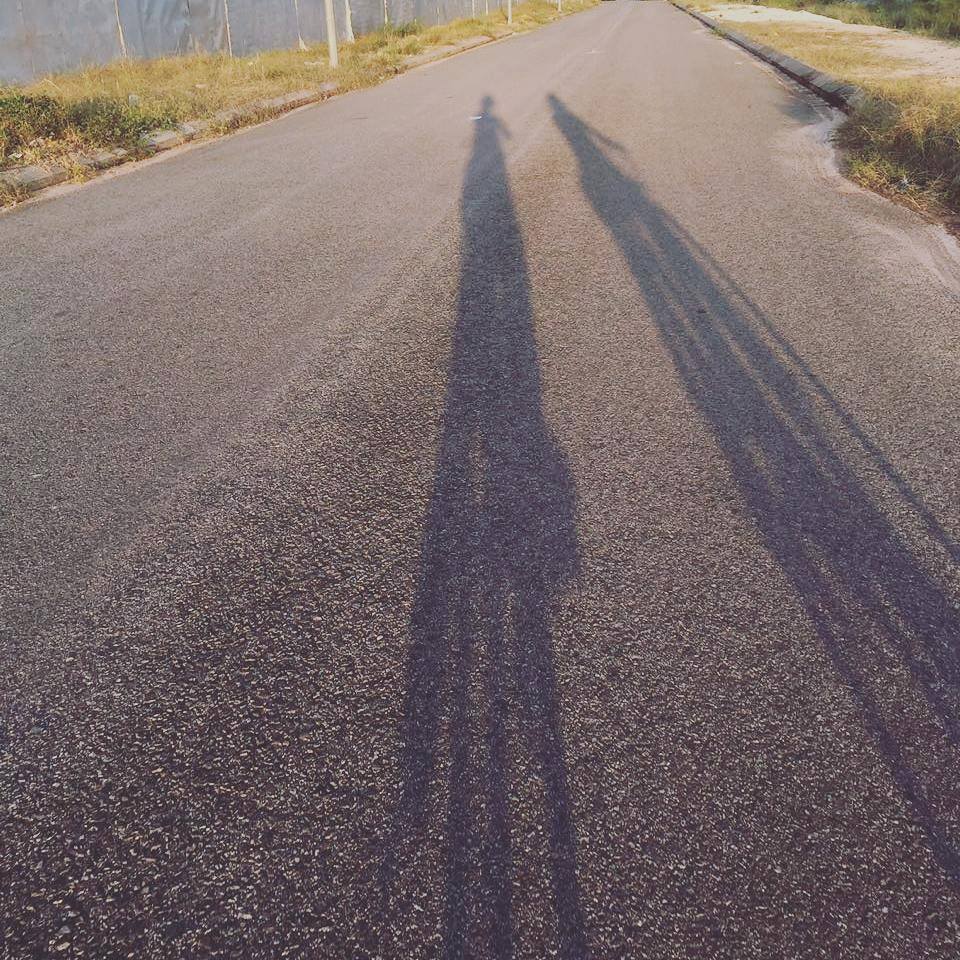
The first time we set foot in Lai Châu, we were astonished by its peaceful beauty. At the heart of the city are broad, open roads embraced by the sky, mountain peaks, and drifting clouds. From there, they branch into smaller, steeper roads that wind toward villages hidden deep within the mountains. If one merely passes through, it is easy to wonder where to go or what to do. But once you begin exploring the region’s natural beauty and the cultural life of its people, no amount of time seems enough.
Tả Lèng
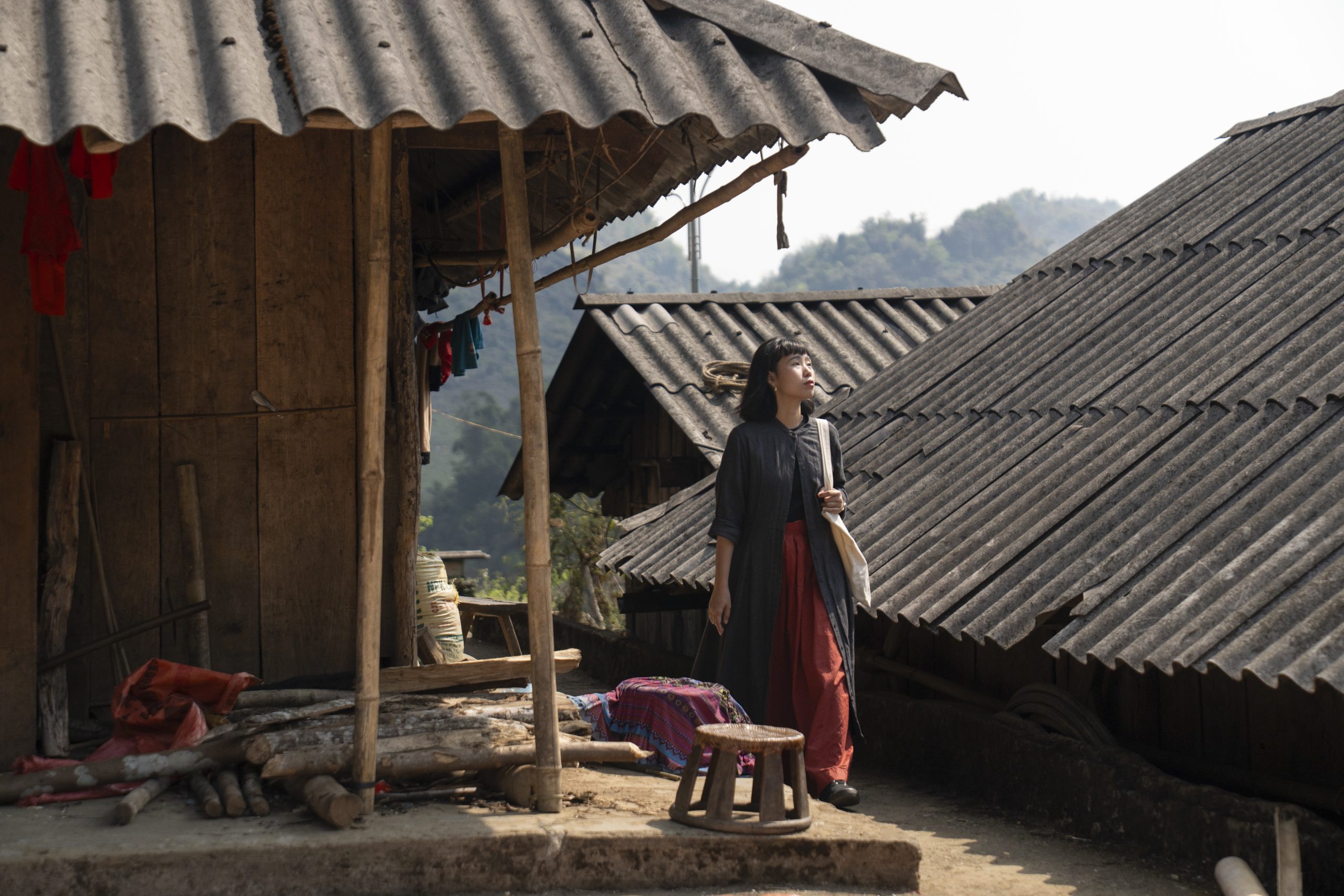
We spent a night at the only homestay in Tả Lèng Village. There were few signs of tourism here. The homestay was surrounded entirely by local homes, allowing us to immerse ourselves in the rhythms of everyday life. The residents included both Kinh and H’Mông families whose lives revolved around farming, sewing, and embroidery. Some of the younger villagers worked in the city center just a few kilometers away.
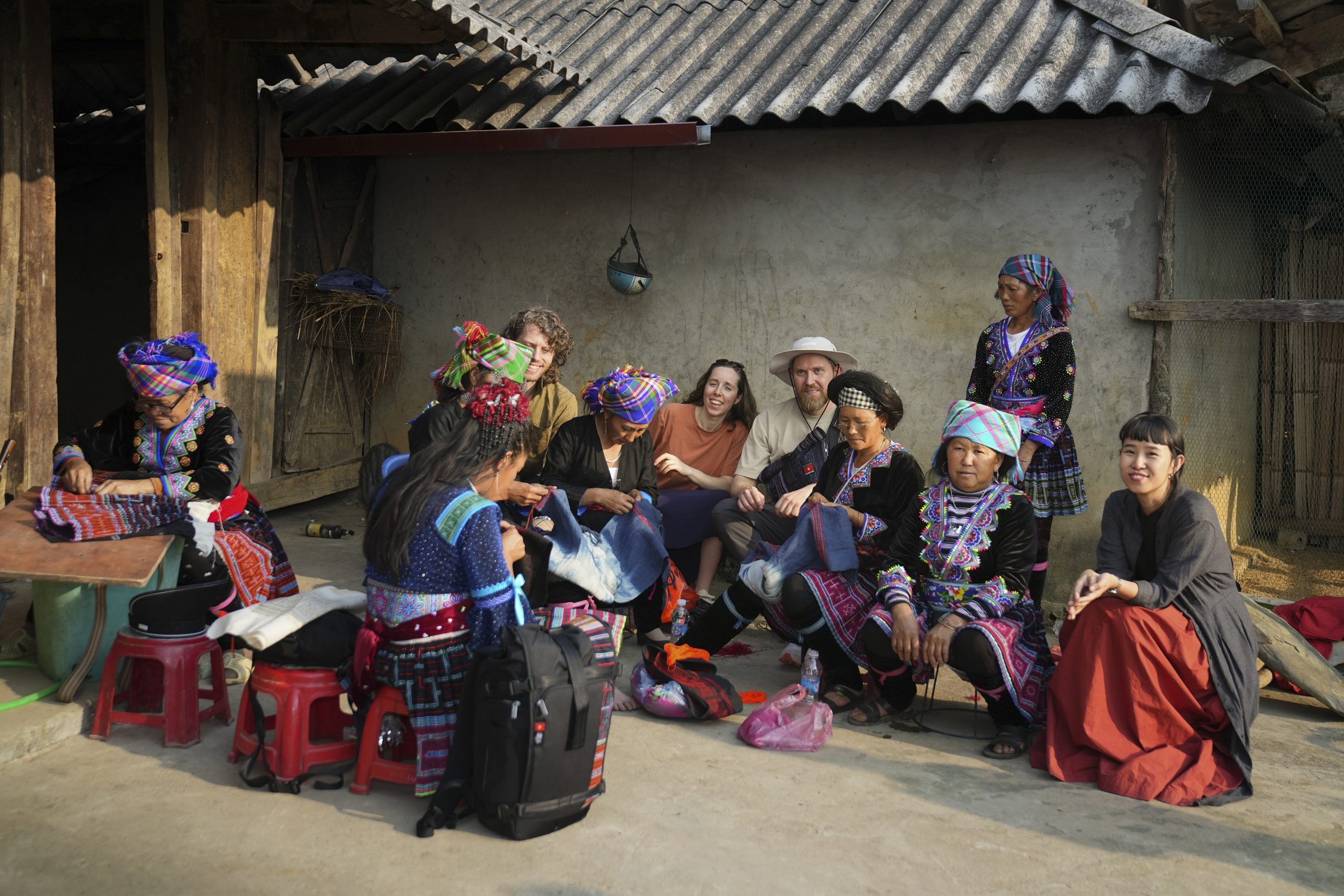
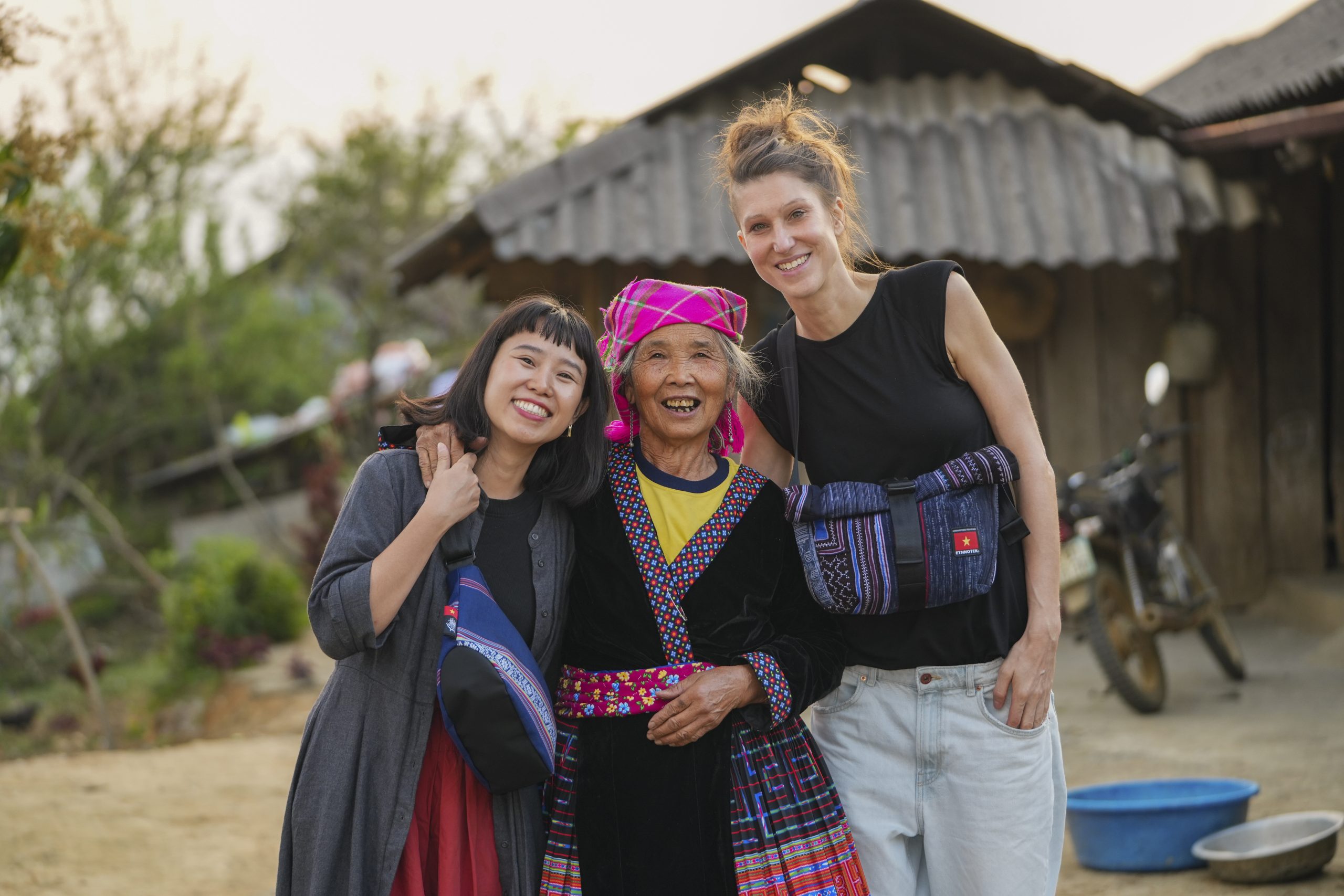
The elderly people did not speak Vietnamese, yet greeted us warmly with smiles before returning to their work. Children followed us around, eager to have their photographs taken and delighted whenever they saw the results. The village dogs barked at strangers while wagging their tails in welcome. In Tả Lèng, happiness seemed to be everywhere.
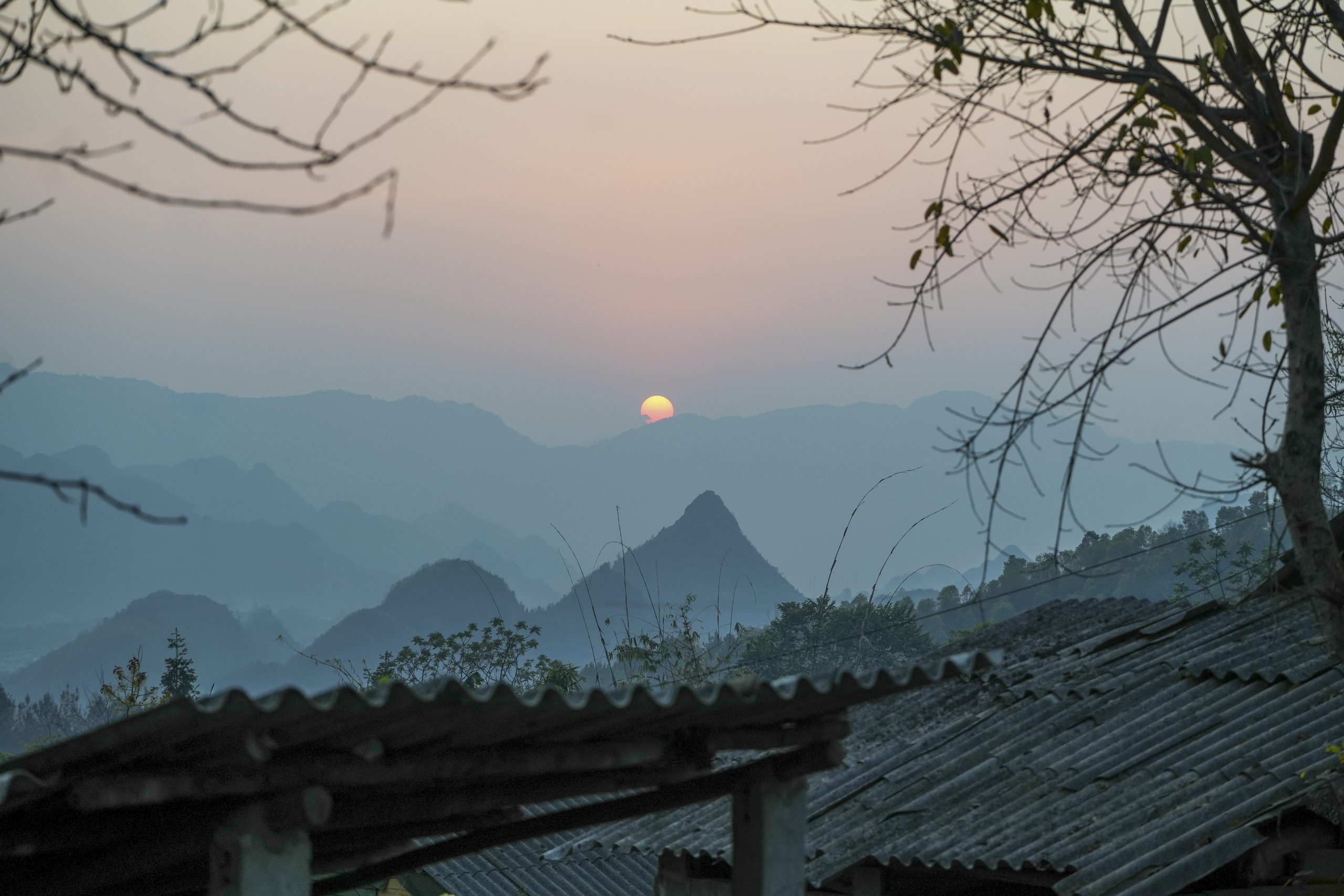
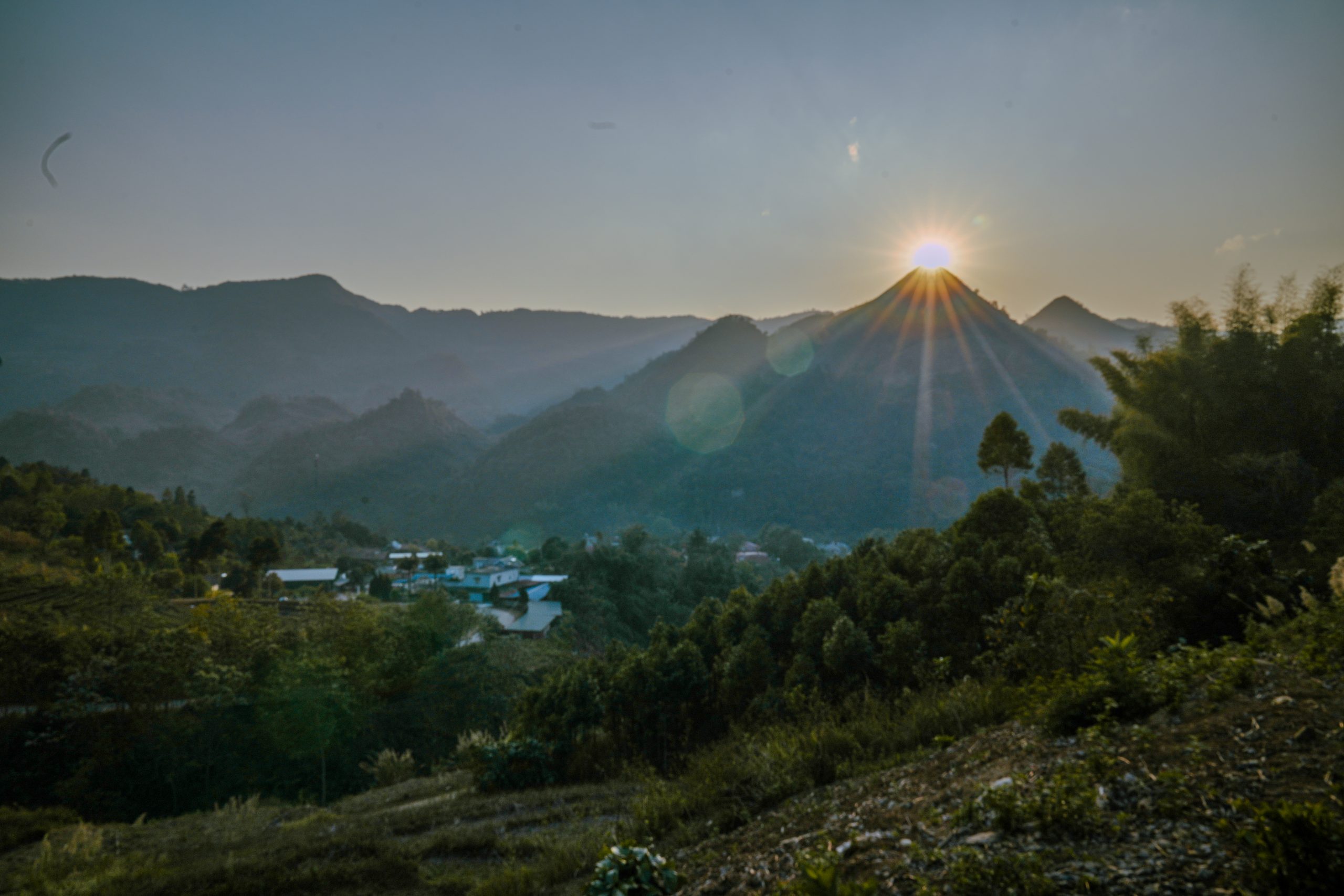
My favorite moments were the afternoons spent riding a motorbike through the village, climbing toward the mountain peaks, then wandering on foot and stopping at viewpoints that offered sweeping panoramas of the city below, quietly watching the sunset descend.
Some of the slopes were so steep that our knees ached from climbing. Yet we never stopped because we were tired. We stopped because of the silvery afternoon light streaming through layers of cloud and settling softly across the rooftops on the mountainside. I think it was the first time I had encountered this type of architecture in real life rather than in films: wooden houses with corrugated metal roofs, their floors set lower than the road, leaving a narrow gap between the house and the street where sunlight poured in, resembling mischievous half-open eyes.
One particularly joyful memory occurred during a walk near the mountaintop. We passed a house with a courtyard positioned perfectly to catch the slowly descending sun. I remember thinking, I wish I could stand in that courtyard just once. The next day, while wandering along the same road at roughly the same time, a woman sitting in that very courtyard waved us over and invited us in. It is impossible to describe how happy I felt. We stayed until long after sunset, until the sun had completely disappeared into the darkening sky.
Sin Suối Hồ
About 35 kilometers north of Tả Lèng lies Sin Suối Hồ Village. One story we heard about the village was that more than twenty years ago, it was known as an “opium stronghold.” Nearly every household cultivated opium, and many people used it, leading to widespread poverty. A young H’Mông man named Vàng A Chỉnh, serving as a local police officer, persuaded villagers to abandon opium and alcohol. He went from house to house tirelessly encouraging change and later helped guide the community toward economic development and village-building initiatives.
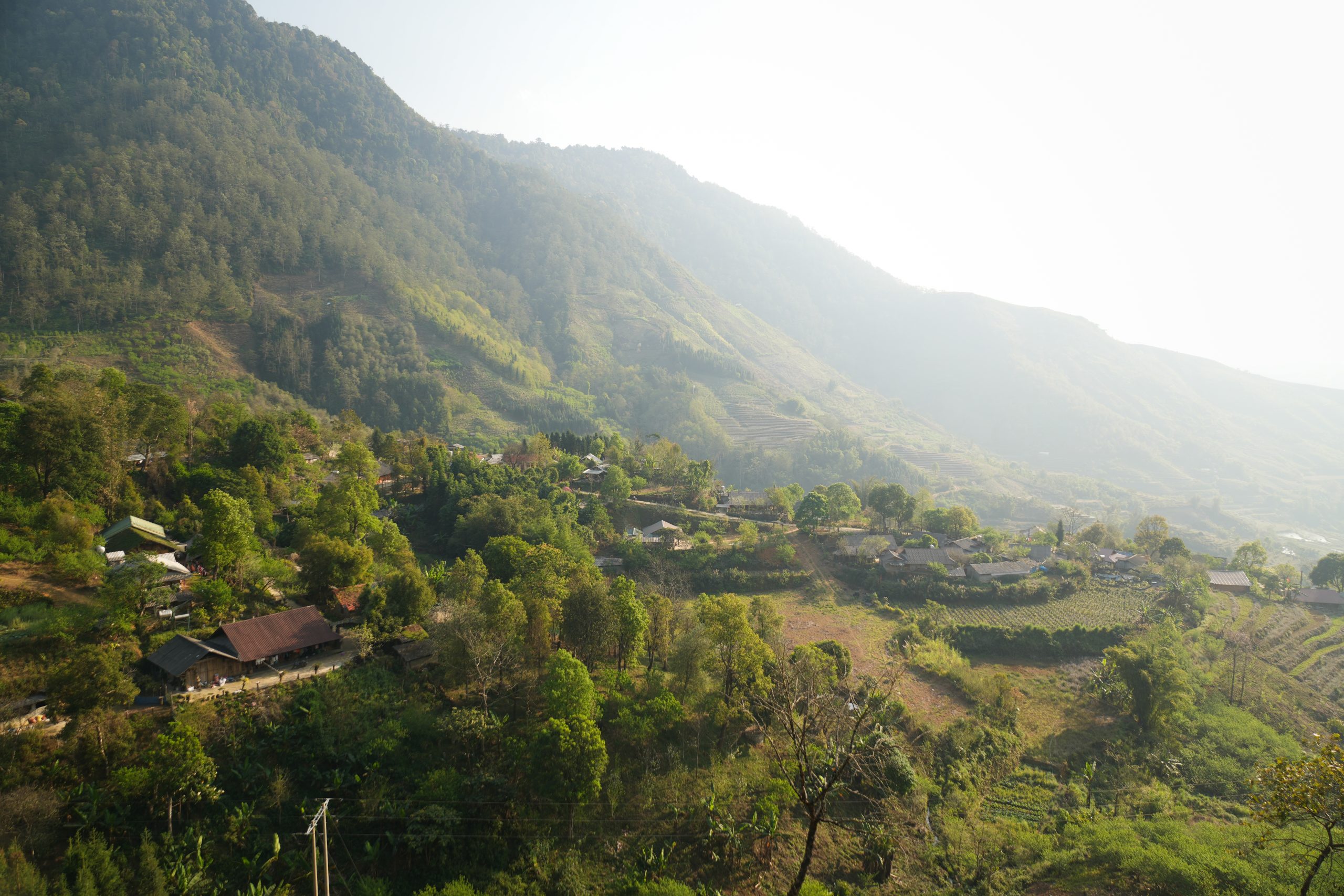
Today, Sin Suối Hồ has become a beloved tourist destination. Tourism here is exceptionally well organized. From the architecture of the wooden houses to the pathways, signposts, and storefront signs, everything appears orderly and carefully maintained. One particularly surprising detail is that nobody in the village drinks alcohol. Even visitors from afar cannot buy a single drop.
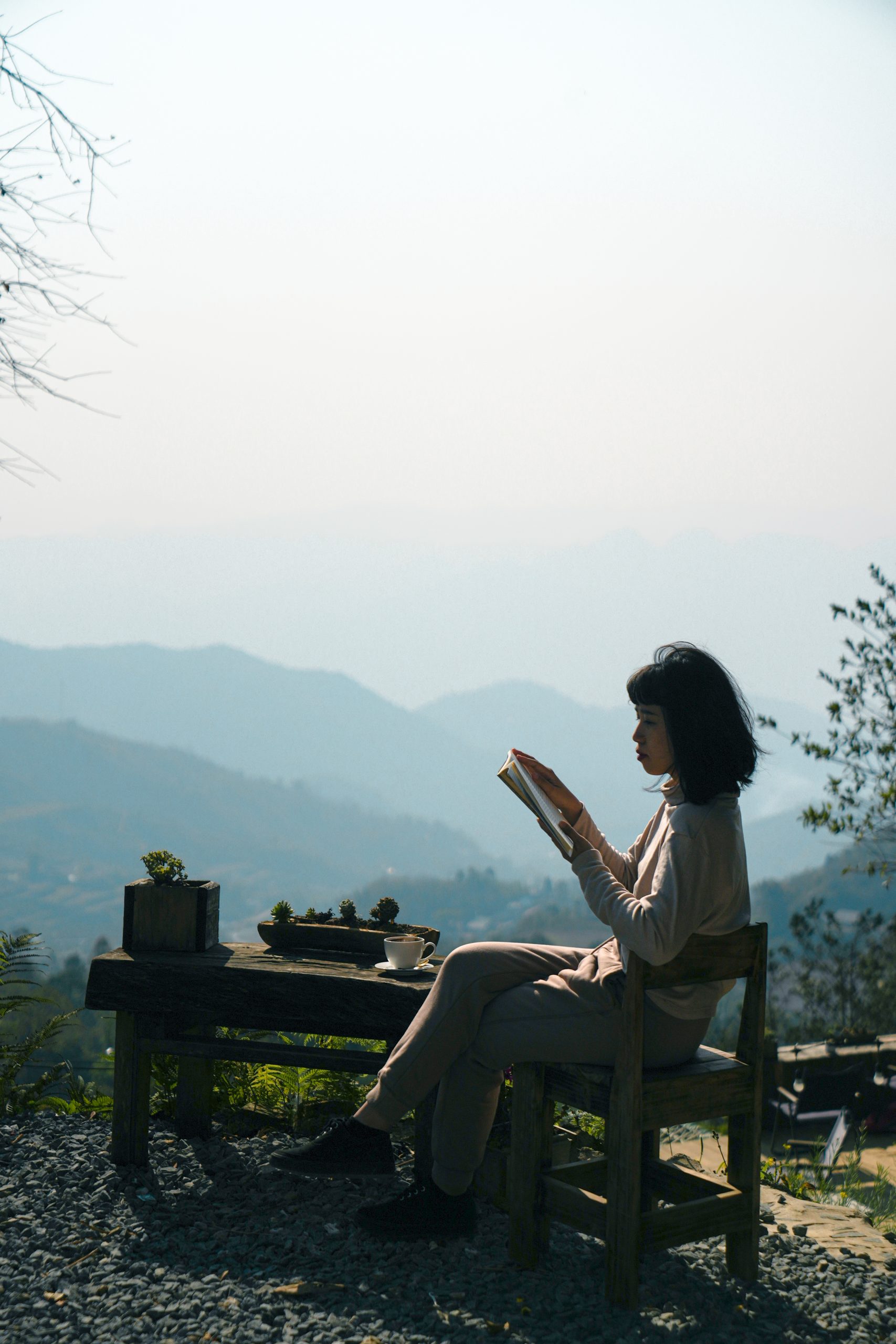
At an elevation of more than 1,500 meters sits Ka Sha Café, a simple structure built from wooden beams and decorated with indigo-dyed fabrics. Tables and chairs are spaced comfortably apart. In front of the coffee counter is a spacious courtyard, with steps leading down to a lower terrace along the mountainside. From here, one can gaze endlessly at the vast sky, drifting clouds, and mountains beyond. We sat there while powerful gusts of wind lifted the curtains at the windows. It felt as though the wind was also lifting us, searching for answers to the questions turning endlessly within our own hearts.
The Giáy People’s Phở
This was one of the greatest surprises of our journey. A Giáy friend from Lào Cai took us to a famous phở shop in San Thàng 1 Village, Lai Châu. Crossing the iron bridge just beyond the village gate, the shop stands on the right-hand side. Upon arriving, we discovered that the restaurant specializes in Giáy-style phở, commonly known as phở Nhắng, a distinctive dish of Vietnam’s Northwest region, particularly associated with Lai Châu. The restaurant consisted of two sections: one housing large stoves, pans, mixing basins, batter trays, and bamboo racks for drying noodles; the other furnished with an assortment of tables and chairs for customers. Most guests were local residents or people visiting during market days.
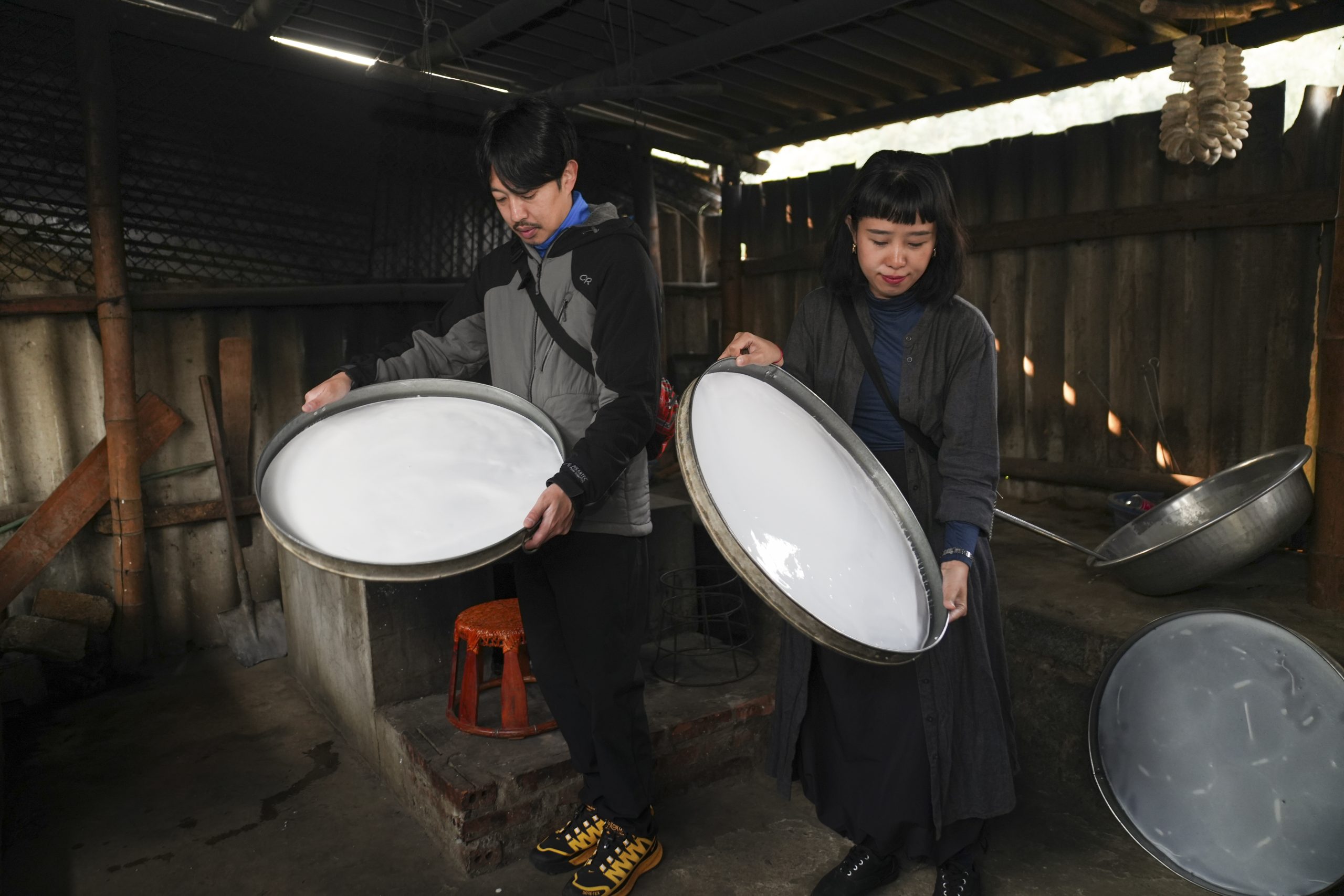
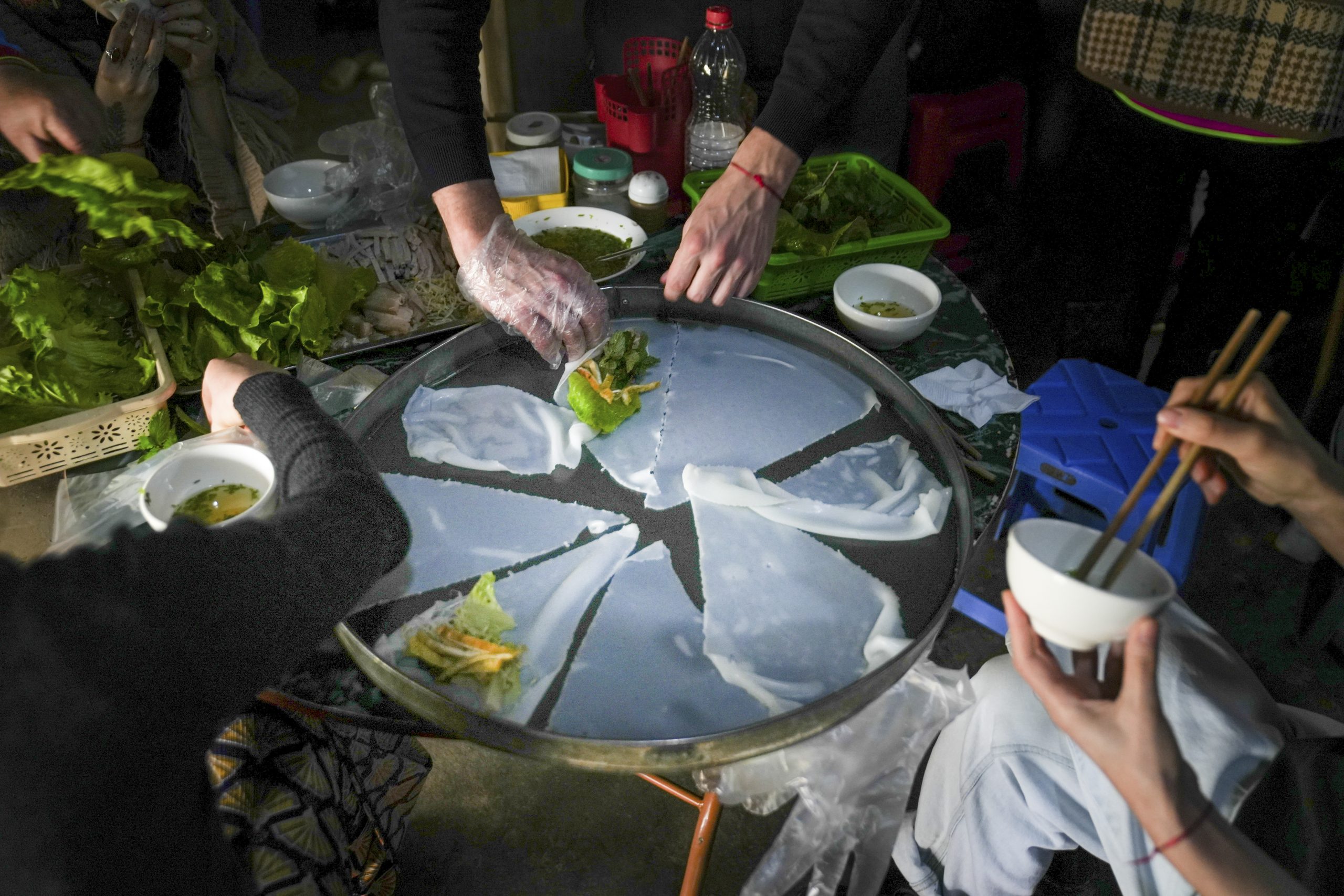
The owner, a sturdy Giáy woman, enthusiastically taught us how to make phở sheets “properly.” The process begins by pouring a large ladle of diluted batter made from upland rice into the center of a tray about the size of an embrace. Then, using both hands, the tray is gently tilted until the batter spreads evenly. Sometimes it flows quickly, sometimes slowly. Some parts become thick, others thin. The resulting patterns are endlessly varied. Though the motion appears simple, it requires concentration and produces a soothing sensation, as though participating in a form of art. Nearby, a large pot of water bubbled vigorously over a charcoal stove. The batter tray was lowered carefully onto the steam, covered, and left to cook. Once done, the rice sheet was removed, cooled, draped over bamboo poles, layered, and eventually sliced into noodles.
There are three traditional ways to enjoy the noodles: served with beef and broth, mixed with vegetables and meat as a noodle salad, or rolled into fresh rice noodle wraps. We chose the wraps because they seemed the most fun.
A large tray was brought to the table containing fresh noodle sheets, lettuce, mint, bean sprouts, Vietnamese pork sausage, fried eggs, fried tofu, and thinly sliced pork belly, accompanied by a light fish sauce similar to the dipping sauce served with bún chả. Each of us assembled our own rolls, creating a delicious and refreshing breakfast.
A Meal Rich in Affection with the Thai People
On our way toward Mù Cang Chải through Lào Cai Province, we stopped at Mường Kim Village in Lai Châu. It is one of the few places where the traditional cotton weaving process of the Thai ethnic group remains fully preserved. The Thai women in the village showed us the entire weaving process. After harvesting, cotton is dried and the seeds are removed using hand-operated tools. The fibers are then fluffed, flattened, spun into thread using spinning wheels, and wound onto bobbins before being woven on looms. The thread is often dyed with natural pigments derived from leaves, bark, and roots, producing earthy and gentle colors. Once the fabric is complete, Thai women embroider distinctive patterns onto it using brightly colored threads.
When word spread that our group included a foreign visitor and that many villagers had never met a foreigner before, they abandoned their work and gathered in the courtyard of the local cultural troupe leader simply to observe the guest from afar. The most memorable sight was an elderly man, perhaps ninety years old, determined to follow us around the village with the help of a walking stick. Only when his children and grandchildren came to stop him did he reluctantly give up.
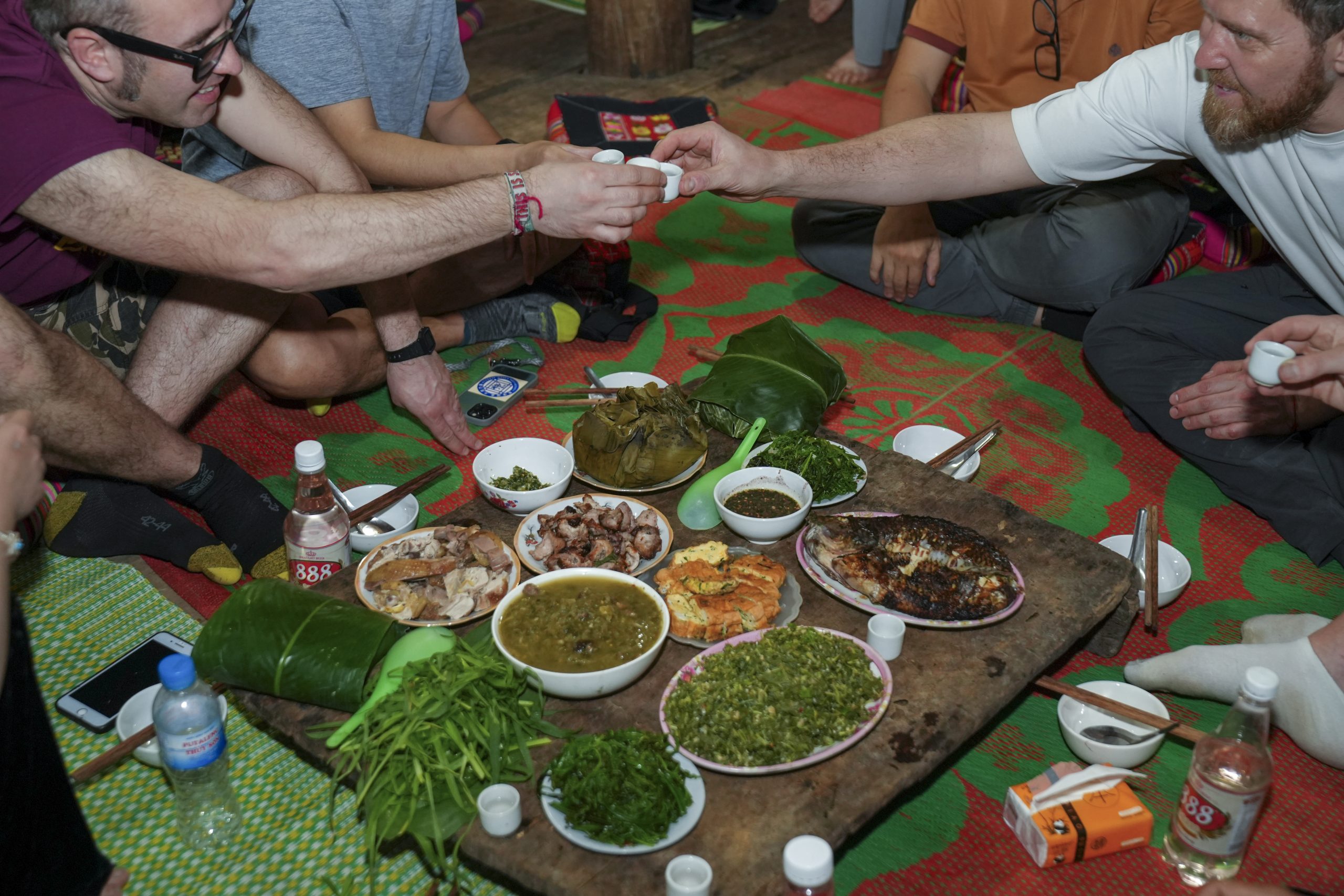
The village became almost silent in the afternoon, interrupted only by the gentle sound of a stream flowing nearby. The Thai women took us to the water’s edge, where we picked tamarind and nhót fruit before returning to a house where several trays of food had already been prepared. We had been told that we would be treated to traditional Thai specialties, so we arrived with healthy appetites. The meal included frog braised in banana leaves, boiled chicken, grilled pork, fish marinated with forest leaves and grilled over charcoal, and goat soup.
Most surprising of all was seeing grass served at the dining table for the first time in my life. It was goosegrass, eaten with a dipping salt mixture pounded together with wild herbs. The flavor was rich and aromatic, filling both nose and palate. There was also sticky rice and rice wine made from locally grown glutinous rice. The sticky rice had been steamed with hoa bó phón, giving it a brilliant golden color. It was truly a meal where “nobody leaves sober,” as villagers took turns inviting us to drink. Afterwards, everyone danced together beneath a sky filled with stars. It remains one of our most unforgettable memories.
Traveling Without a Destination
After spending an entire week wandering through Lai Châu, we came to agree that here, one can simply travel without any particular destination and still stumble upon breathtaking beauty. For example, while exploring Tả Lèng Village, we found ourselves stopping every few dozen meters to capture short videos. There were terraced rice fields stretching across hillsides, scattered wooden houses, and farmers walking home at an unhurried pace after a day’s work. Silk cotton trees exploded with brilliant red blossoms against the sky.
Another time, while visiting Chin Chu Chải Village, we wandered into a pear orchard filled with white blossoms. From a distance, the flowers looked like a richly embroidered fabric draped gently across dry earth. We lingered beside a wooden house bathed in sunlight. A goose played mischievously with a water hose in the yard. Two elderly women chatted beneath the porch. Inside the house, an elderly man quietly repaired his tools. Nothing extraordinary was happening, yet the scene brought a strangely comforting sense of peace.
On one occasion, we met an elderly woman selling tomatoes at the bottom of a hill. We handed her 20,000 đồng to buy a few tomatoes for our instant noodles the next morning. She carefully selected the best ones and filled a bag for us. I told her, “Grandma, you’re so beautiful!” She replied, “Not beautiful. Don’t know Vietnamese. Where are you from?” “We’re from Ho Chi Minh City.” “So far away! Buy tomatoes, buy tomatoes.” The conversation made little sense from beginning to end, yet it somehow brightened the entire morning. There were many more warm memories like these. We left Lai Châu behind, but a piece of our affection remains there, waiting for the day we return.