Peter Cường Franklin
Born in Đà Lạt, Vietnam, and later immigrated to the United States as a teenage refugee, Peter Cường Franklin’s journey has been shaped by both cultures. He graduated from Yale University with a degree in finance and studied culinary arts at Le Cordon Bleu in France. Despite being more fluent in English than Vietnamese, he has found solace in exploring Vietnamese cuisine, allowing him to reconnect with his roots.
“I’m Vietnamese”
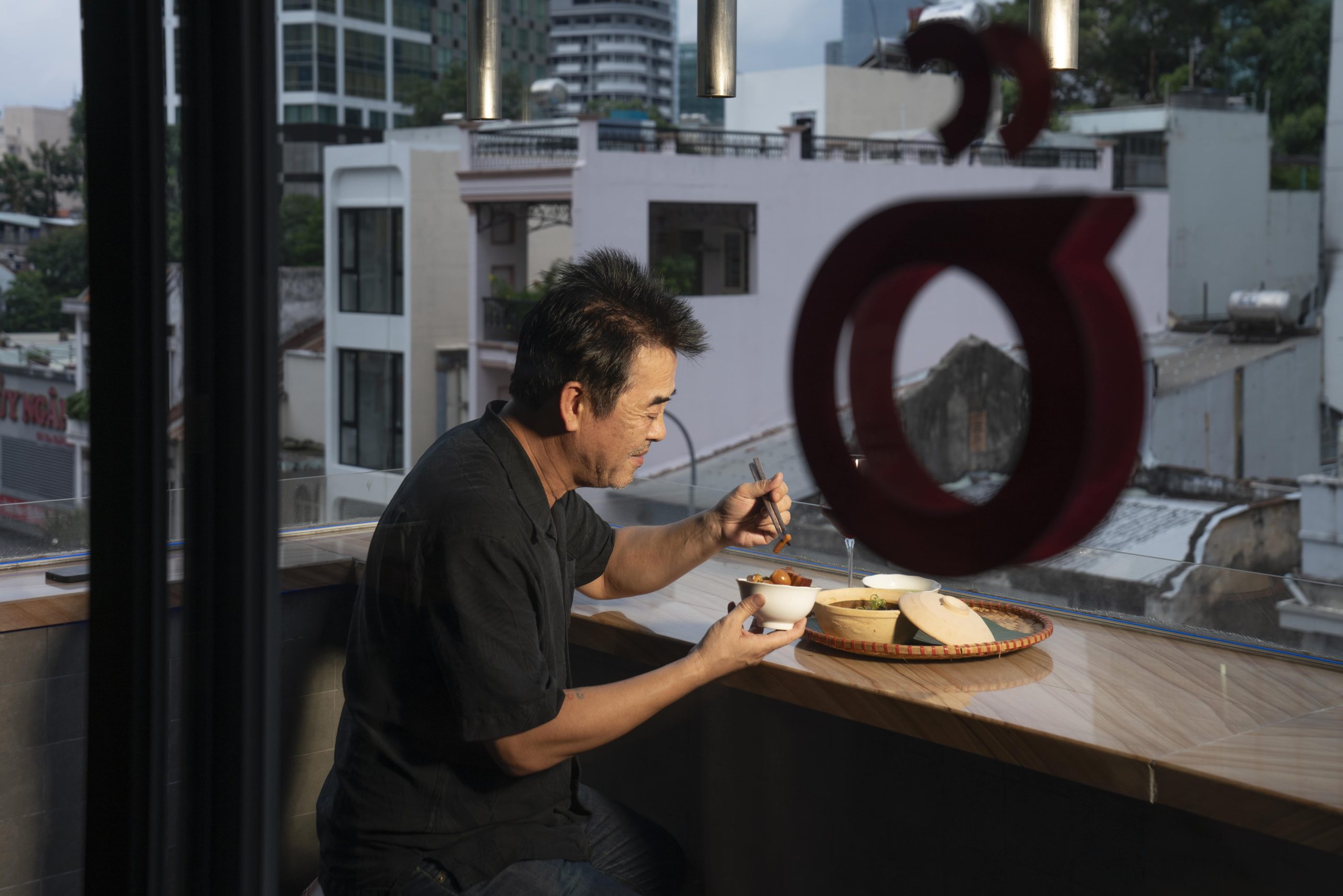
In a six-story building nestled amidst the bustling Tôn Thất Đạm market, Peter has established three restaurants. The ground and second floors house Ănăn Saigon, the third floor is home to Pot Au Pho, the fourth floor serves as Peter’s private space, and the fifth floor and rooftop host Nhậu Nhậu bar. An intriguing detail on the glass door of the third floor reads “ở” (which means “to live” in Vietnamese), cleverly combining with the names of the other two restaurants to form the phrase “ăn – ở – nhậu” (which means “to eat – to live – to drink), reflecting Peter’s down-to-earth perspective on Vietnamese culture and people.
When asked about his identity connection to Vietnam, Peter shares, “In the United States, the term hyphenated American refers to people with dual identities such myself as Vietnamese – American. In Vietnam we often use the term Việt kiều which simply means Overseas Vietnamese but also imply the status of an outsider. In the US I am not American, in Vietnam I am not Vietnamese. As a result I have the dual perspectives of Vietnamese cuisine and culture both as an insider and an outsider. Regardless of what other people might think, I prefer to define myself simply as Vietnamese.”
Inspiration strikes Peter at any moment, from any place. Each region in Vietnam boasts a rich array of delicious dishes. By mastering the fundamental principles, one can cook these dishes to perfection. Combining these basics creatively leads to culinary marvels. Peter particularly enjoys exploring regional cuisines. He recounts a recent trip to Huế where he savored “cơm hến,” a light and simple dish enjoyed early in the morning, yet bursting with flavors and textures. Inspired, he recreated this dish upon returning to Sài Gòn.
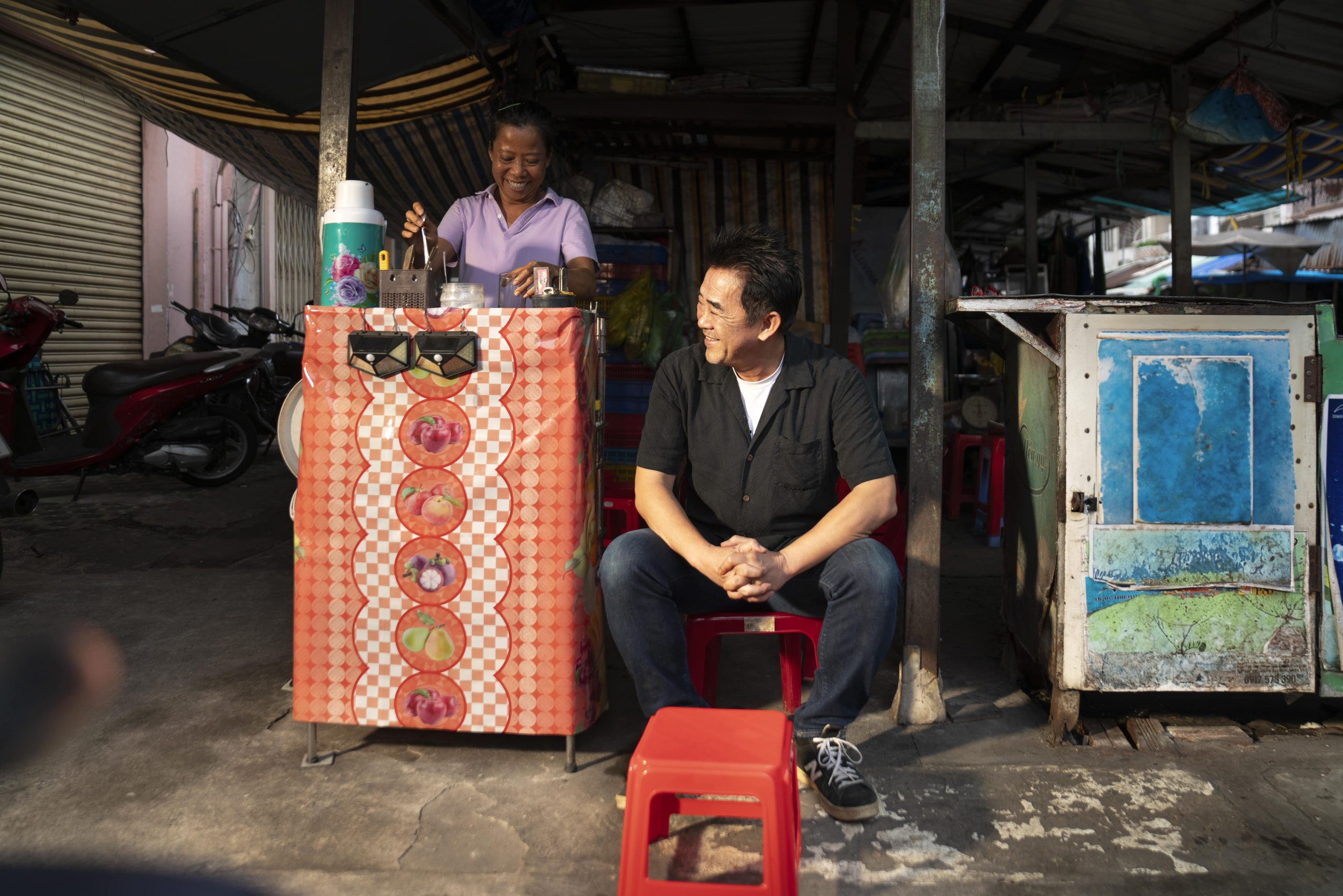
His daily routine includes sipping street-side coffee and strolling through the old market. Creativity often sparks in his mind as he observes life and immerses himself in the vibrant local culture.
Thịt Kho (Caramelized Braised Pork Belly) and Cơm Trắng (White Rice)
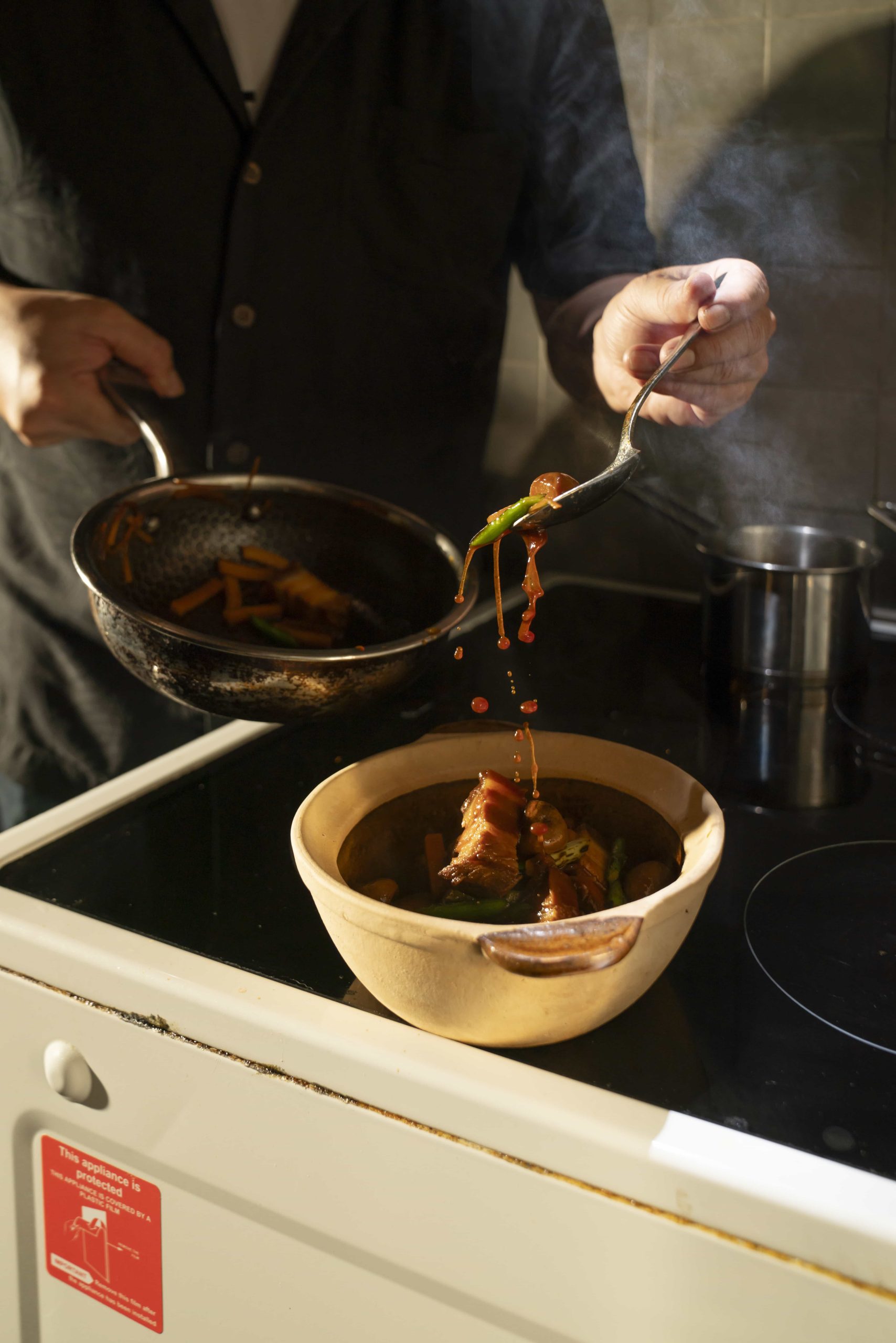
Peter treats us to “thịt ba chỉ kho nước mắm” (caramelized braised pork belly), served with sour soup and Sóc Trăng rice. “Kho” refers to the technique of slow-cooking meat or fish with fish sauce and caramelized sugar—a comforting staple in Vietnamese households. Families often keep a pot of simmering “thịt kho” on the stove for days. Anyone hungry can ladle some onto a bowl of rice, or when guests visit, it’s readily available for hospitality.
Peter fondly recalls his childhood: “Some of my fondest memories as a young boy growing up in Dalat is sitting on the dirt floor around the small kitchen table and watching my mom cook. When I am hungry she brings out a bowl of “thịt kho” that has been cooked a few days earlier from the old wooden cupboard and give that for me to eat with a bowl of steamed rice.”
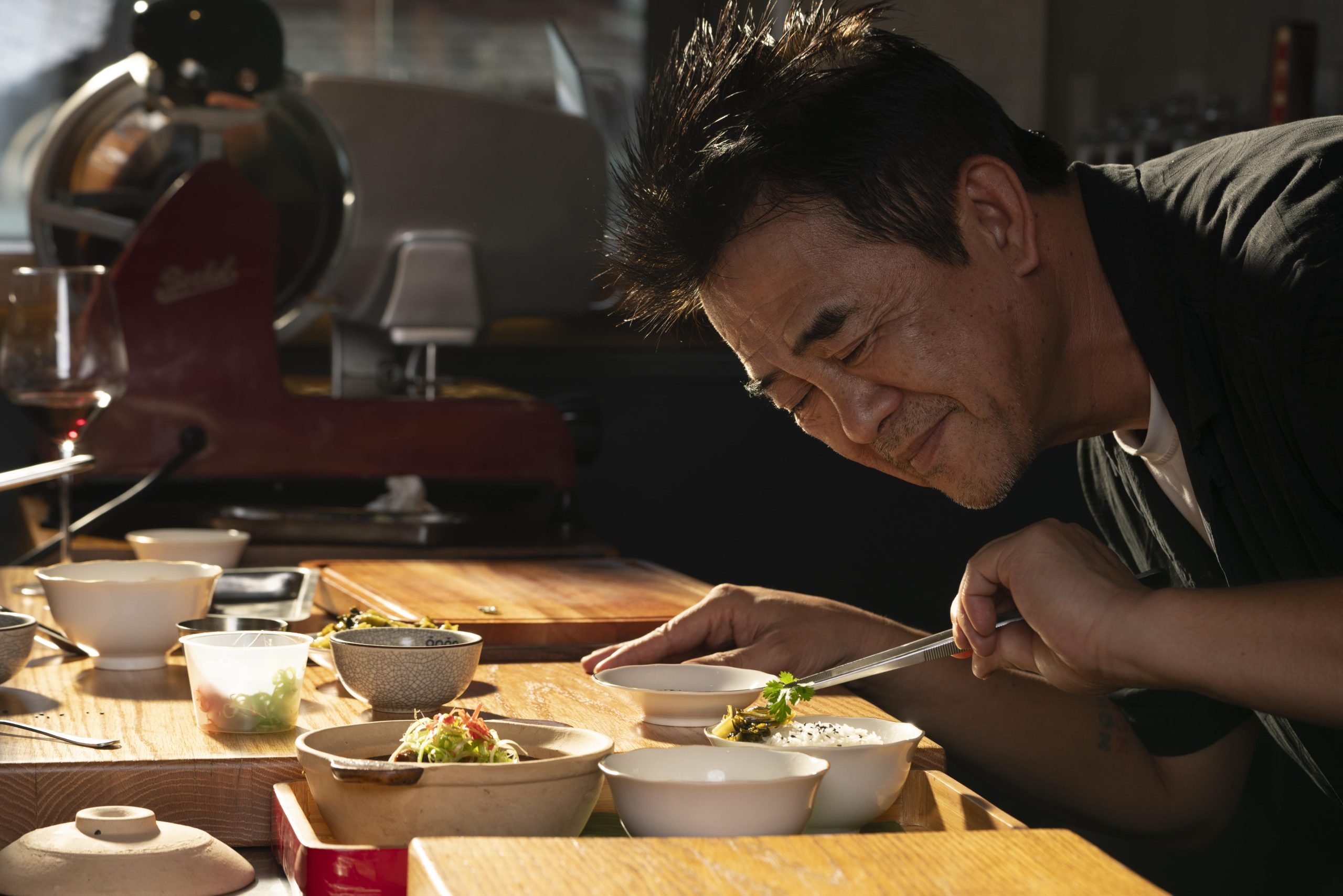
“Thịt kho” is addictive due to its harmonious blend of sweet and savory flavors. His version of “thịt kho” involves a 24-hour slow-cooking process using the “sous vide” technique, resulting in ideal pork belly slices—tender, with crispy skin and succulent fat that retains its bounce, complemented by soft, flavorful meat. Quail eggs are separately braised until their whites absorb the seasonings and dry out, then smoked, maintaining their quality at room temperature for several days.
Peter’s “thịt kho” leaves an unforgettable impression. The pork slices appear firm yet melt-in-your-mouth, balancing sweet and savory flavors. The smokiness, the freshness of spring onions, the slight bitterness of asparagus, and the gentle heat of chili—all harmonize without any excess. Paired with fragrant white rice, black sesame seeds, a touch of pickled mustard greens, and a bowl of sour soup, it creates a taste of happiness, where beautiful memories of family intertwine vividly.
When food is life
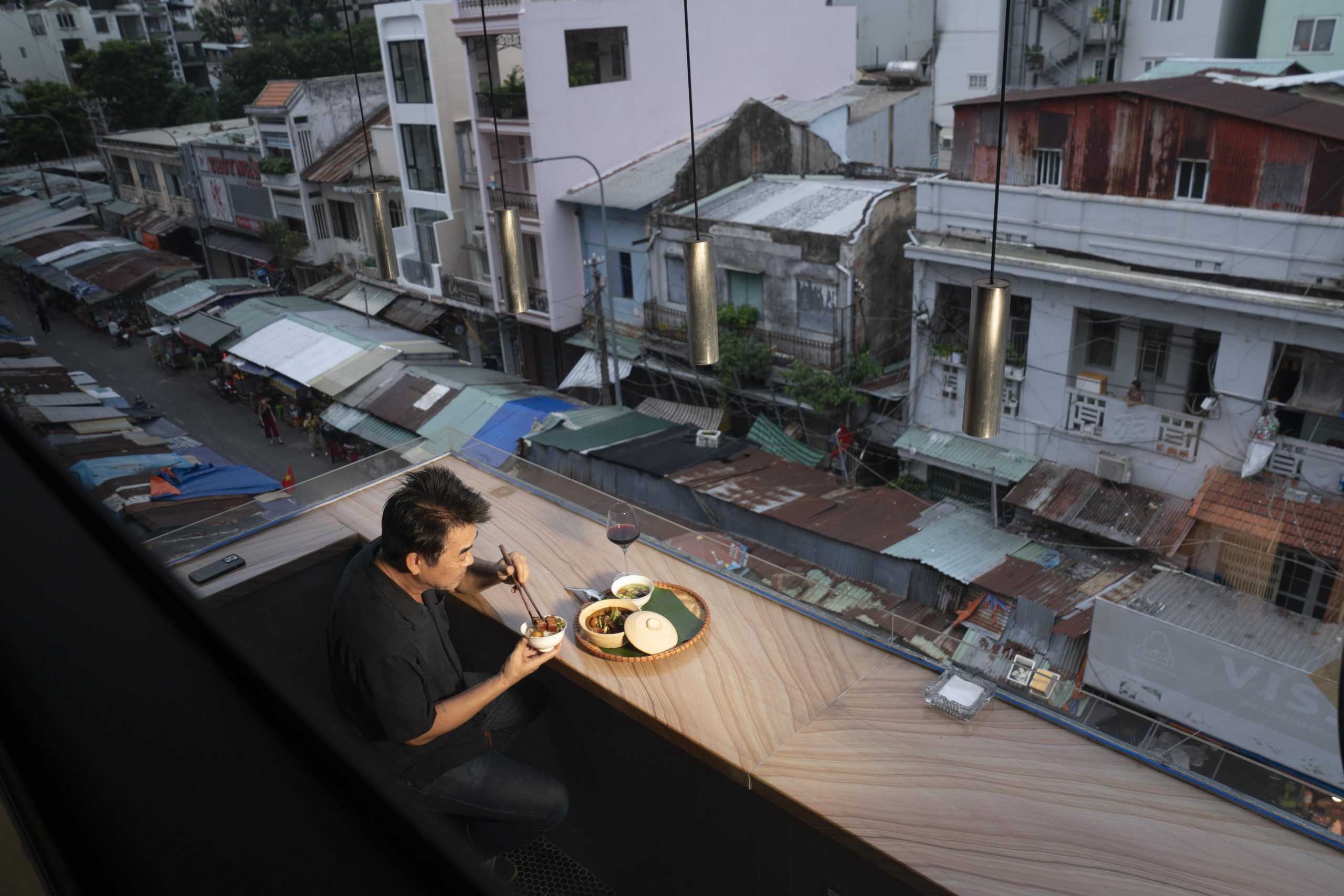
After living in New York, London, Hong Kong, and Bangkok, Peter defines “home” flexibly: wherever he resides becomes home, and notably, even restaurants are home.
“If I lived in a private house, I’d enjoy wine and cook. Similarly, when I’m at a restaurant, when cooking I like to sip a glass of wine usually with no music since I like to hear the sounds of ingredients being prepared and cooked. When time is limited, I go out to eat alone at one of the street food stalls or small restaurants nearby Ănăn Saigon. The food is simple, comforting and prepared with love and I can connect with the other cooks who also make food and feed people for a living,” Peter shares.
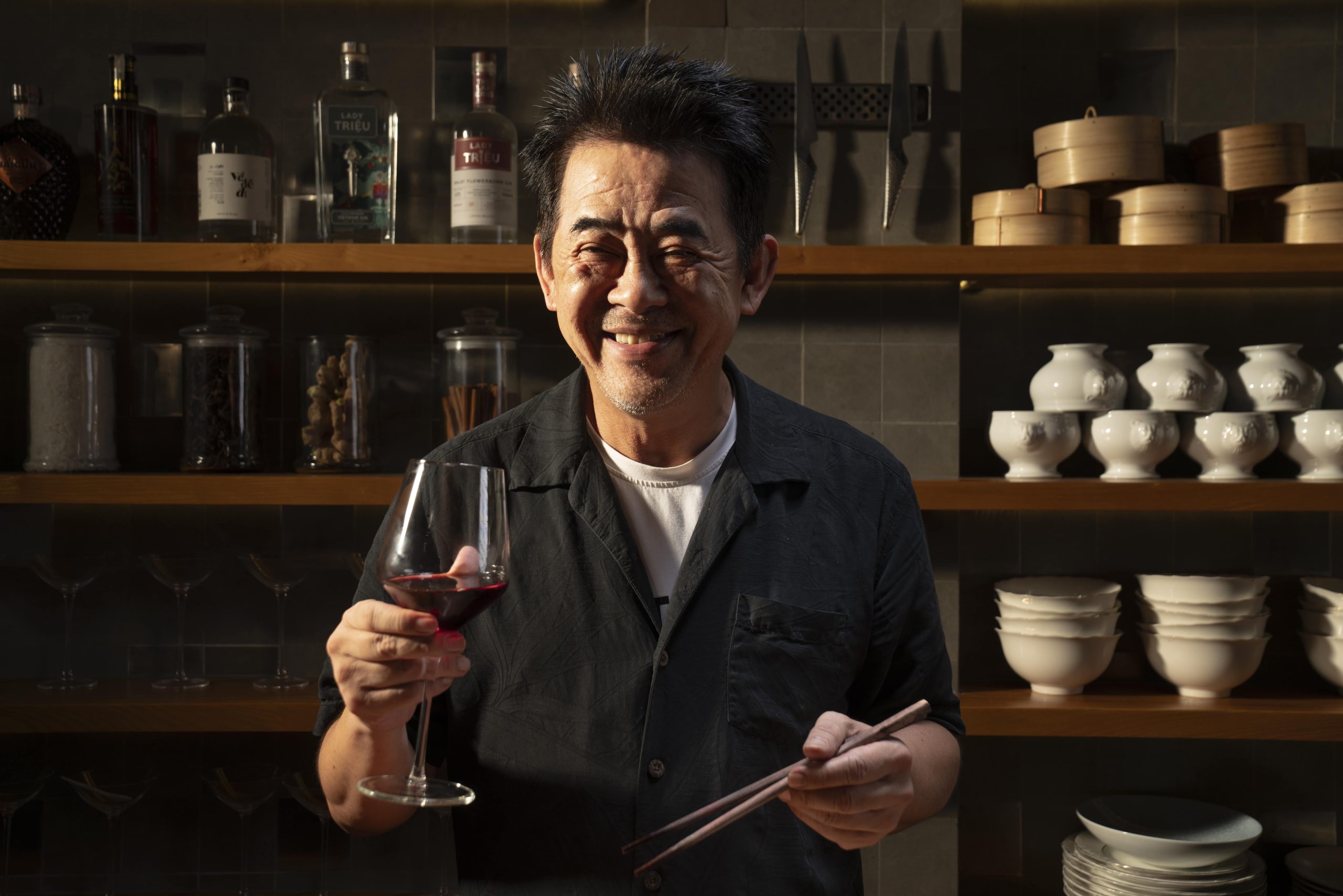
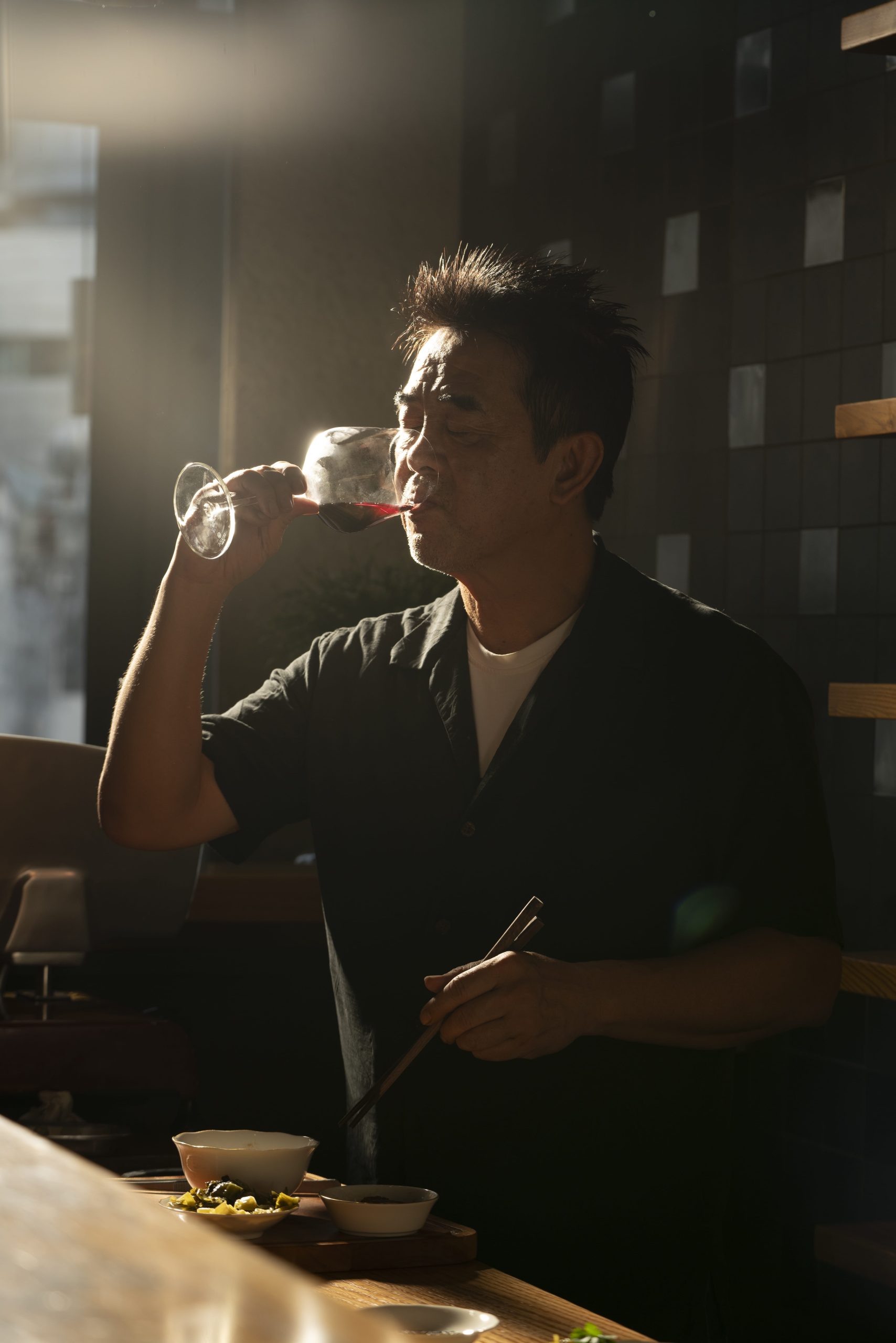
Facing Peter, we sense a unique individual—one who extremely delves into culinary exploration—nothing can come between him and his passion for cuisine. The image of him holding chopsticks to pick up a morsel and raising a glass of red wine with his other hand is perhaps a wonderful representation of the blend of culture and culinary enthusiasm within a chef.
_ĐẸP Magazine | July 2024
“Around the Dining Table” chronicles the ordinary lives of individuals from diverse professions who have reached significant milestones in their respective fields. These narratives offer readers an alternative viewpoint on these characters as they return home and cultivate their spiritual well-being through communal meals. Feel free to discover the latest articles in Đẹp Magazine.