
Tea ceremony – the spiritual culture of the Korean people
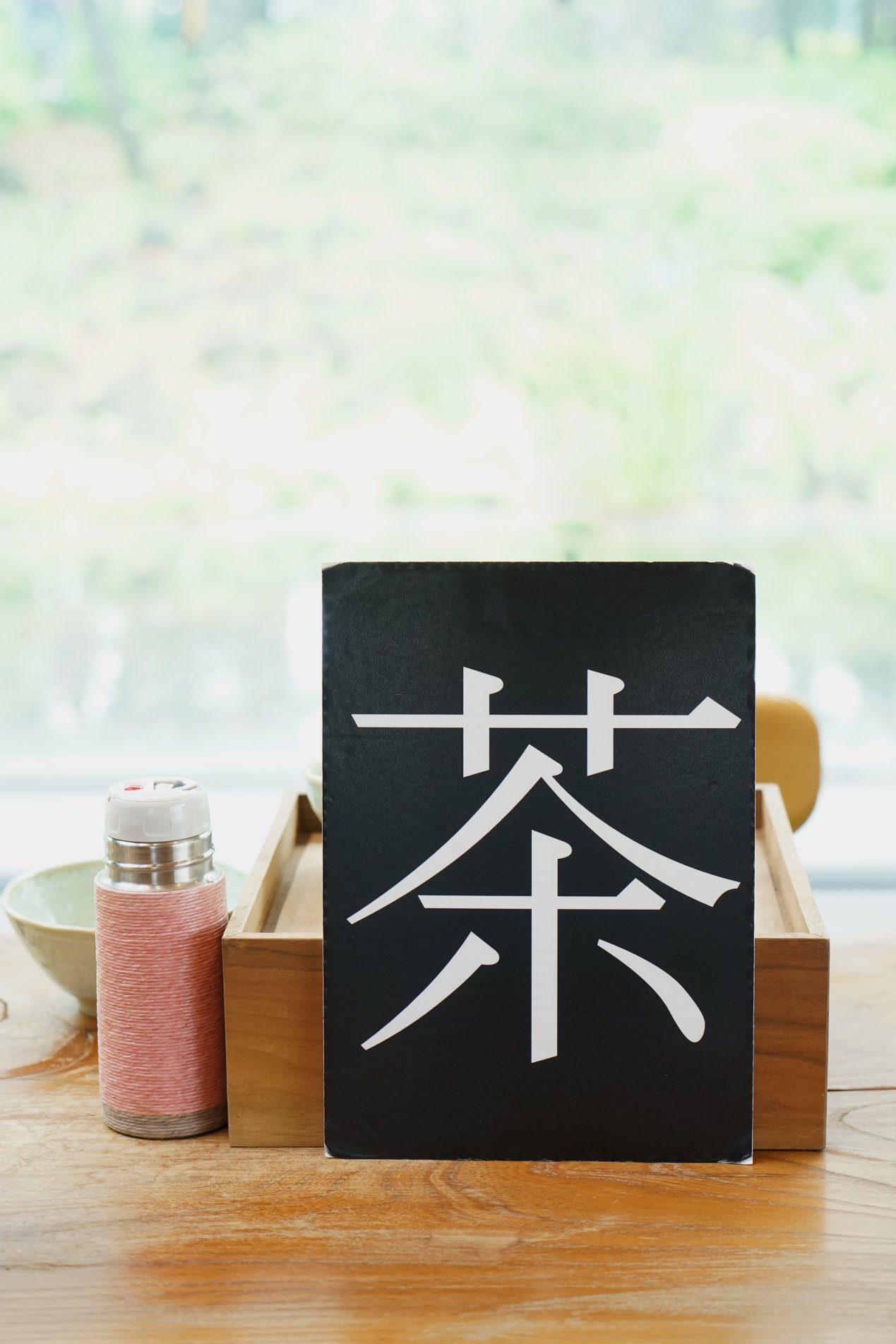
Green tea and tea ceremony appeared in Korea since the Three Kingdoms period on the Korean peninsula, the period under the reign of Queen Seondeok. Tea is read in Chinese as “cha” – the word includes a dash and two vertical stripes on top representing the grass, two lines in between pointing to two directions representing the human, and the remaining lines representing the tree. Therefore, the most appropriate space for enjoying tea is the space close to nature. The word “cha” when separated is the number 108, meaning that drinking tea is good for health and can prolong your life.

Unlike Japanese people who often use green tea powder, Koreans like tea made from cereals, flowers and dried fruits, ginseng, and green tea leaves. Korean tea ceremony kit includes a wooden tray, boiling water kettle, teapot, teacup, dry tea utensils, boiling water bowl, scum tea bowl and wooden or porcelain teapot lid holder. Teapots, cups, and tea bowls are made in the style of Hagi pottery – an enameled ceramic line of simple designs, elegant colors, often soil color. Legend has it that, in the 16th century, after a military invasion of the Korean peninsula, some Korean pottery artists were kidnapped and taken to Hagi, a town located in Yamaguchi province in Japan, where they played an important role in the birth of the ceramic lines such as Satsuma, Arita, and Hagi. The contrast between the bright green color of green tea and the warm, neutral tone of Hagi pottery creates a delicate beauty for the Korean tea ceremony.
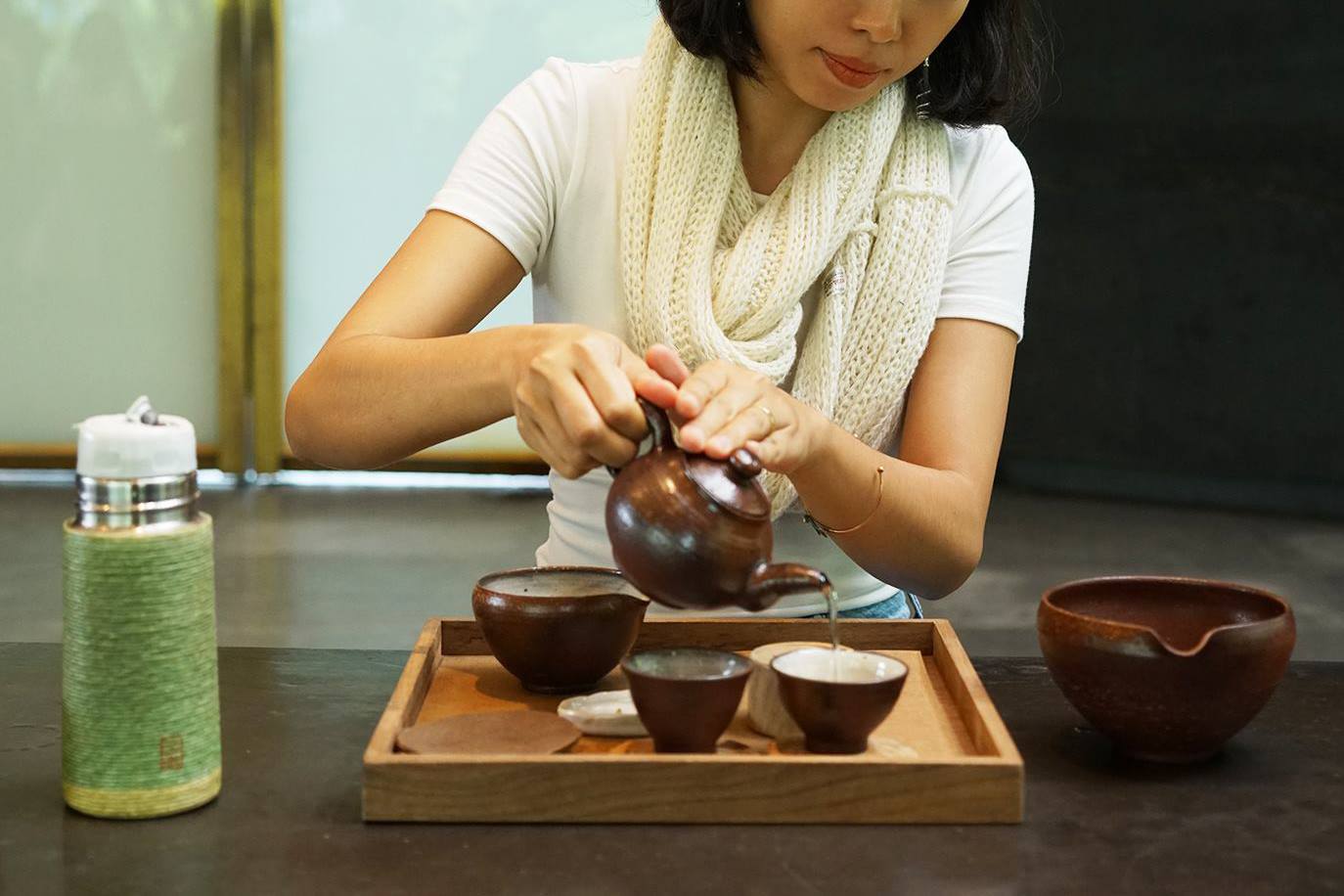
Water to make tea is extremely important. It must be pure water, preferably water from natural springs, rainwater, or dew left on the leaves in the early morning. Koreans often make tea with hot water at 70-80 degrees Celsius, not with boiling water, so when brewing tea, we were instructed to pour boiling water from a boiling water kettle to a boiling water bowl, then lightly gently lift the lid, place it on the lid holder, then pour boiling water from the bowl into the teapot, shake gently, pour out the bowl of scum tea to rinse. Repeat the process of pouring boiling water from the kettle into the bowl and open the lid again, then pour the tea into the teapot. Tea is put in a lovely leaf-shaped tea container. When the water has dropped to the required temperature, slowly pour the water from the bowl into the kettle. Wait about two minutes for the tea leaves to swell then pour out the cup to enjoy.
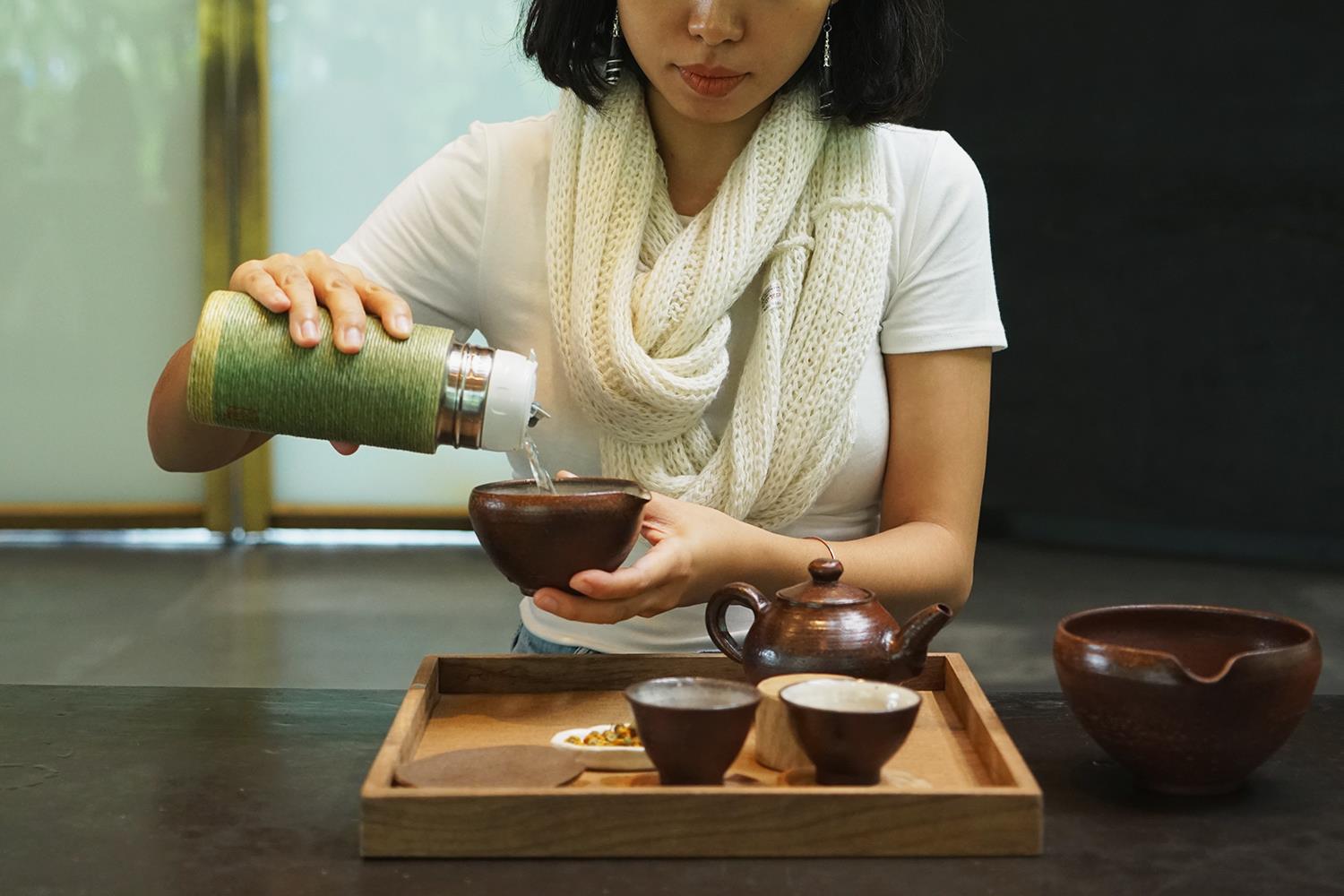
The amount of water poured into the kettle should be just enough for two cups of tea, avoiding putting too much water, making the tea thin, and cool, loss of its taste. When pouring tea, the host will pour into the guest’s cup on the left hand first, then pour it into his/her cup on the right. The host will be the first to raise the cup. When enjoying tea, one hand holds the cup of tea, the other covers the cup, the palm turning inward, lifting the cup to the nose to enjoy the aroma of the tea, then slowly sip each small sip. If the person enjoying the tea is an older person, when drinking tea, you should turn your face to the other direction, sip the tea very discreetly.
While enjoying tea, especially during the holidays, Koreans also serve with some cakes such as yugwa (fried rice cakes), jeongwa (fruit jams), gangjeong (rice cakes), dasik (cakes made from potato flour, sweet potato or green beans), etc. If before, enjoying tea was a social etiquette, then today, it is a relaxing way to help clear your mind, shake off worries and troubles from the pace of modern life. Drinking culture always plays an important role in the daily life of Koreans. As a distant friend, there seems to be no better way for you to understand Korean society and people than enjoying tea with them.
 ☘️☘️☘️ Tips:
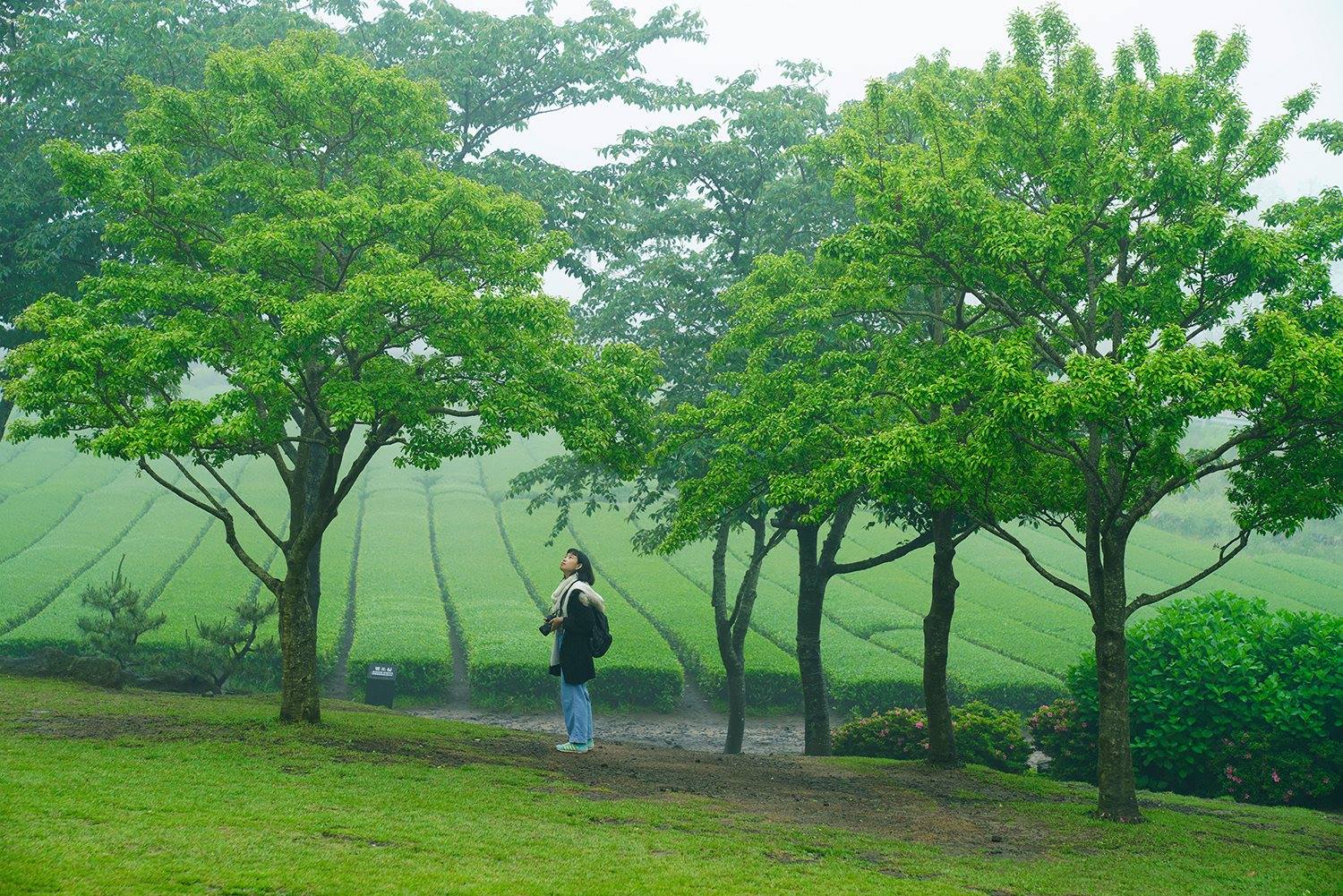
If you visit Jeju Island, Osulloc’s tea hill – Korea’s largest tea brand – is a destination that you can’t miss. There is a tea-drinking class in a spacious tea room with wooden tables and chairs, a faint smell of tea and a large glass door overlooking the lush garden. Each class lasts about half an hour and can host a minimum of two people and a maximum of 20 people who must register in advance.
(The article is on the “Korea Travel Guide” by Wanderlust Tips magazine and Korea Tourism Organization)
|
|
|