
Spice the Love No.13

Dear friends,
I write these lines while adrift in the melody of Diễm Xưa – a song by the late composer Trịnh Công Sơn, carried by the voice of singer Khánh Ly – and equally adrift in memories of my early twenties, when I would sit on a loft at some café with a friend, letting Trịnh Công Sơn’s music fill the air between us.
Not long ago, I had the rare privilege of meeting Khánh Ly during one of her visits back to Vietnam. I asked for her permission to write a piece on the extraordinary bond she shared with Trịnh Công Sơn. Through the kind arrangement of Ms. Trinh – founder of Wings Media and Innovation Hub, the exclusive publisher of the book Singing with the Source: A Portrait of Khánh Ly – I joined Khánh Ly, the family of singer Trịnh Vĩnh Trinh, and her close circle to pay respects at the late composer’s grave at Quảng Bình Pagoda Cemetery in Gò Dưa, Thủ Đức. She smiled gently and asked, “What’s your name?” – then offered me a warm, unhurried handshake. She had only just returned to Vietnam that day, visibly weary from the long journey and the time difference, yet her smile never faltered, and her voice remained full, resonant, and warm.

Before that visit, I had met separately with Ms. Trinh to gather details about the book and learn things about these two names – names that have lived, and will continue to live, beyond time – that had never made it into print. After meeting Khánh Ly, I returned home and spent weeks reading: books, archives, interviews, anything that might help me understand the true nature of their bond. The writing process stretched across nearly a month. The challenge was to find an angle no one had taken before, while avoiding overlap with the book itself – which, by all accounts, would reveal nearly everything that had never before been told. In the end, what struck me as most singular about their relationship was this: the time they actually spent together was far shorter than the time they spent apart – and the feeling between them was not quite what most people imagine, because it resists any familiar definition. And so I chose to write about their meetings: the rare, luminous occasions when their paths crossed.
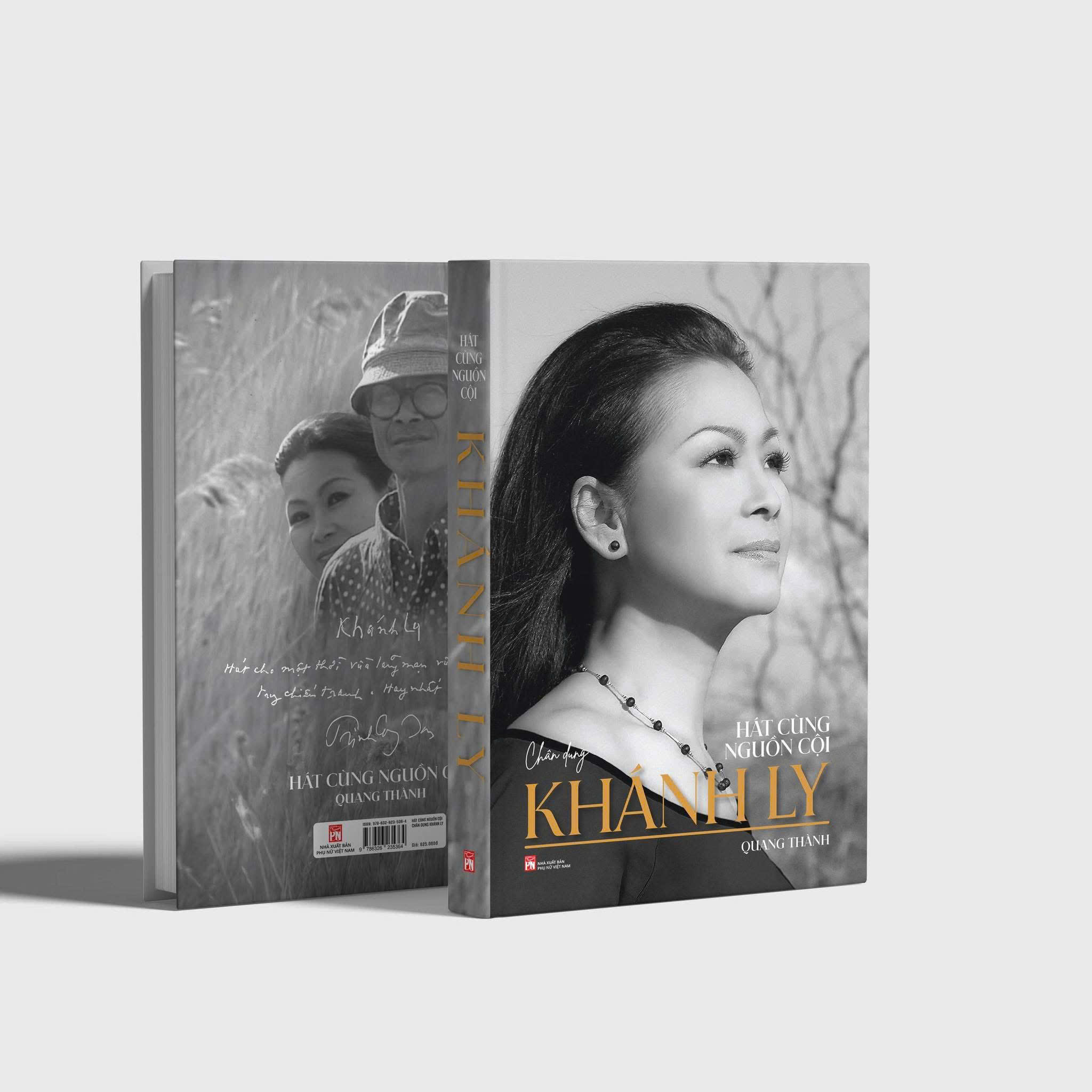
Among the many who have been touched by Khánh Ly’s voice, there is a young man who lost his sight in an accident and, in a moment of complete despair, happened to hear the line “Đừng tuyệt vọng, tôi ơi, đừng tuyệt vọng” (Don’t despair, dear I, don’t despair) – and felt, in those words, a profound understanding from a stranger who somehow knew his pain. He did not give up. He kept living. Ms. Trinh said warmly: “Isn’t that something – so many young people listen to Trịnh’s music.” I laughed and replied: “I listened to it all through my own young, foolish years. I think at that age, we carry so many questions about life that we haven’t yet found answers to – and Trịnh Công Sơn’s music holds so many layers of meaning to sit with.”
And really, at eighteen or twenty, what did any of us have if not time – endless, unhurried time to contemplate? Now, edging toward forty, that kind of spacious reflection has become a small luxury. Though perhaps the trade is fair: back then I contemplated endlessly and understood very little; now I understand a little more than I did… just a little (as one must admit when asking how anyone could ever fully understand the human condition ^.^).
Between me and that friend from the loft – the one I used to listen to Trịnh with – there was also something strange and wonderful that neither of us could ever quite name: we appeared for each other at precisely the right moments, exchanged a handshake or an unhurried embrace, kept each other’s secrets, and shared a few of our own. And yet, in all that time, love – romantic love – never once entered the room. So when Khánh Ly said, “I know that true friendship between a man and a woman is rare. But rare does not mean impossible. And what is rare is usually precious” – I believed her completely. Life holds these inexplicable, luminous bonds. As luminous as the lyric: “Mưa vẫn hay mưa cho đời biển động/ Làm sao em biết bia đá không đau/ Xin hãy cho mưa qua miền đất rộng/ Ngày sau sỏi đá cũng cần có nhau” (The rain still falls, life’s like a sea storm/ How do you remember traces of migrating birds/ Please let the rain pass over this region/ Let the wanderer forget he’s wandering).

I warmly invite you to read: “Singer Khánh Ly & Composer Trịnh Công Sơn – The Encounters of a Kindred Soul” – linked HERE.
With love,
Lê Ngọc (Nhà Có Hai Người)
If this letter resonates with you or brings you something meaningful, feel free to share or forward it to friends and loved ones.
All stories are available in Vietnamese. You can switch languages directly on our website.
You are also welcome to share your own stories or send feedback to help us improve the “Spice the Love” newsletter. Write to us at: imeo@nhacohainguoi.com


