A Holiday Within the Soul
When I was little, flipping through the pages of books made me realize that we could travel anywhere through imagination. As I grew older, I had the chance to wander with my own two feet, experiencing the world through every sense: hearing, seeing, smelling and touching each place I stepped into. Sometimes, reality mirrored my imagination. Sometimes, only a little. That contrast stirred even more curiosity within me and made me wish to keep roaming, both across inner landscapes and across the wide horizons of the physical world. Among the people I have met, some remain in one place yet their spirit drifts freely everywhere. Others seem to have far more opportunities to explore the world, yet their minds remain trapped in worries, burdens or unspoken pain.
I often think about Kafka from Haruki Murakami’s novel “Kafka on the Shore,” a boy who left home to search for his mother and sister, who had disappeared before he was old enough to remember them. In truth, he was running from a prophecy that he would one day kill his own father. Crow, the character representing his alter ego, planted in his mind the idea that “sometimes fate is like a small sandstorm that keeps changing direction.” That storm was nothing other than Kafka himself, something inside him that he endured until it began to swallow him whole. The only way through was to be strong. Yet perhaps he did not know what strength looked like, so he chose to run. And is that not any one of us, at certain moments in life? In the center of an inner storm, “there is no sun, no moon, no direction, no sense of time.” All that remains is disorientation.
On the opposite end of the spectrum is Hong Doo Shik, the male lead in the Netflix series “Hometown Cha Cha Cha,” who captured the hearts of many viewers. He is lively, well traveled and knowledgeable, yet after facing his own hardships, he chooses a life without ambition or competition. He moves to a quiet seaside village in Pohang, South Korea, and finds joy in simple things, helping villagers with everything from plumbing and carpentry to making wine, crafting candles and cooking. He reminds me of a petite friend of mine who once left the city’s bright lights to live in a small house in Cat Cat Village, Sapa. There, she learned indigo dyeing and beeswax painting from the H’mong people and created textiles and clothing that carried her own sense of beauty. She also produced essential oils from local ingredients like mắc khén, hạt dổi and wild pepper, while guiding local villagers to make products and build their own brands. To many, characters like him, and friends like her, may seem eccentric or carefree. But to me, they are the brave ones who step into the storm rather than flee from it. They know what is best for themselves. Their time living simply was both a remarkable journey and a holiday for the soul.
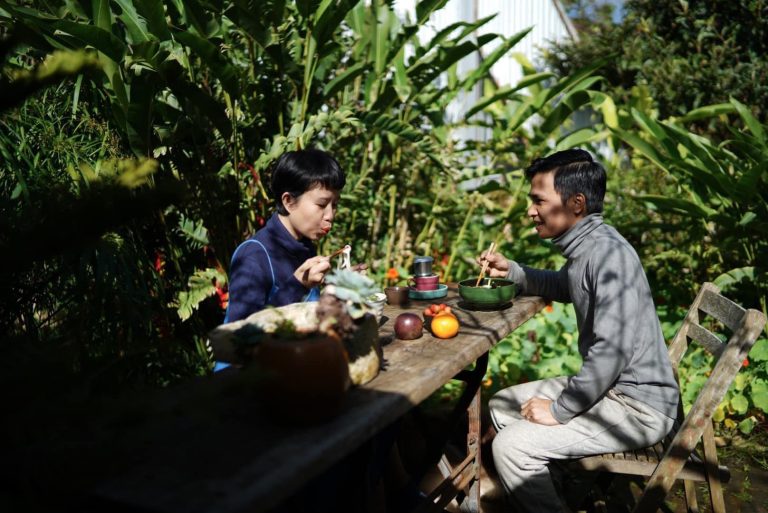
People often wonder why my husband and I seem able to live as if we do not worry about tomorrow. Of course, like anyone else, we have our concerns. Yet a free and easy spirit guides us through every milestone. Even when we return home after trips, that spirit comes home with us. Once, we chose a small riverside apartment along the Saigon River for a two-month staycation. I was born in Saigon, met my husband in Saigon, fell in love, married and built my life there, but this was the first time we became “tourists in Saigon.” Thanks to that spontaneous decision, we saw our beloved city from a new angle, learned to know it like travelers who cherish every detail, met new people and listened to new stories. These moments enriched my writing. Our legs were made for going far. Yet the spirit goes far beyond the body, does it not?
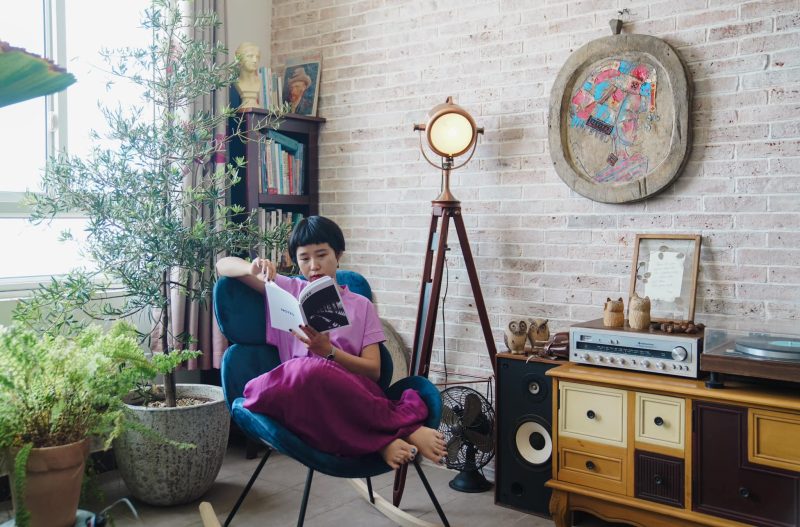
When we returned home for real, we turned our house into a place that held memories from every trip. A home is not merely a storage space or a shelter. Everyone deserves to feel joy and pleasure in shaping their own world. The beautiful homes found online or in magazines often show polished corners and immaculate lines that may feel distant from our reality. That is why home should be a place of familiarity, belonging and personal identity shaped from emotions, childhood memories and lived experiences. A meaningful home does not need to be filled with material things. I remember our old apartment when we first married, with only bare walls and a leaking ceiling during heavy rain. And yet we were so happy decorating that little world together. We had corners displaying small souvenirs collected on our travels, potted greenery to bring nature indoors and even our own vegetable and mushroom garden.
That home resembled no design template. It was messy, improvised and wonderfully ours. We had limited means, but with our hands and minds, we infused warmth into every corner. We climbed onto our tiny balcony for dinner while watching the rain, built a wooden loft bed just for fun, moved our laptops into the kitchen for a change of working space and often invited friends over to cook and sing. We even cooked Vietnamese meals for visiting foreign travelers, who adored the chaotic yet laughter-filled atmosphere.
Our second home is bigger and more polished, yet it still carries our identity. Every corner is shaped by the love we share. Because we decorate everything ourselves, you will still find half-finished spaces. But it is precisely that imperfection that reveals a living, breathing home. We cherish the moments when the house is in disarray because something awaits renewal. We still find ways to play together, like bringing the camping stove into the living room, cooking in the garden, climbing onto the roof to watch fireworks or creating a tiny library corner for reading. Decorating a home is also a journey of self-discovery. The differences between our two homes reflect the inner growth of both of us.
Our way of life has blended gently together like a warm cup of milk coffee. Whether we are traveling far away, listening to the breath of the mountains, watching squirrels leap from branch to branch, or sitting quietly in our cherished city home, we choose to detach from the noise and enjoy a holiday within the soul, a place untouched by disturbance. In German, there is the word “geborgenheit,” meaning “the safest and most peaceful place,” often tied to childhood memory. For me, that place is anywhere he is. Our understanding narrows only when we confine our minds. When our inner world expands, we welcome newness wherever we go. Whether we travel the world or hide deep in the forest no longer matters when two people from two worlds set aside their prejudices, open their hearts, step gently into each other’s worlds and build every possible thing together.
The answer to the question “Are we really the ones who travel, or is it the spirit that leads the journey?” becomes clearer. Our legs may walk, our eyes may take in countless scenes, our ears may hear even the softest sounds, our nose may scent memories, and our hands may touch the future. But if our spirit is not free and serene enough to let emotions flow, we remain trapped in the sandstorm. There is always “a parallel world to our own, and to some extent, we can step into it and return safely if we are careful. But beyond a certain point, we become lost in a labyrinth with no way out.”
This is an essay I wrote for Travellive Magazine, March 2023 issue. It suits my mood perfectly today, for I have just returned home from a long journey.