Chef Koshika Kiyoshi: “A beautiful flower is one that has been carefully nurtured”
Wandering into a small alley near the beginning of Nguyễn Văn Tráng Street in District 1, Ho Chi Minh City, you may come across a wooden house with a modest sign reading “Curry Shika”—the place where Koshika Kiyoshi (fondly known as Shika) works and lives with his family. When asked what makes a Japanese man like him fall in love with Vietnam, he laughs and answers, “Cheap beer, lots of fresh herbs, excellent coffee. And life feels easy here.” What continues to surprise him about his wife and many Vietnamese people is their ability not to worry too much about the past or the future. From that, he learned a simple truth: “No matter how the past was or how the future may be, just be happy right now.”
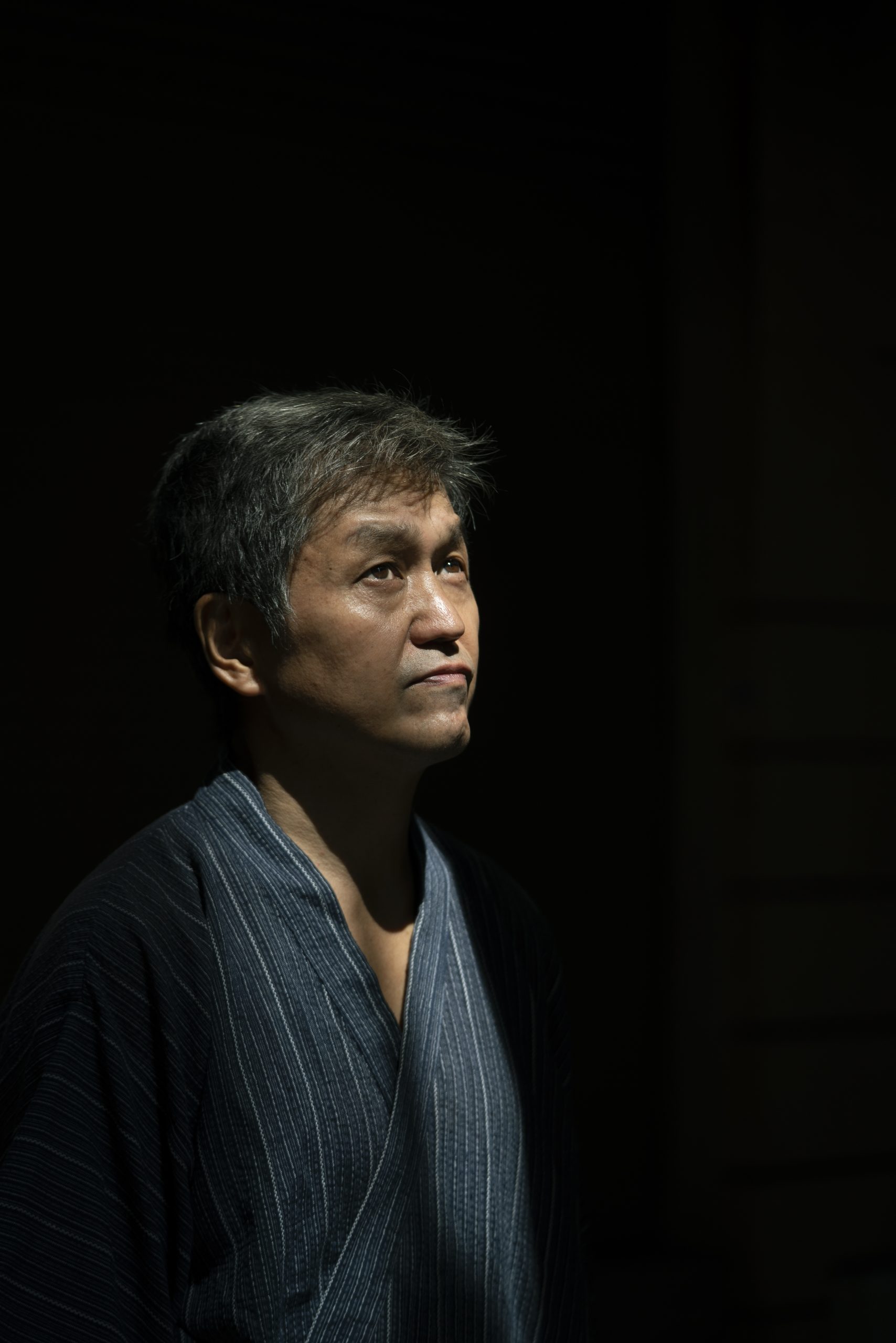
Curry Shika
Did you know that curry has long been considered a “national dish” in Japan? According to historical records, curry was brought to Japan by the British from India during the Meiji era. At first, it was merely an exotic foreign dish. By 1954, however, the introduction of curry roux—a thick sauce base made from fat, flour, and curry spices—made it possible to cook curry quickly and easily. From then on, curry gradually became a regular part of daily Japanese meals.
Shika first came to Vietnam in 1992 and immediately fell in love with the beautiful “Pearl of the Far East.” He returned every year thereafter, with the idea of eventually settling down here. In 2010, after observing that Vietnamese people preferred eating curry with noodles or bread rather than rice, and realizing that there was no restaurant in Vietnam dedicated solely to Japanese curry, Shika and his wife decided to go “against the current.” Curry Shika was born.
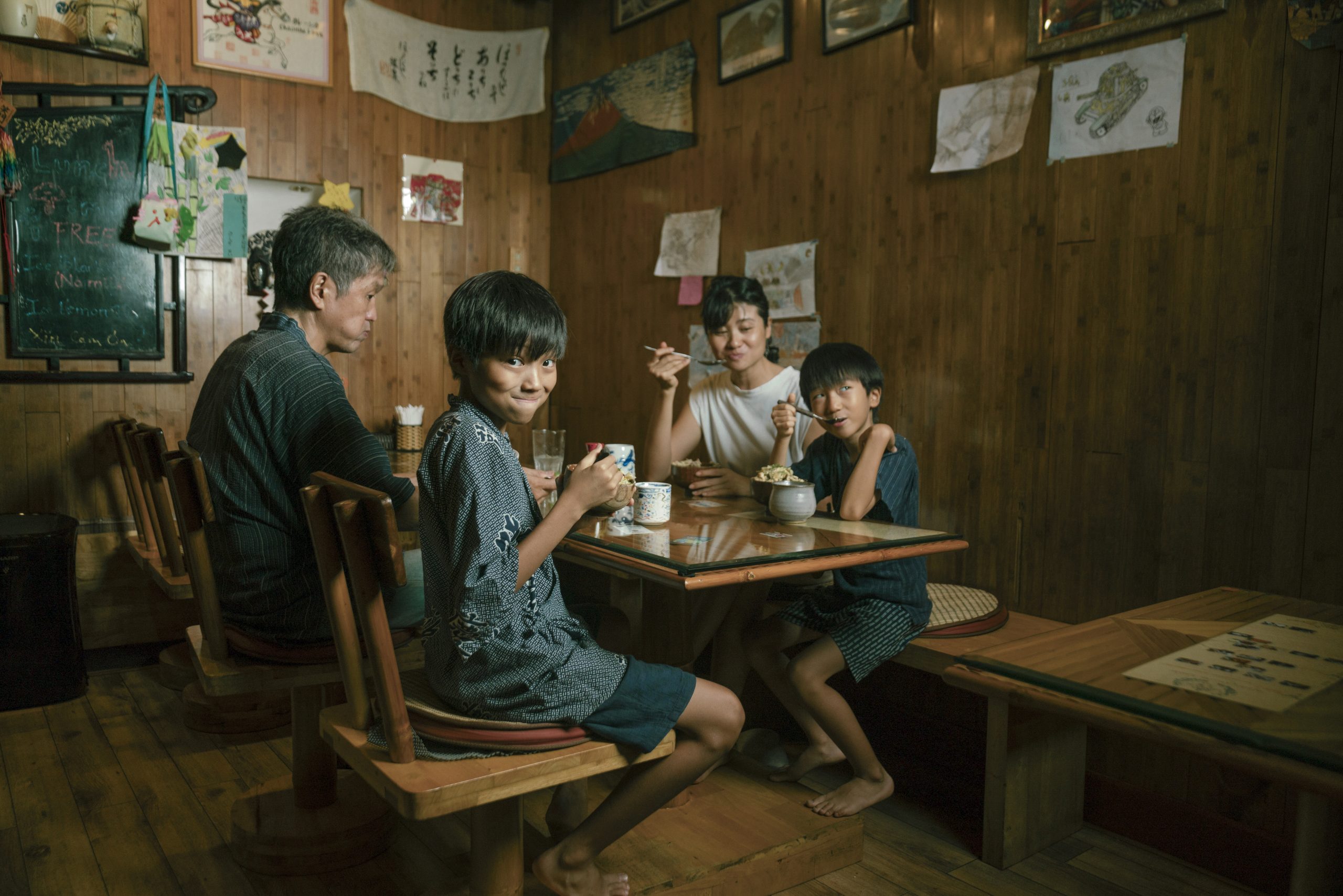
The small, cozy eatery is also the home of their family of four. The ground floor welcomes guests with a few sets of wooden and bamboo tables and chairs. The shop takes its name from Shika’s family name, which means “little deer,” so you will find many deer illustrations on the fabric wall hangings. The walls are also filled with family mementos, either collected over time or given by customers. The second floor houses a compact kitchen, simply arranged with a prep area and a gas stove for cooking. The third floor is the family’s private living space.
The curries at Curry Shika are served with rice and topped with cheese, offering a deep, robust flavor. If you are accustomed to sweet curries, you may find them challenging at first. But if you have a refined palate, you will sense the cook’s devotion in each layer of taste—sweet, salty, rich, sour, and spicy—harmoniously blended through fresh ingredients and a slow cooking process that lasts many hours.

The Everyday Life of Koshika Kiyoshi
Instead of using industrially packaged curry cubes, Shika sources high-quality ingredients for each spice—pepper, chili, ginger, turmeric—so he can make his own curry powder by hand. He prepares this powder only twice a year, storing it in jars to be used gradually.
A pot of curry is cooked continuously for three days and three nights. Fresh vegetables are simmered until soft, then strained out, leaving only the broth. Curry powder is added, and the mixture is simmered further until it thickens. Whenever a batch is nearly sold out, he prepares a new one. After each new batch, the concentrated curry base left at the bottom of the pot is always saved and added to the next batch.

Meat is purchased fresh every morning, marinated, cooked, and added to the curry only when serving customers. To secure trustworthy ingredients, Shika follows a strict routine. He buys meat from the same vendor for several consecutive days; if even one day the quality falls short, he immediately switches to another butcher. The rest of his day is spent mostly in the kitchen—cooking for guests or researching new methods to make his dishes even better.
His workday may seem ordinary, yet it reveals a deep love—not only for food and his small restaurant, but for everything in life. Someone who does not truly love life could never be so devoted to every small task, nor tirelessly repeat a near-identical routine day after day.
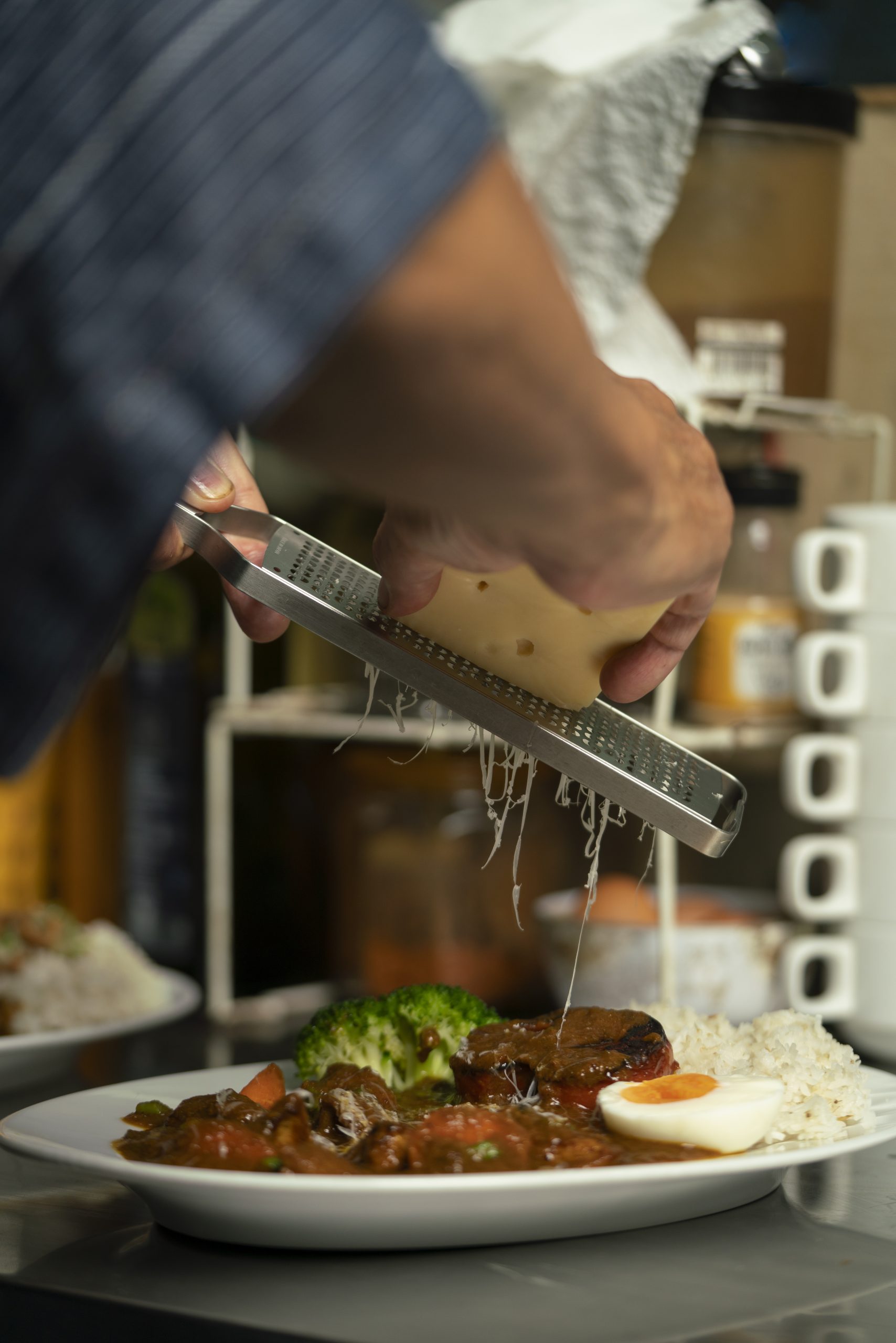
The Joy of Labor
One might assume that Shika must be a professionally trained chef to possess such patience in the kitchen. But his wife, Phương Yên, shares otherwise: “He used to be an engineer. It was only when we decided to open the restaurant that he started learning how to cook. Even now, he really only cooks curry well. Desserts are made by me and the kitchen assistants.”
Before opening the curry shop, the couple returned to Japan and sampled curries at various recommended restaurants. What followed was a long stretch of days eating curry to the point of exhaustion. “But Shika is incredibly persistent,” Yên said. “Every day he cooked, the two of us ate together and analyzed what wasn’t right, adjusting the recipe each time.” Throughout the experimentation—and even after opening to customers—Shika never stopped reading books and reference materials. When criticized by customers, he did not feel discouraged; instead, he continued to study and improve.
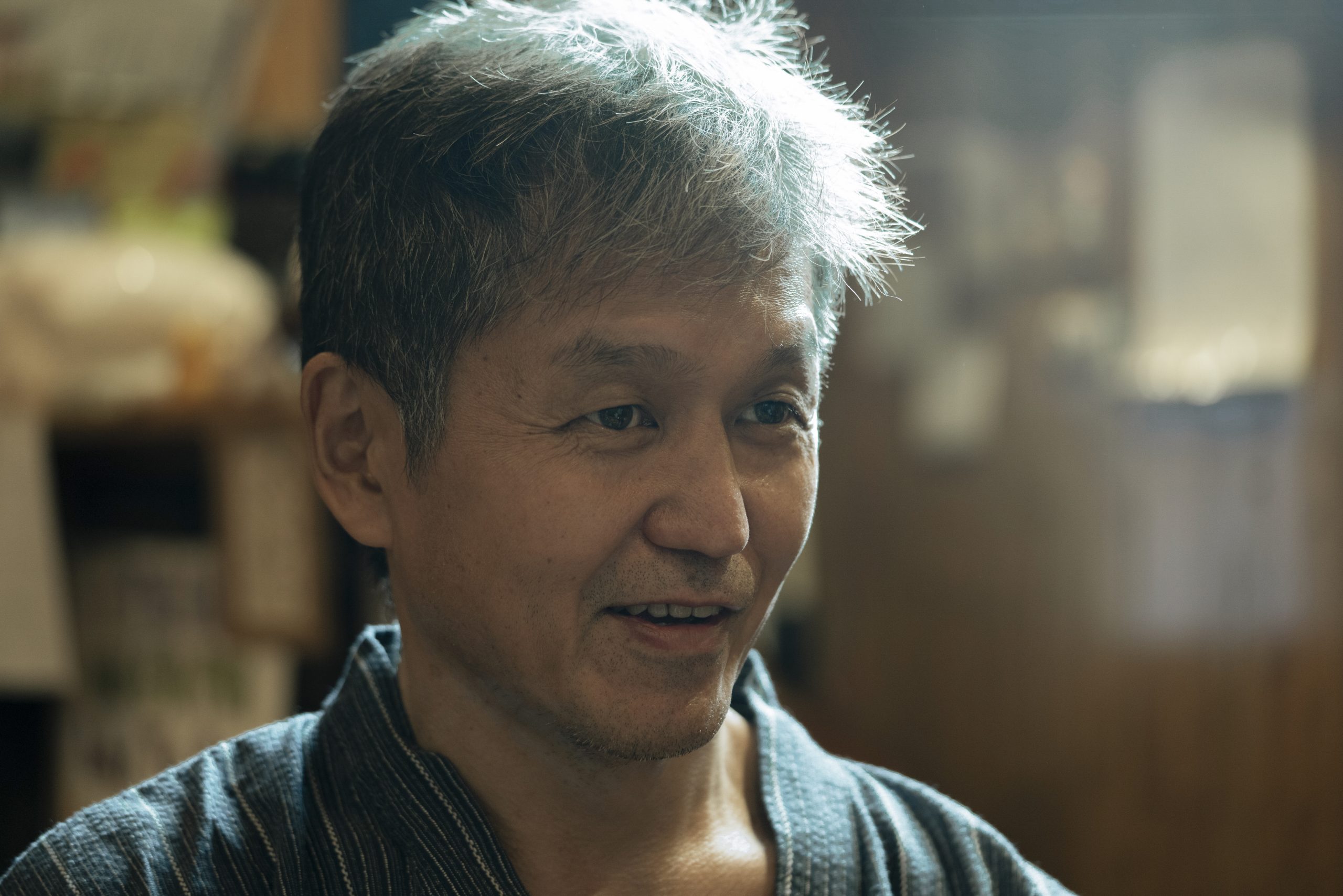
In the early years, Curry Shika was not widely known because Shika did not actively promote it. Most customers came through word of mouth. He did not want to welcome guests who simply followed trends. There is a Japanese proverb: “Even sitting on a stone, one must wait three years.” He constantly reminds himself that no matter how hard or painful things become, he must endure patiently until happiness arrives.
Yên recalls that during the most difficult period, she suggested renting out the restaurant space, which would have brought in more stable income. Shika asked her one question that made it impossible not to support his choice: “After we have money, what will we do then?” For him, the greatest joy in life is simply being able to work. Indeed, another Japanese saying goes: “A beautiful flower is one that has been carefully nurtured.”
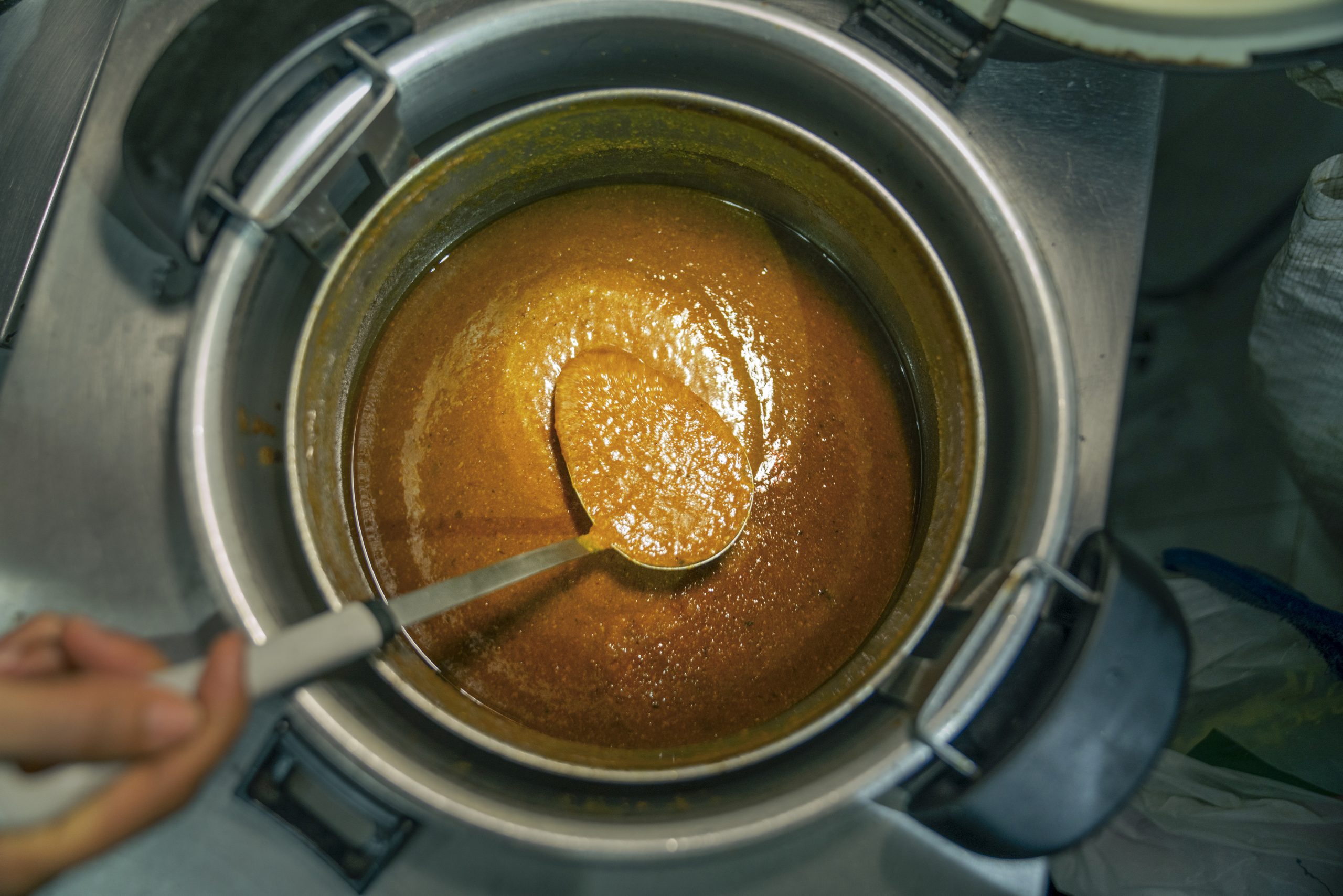
Does this remind you of the Japanese philosophy of ikigai? We often encounter such images of Japanese people in books, films, and everyday life. It might be Hirayama, the protagonist of the film Perfect Days, who cleans public toilets in Tokyo with the devotion of an artist. It could be Mikage, who finds happiness and peace in the kitchen in Banana Yoshimoto’s novel Kitchen. It could be sushi master Ono Jiro in Jiro Dreams of Sushi, endlessly refining his craft in a ten-seat restaurant; or artisan Kenji Tanaka, who left everything behind to live at the foot of Mount Yatsugatake, dedicating his life to indigo dyeing; or Soukichi Nagae, the ninth-generation head of the Nagae pottery family, who wakes each day with a single purpose—to recreate the long-lost yohen tenmoku glaze.
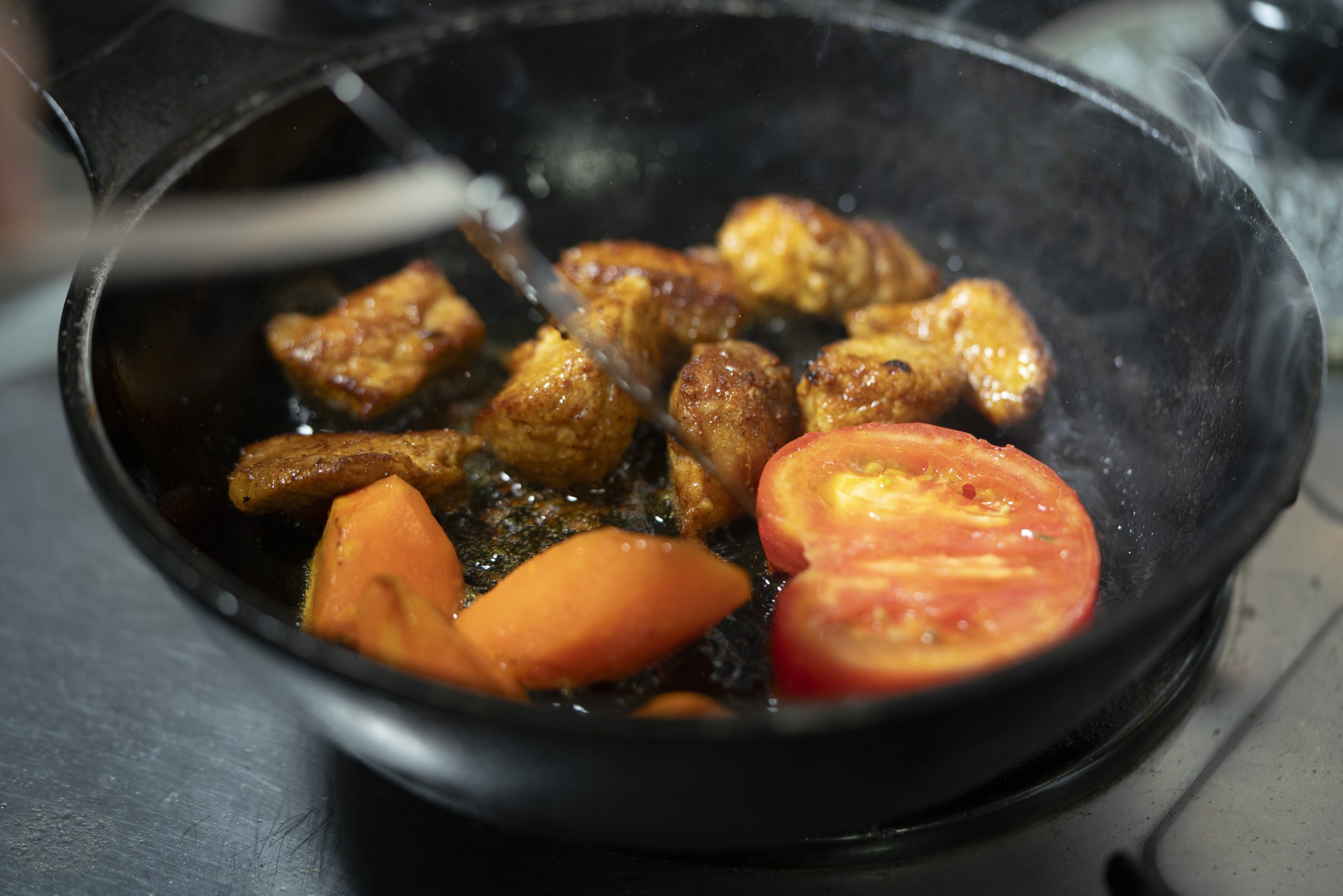
“Thanks to my former career as an engineer, which gave me many opportunities to travel and meet people from different countries, I realized how unique Japanese people are,” Shika shared. “Yet most Japanese don’t feel they are special at all. They work passionately simply because that is what they want to do. They find meaning in life through labor.”
Family – Intersecting Straight Lines
A door from the main kitchen leads into the storage area. There, Shika has placed his work desk beside a bookshelf so he can study whenever he is not busy cooking for customers. His reading spans many subjects—culture, history, geography, and cuisine. Late at night, after closing the shop and spending time with the children, he often sits alone at this desk, drinking sake and looking at family photos. Each time Yên witnesses this scene filled with quiet love, she feels deeply moved. She recalls that she once wanted to learn Japanese because she was fascinated by the image of a samurai standing beneath the blazing sun in an old book on her family’s shelf. In her words, “Everything about Shika—his thoughts and actions, in life and in marriage—is straightforward and direct to the core, giving me an immense sense of security.”

When speaking of the samurai spirit, one might think of beautiful virtues: Gi—justice, Jin—compassion, Yu—courage, Rei—respect, Makoto—sincerity, Meiyo—honor, and Chu-gi—devotion. For the Japanese warrior, the life of a flower is short, yet it has two moments of great beauty: when it blooms under the spring sun, and when it drifts away on the wind. Samurai likened their own lives to such flowers, viewing death as an honor, a beauty akin to falling cherry blossom petals.
The couple named their two sons Koshika Sei, meaning “the sincere little deer,” and Koshika Shia, meaning “the Asian little deer.” The boys often read and play together quietly. During family meals, they also connect through silence, as Japanese culture holds that only in stillness can one fully savor the aroma and taste of each grain of rice, each piece of meat, each stalk of vegetable—and thereby express gratitude to the cook and to all those who made the meal possible.
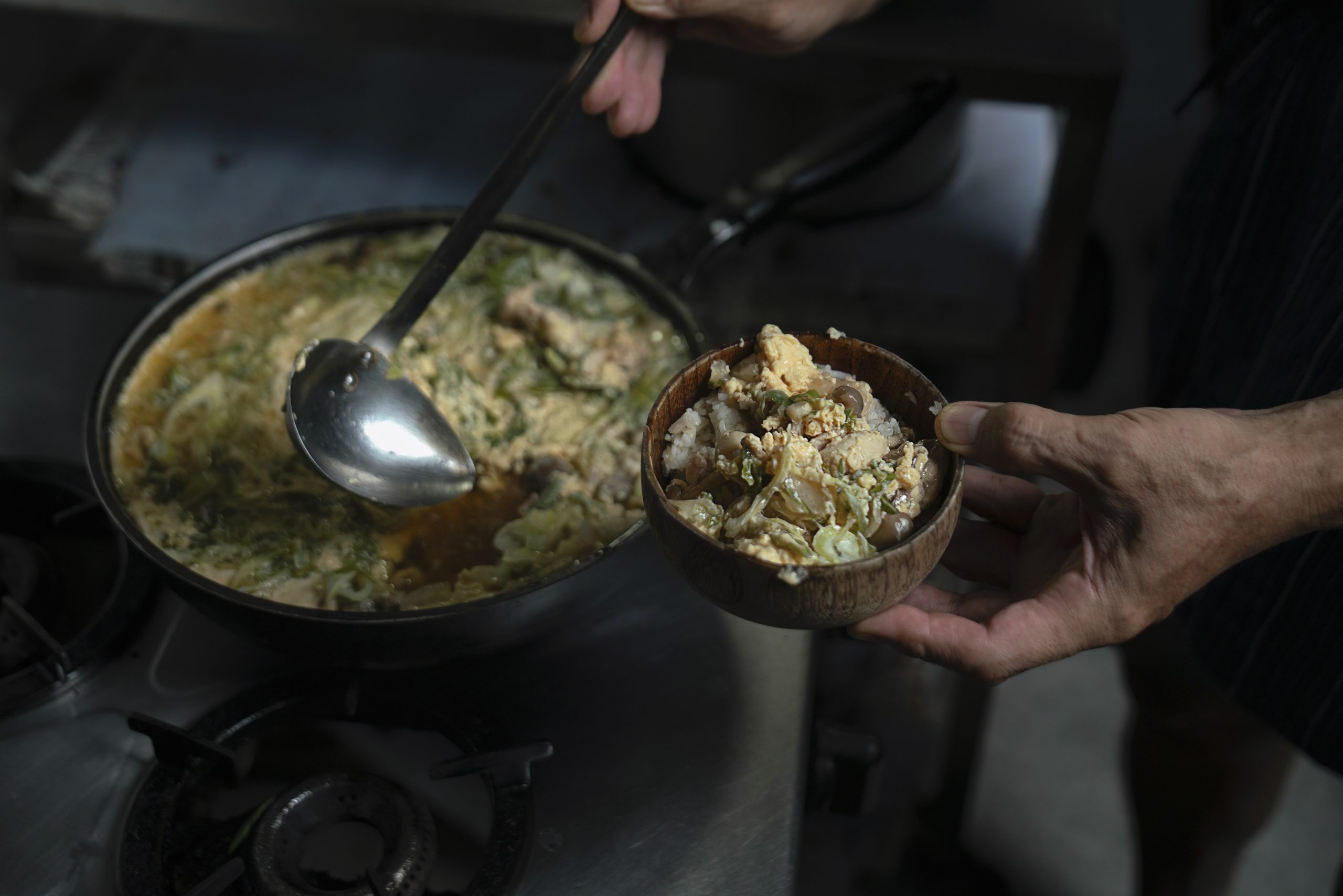
Modern Japanese life maintains clear boundaries in personal space, yet preserves the beauty of family traditions—visiting temples together, paying respects to ancestors, viewing cherry blossoms. They cherish small moments and connect with one another quietly yet deeply. On days off, Shika enjoys cooking simple dishes for his family, such as oyakodon—chicken and egg over rice. Cooking for family feels entirely different from cooking for customers; it is more relaxed. Whether the food turns out well or not does not matter—what matters is sharing the meal together. The family also bonds through frequent trips. Even during financially tight times, they happily board a bus and wander around the city. Where they go is not important, as long as that time belongs entirely to them.
Here, we see a family in which each member is a straight line. Each lives with sincerity, integrity, and devotion—to themselves, to one another, and to life.

(*) Ikigai: a sense of gentle fulfillment, life’s meaning, a reason to live.
Originally published in Đẹp Magazine, Issue No. 286
Words and images: Nhà Có Hai Người