
Thế Huy: Finding the New Within Familiar Loops
Sitting inside the recital space of opera singer Thế Huy, you are gently guided to listen to classical opera through the lens of literature. The most wonderful thing about classical music lies in its relationship with time and repetition: the music is sung exactly as it was written, with no improvisation, no personal embellishment; even the accompaniment cannot change a single note. And yet, these works have been performed by hundreds of thousands of opera singers, retaining their beauty across generations. Thế Huy believes that within this endless loop, an opera singer can discover something new inside their own soul. That is why an opera singer must work like a researcher. Each day, Huy finds happiness in immersing himself in the worlds of music and books.

Bringing Opera Closer to the General Audience
Not growing up in a family with an artistic background, were there moments when Thế Huy first felt a deep emotional pull toward music?
As a child, I joined the church choir. The moment I saw someone playing the piano in the church orchestra, I dreamed of learning the instrument myself. Because my family’s finances did not allow it, that boy back then drew piano keys on paper and practiced his first notes in imagination. Seeing how absorbed I was in this invisible instrument, my parents eventually saved up to buy me an organ. Once I became proficient, I began accompanying solo singers at church, gradually growing curious about singing and training myself purely out of passion.
Even when I applied to the conservatory, I didn’t really know what they taught there—I only thought it must be a place where people learned to sing well. Thanks to my first vocal coach, who carefully guided me in changing my singing technique and choosing repertoire suited to my voice, I passed the entrance exam on my first attempt. That was when I found my way to opera, and I’ve stayed with it ever since.
Choosing to bring opera closer to the general public sounds far from easy. Why did you decide to take the harder path?
Each admissions cycle, the conservatory selects only 20 to 30 students. Those who pass are talented and self-aware enough to know what they want, yet many eventually abandon this path due to limited performance opportunities and unstable income. That was a major reason why I decided to pursue personal projects to bring opera closer to audiences.
People often ask: Who are you? Why should I come and listen to you sing? I think that alongside the difficulties we see, there are also bright spots. Organizing small-scale classical music performances in Vietnam is still relatively new. There aren’t many players yet, which means there’s room to move freely.
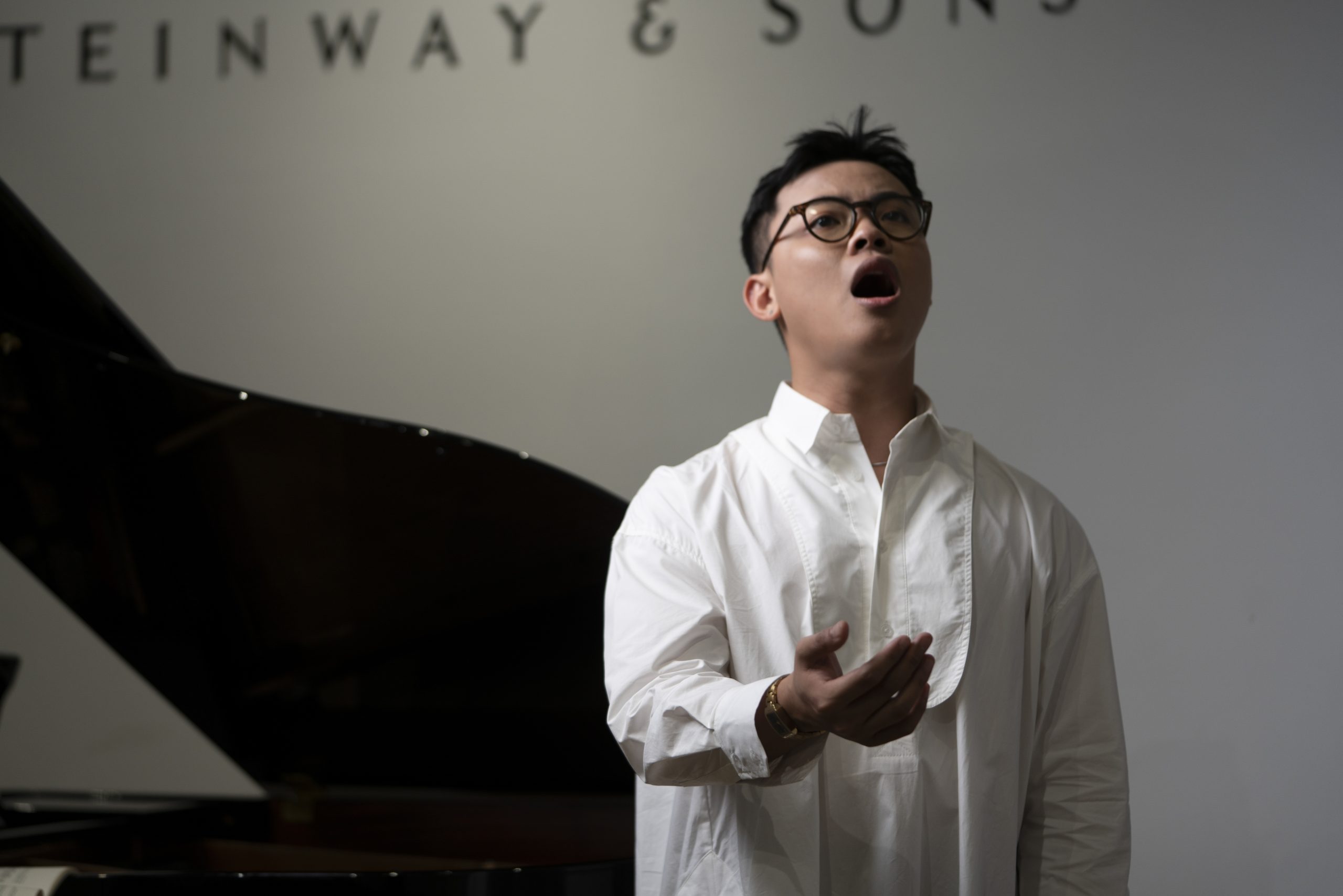
Personal projects can take many forms. Where do you find inspiration for organizing recitals?
I draw inspiration from international artists. Each year, opera singers typically perform a few roles in productions at major theaters. Outside of rehearsals and staged performances, they often organize recitals—solo performances. Unlike what many people imagine, recitals follow certain academic frameworks: within a single program, the artist focuses on one theme, one composer, or one language, such as French music or 18th-century repertoire.
Beyond performing, the artist must help the audience understand the academic aspects behind the music. Not only in Vietnam, but even in developed countries, classical music can feel inaccessible to general audiences. The music itself is beautiful, but understanding is what allows true appreciation. The artist’s task in a recital is to study deeply and then share that understanding with the audience. I followed this model and have now organized close to ten recitals. I hope to inspire others on a similar path to confidently create performances with their own signature, free from the pressure of previous generations.
What were the biggest challenges when you first started organizing recitals?
Financial sustainability, first and foremost. Then there were countless organizational details to learn—how to arrange the space, how many seats to set up, how far the audience should be from the performer to fully experience the recital, since opera recitals are usually performed with just a piano.
Another significant challenge was audience taste. In my earliest recitals, I sang only classical music—Mozart, for example—and very few people came. That made me realize I needed to balance what audiences already knew with gently leading them into deeper territory. I began organizing recitals featuring music by Trịnh Công Sơn, Phạm Duy, and Văn Cao—songs people already loved. Audience response was very positive, but then came another question: “So does Thế Huy no longer sing classical music?” Learning from that, in recent performances I’ve structured programs with Vietnamese songs in the first half, followed by classical repertoire. Thankfully, I’ve received a lot of support from people who see my persistence.

Living Each Day Inside a Dream
Could you talk a bit about the recital Nằm mơ một giấc Trang Chu (roughly translate: Dreaming Zhuangzi’s Dream) and the idea of combining opera with classical literature? Was this something you had been nurturing for a long time?
Today we have contemporary artists and visual artists. In the past, painters created paintings and sold them; now they create exhibitions and sell experiences. The artwork still has intrinsic value, but the overall experience becomes central.
I studied classical singing, and the works I perform are existing materials—much like a painter working with paint and canvas. If I only invite people to come listen to me sing, it feels somewhat limited. I kept asking myself how to persuade people to open their hearts to opera. I learned from contemporary artists by engaging with adjacent art forms, allowing them to cross-pollinate. I love literature and poetry; I even specialized in literature in high school. That’s how the idea of using words emerged. Nằm mơ một giấc Trang Chu is the most literature-infused performance I’ve ever created.

Why did you choose the story of Zhuangzi’s Butterfly Dream? Did music lead you to literature, or the other way around?
From music to literature, then back to music—threading everything together.
The idea of life as a dream has been explored many times. I love this story, so I chose it as the theme before selecting the repertoire. The key word here is “dream.” Dreaming can mean sleep and dreams, aspirations, or things that seem unreal in life.
Nằm mơ một giấc Trang Chu is about dreaming Zhuangzi’s dream: dreaming that one is a butterfly, so immersed in the dream that one no longer knows they are dreaming. The recital experience mirrors that feeling—audiences hear many unfamiliar pieces yet find them beautiful and strange, much like a dream.
I used verses from The Tale of Kiều or poems by Bà Huyện Thanh Quan as narrative bridges. If an audience only hears explanations about classical music, they may grow tired by the third piece. But Nguyễn Du’s poetry is familiar to everyone—it’s Vietnamese. That approach felt both accessible and deeply artistic.
The song texts were also translated into poetic Vietnamese. The audience experiences a synthesis of music, poetry, and performance space. At that point, the artist’s role is no longer just about what you sing, but how people remember you. After previous performances, audiences might remember that Thế Huy sings classical music, yet not recall a single piece or composer. With this new approach, memory becomes clearer. Someone might say, “Ah, that piece was about a man leaving a woman—just like a verse from The Tale of Kiều.”

Does placing traditional opera in non-traditional spaces reflect something of your inner world?
In truth, every classical artist loves opera houses. Performing beside a Steinway concert grand piano on a grand stage—those iconic images of world-renowned pianists—has always been my dream.
But in non-traditional spaces—rooms without raised stages, seating around 100 people—we can hear subtle vibrations, and I cherish those moments. In a recital, the artist is the center. The audience must listen from beginning to end. The space needs to sustain connection so everyone can focus on the smallest details: a lullaby sung barely above silence, a smile that isn’t quite a smile, a sound that feels like singing without voice.
One day, I will perform in grand theaters. But I also love gathering small, delicate resonances along the way.

Perfect Days
Beyond passion, what keeps you steadfast on this path?
I love self-learning. Today, AI can sing and compose. Disciplines are converging and evolving together. If I only focus on singing, one day I’ll become outdated. No one will need me anymore.
Every night, I spend long hours reading across many fields—even subjects I don’t enjoy—to accumulate knowledge: history, literature, science, evolutionary biology, metaphysics, and more. Sometimes I’m not even absorbed in what I’m reading; my thoughts wander into imagination. That’s when new ideas appear.
Through my work, I discover new things both outside and within myself. We never fully understand who we are; each new experience reveals another facet. My artistic journey is simply a way to keep moving forward.
Why does classical music, written so long ago, still resonate today? Something remains there—something we don’t yet fully understand. I keep going out of curiosity, feeling that so much still awaits discovery, in art and in myself.
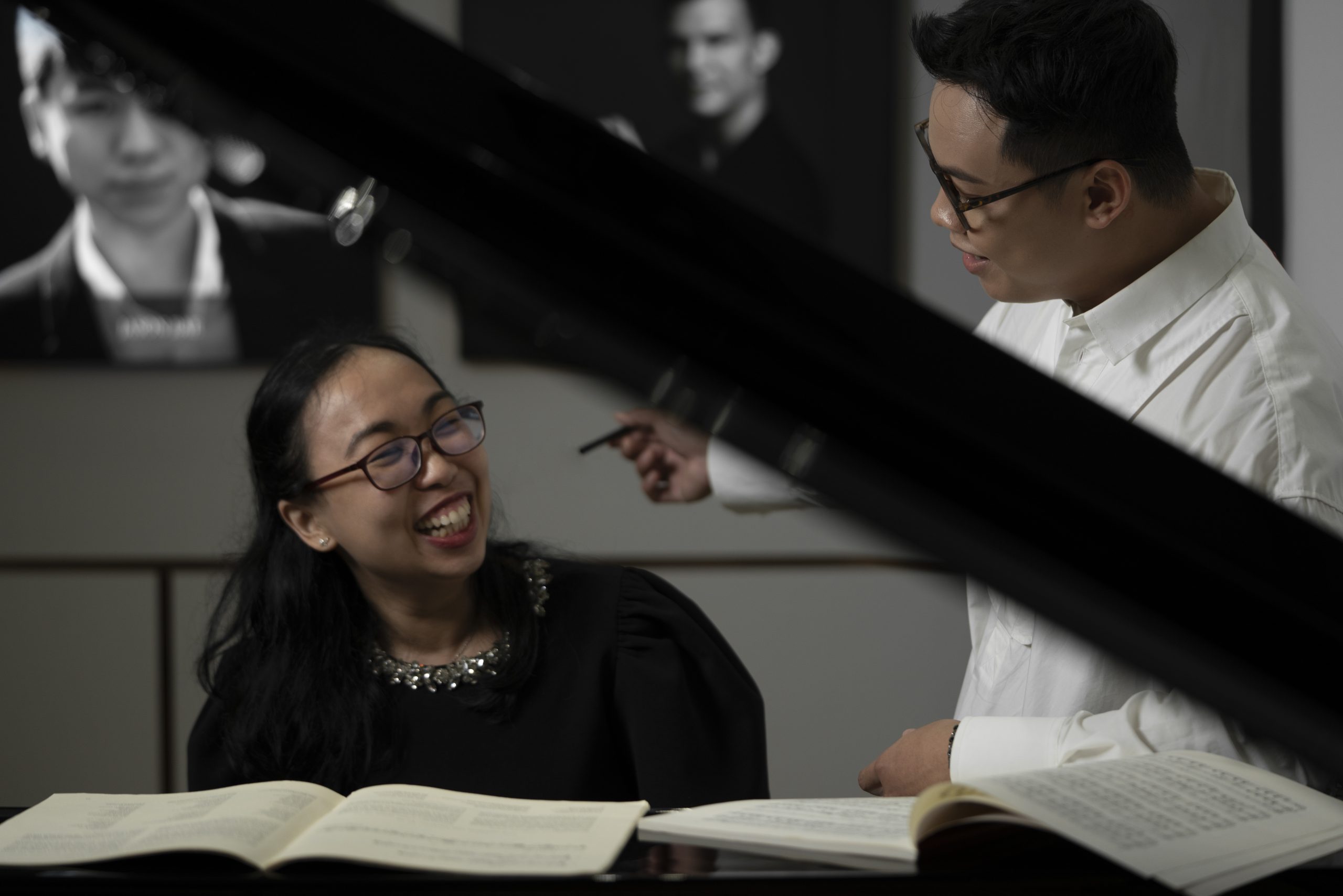
How have books and music supported one another—and supported you?
The art I pursue is academic in nature. Music is never just music—it is history, culture, stories, lives. Learning a piece means understanding its historical context, its society, its artistic movements. Renaissance music relates to Renaissance architecture; Romanticism and Impressionism exist in both painting and music. An opera singer must function like a researcher so that performance gains depth. When you understand a piece from multiple perspectives, your singing changes entirely.
Life experience shapes musical perception. Beyond books, where else do you find material?
I love traveling, wandering through alleys, quietly observing people. Art requires abundant resources, and I know I still lack many.
The beauty of classical music is that it remains unchanged across centuries. So what changes, when so many opera singers exist? What changes is what happens inside us.

Do you truly believe that human life exists only within a butterfly’s dream?
In Nguyễn Duy Cần’s translation: “Zhuangzi dreamed he was a butterfly, content in being one, unaware of being Zhuangzi. Upon waking, he was Zhuangzi again—yet he could not tell whether Zhuangzi had dreamed of being a butterfly, or the butterfly had dreamed of being Zhuangzi.”
Have you heard of parallel universe theory? I believe every decision we make happens somewhere—just… in different universes.
What does a perfect day look like for you?
A perfect day is one where I wake up able to use what I read, studied, and explored the night before. I sleep very little; evenings are spent wandering through words. When I discover something beautiful, I share it with my musical companions. A workday feels empty if I carry nothing new, spiritually, into it.
Originally published in Đẹp Magazine, Issue No. 286
Photography: Ngọc Ánh
Location: Steinway & Sons Showroom


