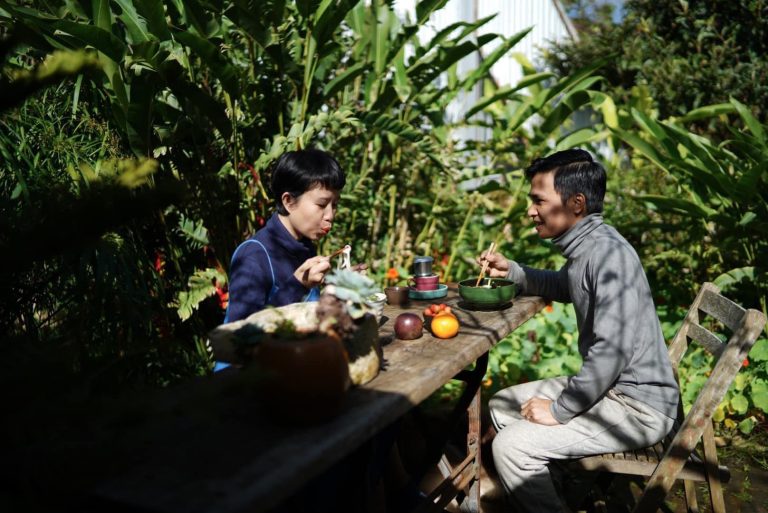
Hoàng Lê Giang and the Wordless Dialogues
Hoàng Lê Giang is easy to talk to, with a friendly smile and a gentle energy. However, to have a truly deep conversation with him, one probably needs to be in nature, where silence itself can speak. As he shares, language is sometimes the limit of humanity. When people are still enough to listen, to converse with nature and reflect, ideas begin to arise naturally. In that wordless dialogue, there is no misunderstanding, no distance, only the pure connection between humans and the surrounding world.

Middleworld – The Blurred Boundary
After a period of quiet, the name Hoàng Lê Giang resurfaced. Not because of a journey across the Arctic or the Himalayas as before, but this time through his first solo photography exhibition: Bardo – Middleworld of Transformation.
According to Tibetan Buddhist philosophy, “bardo” is the interval between death and rebirth. For Giang, “bardo” does not exist in a metaphysical realm but in lands in flux, melting, neither old nor new – where nature breathes, moves, and is eroded by time. It is the trung giới between humans and the surrounding world. And it is also where the artist does not go to conquer, but to listen.
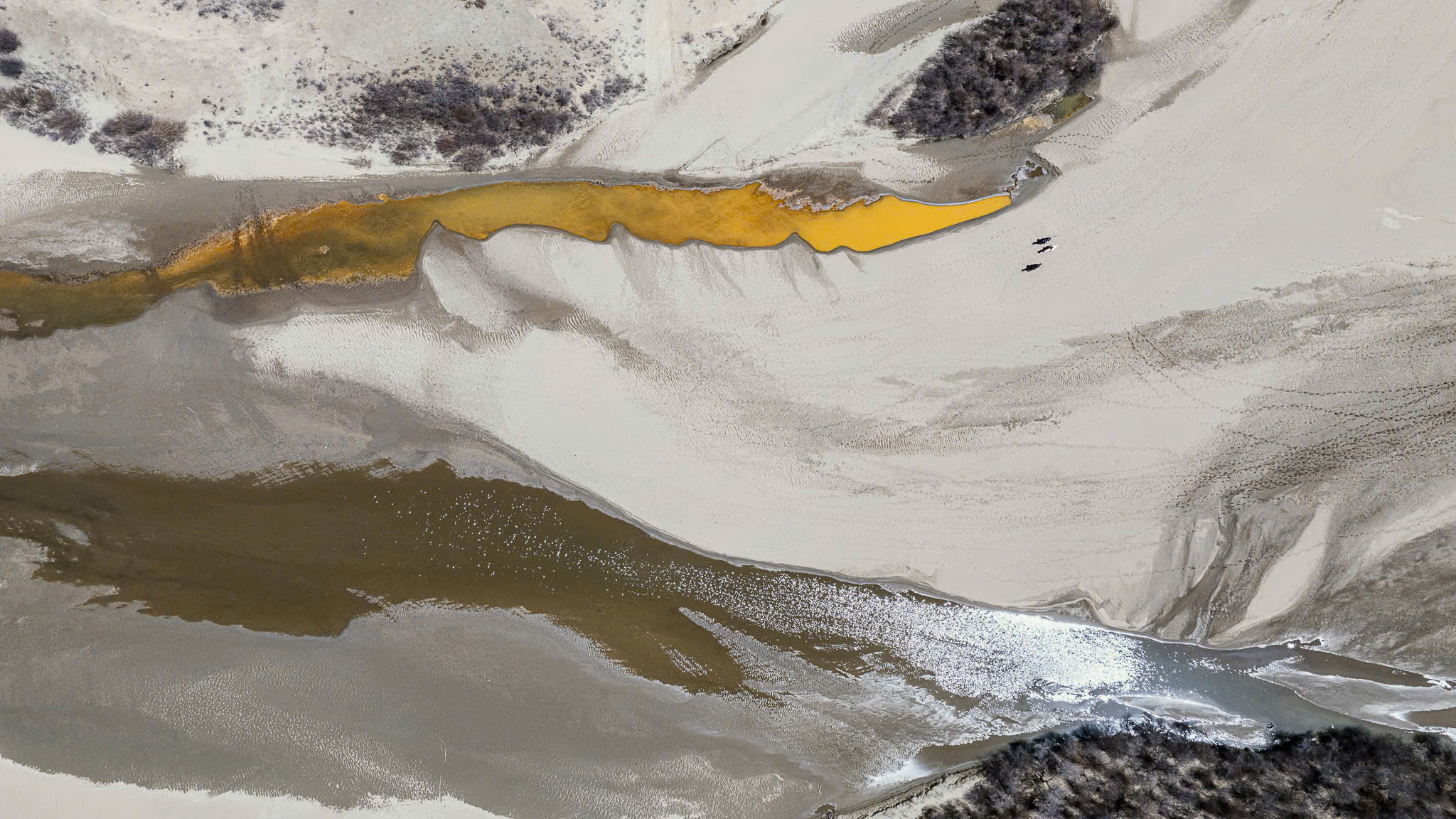
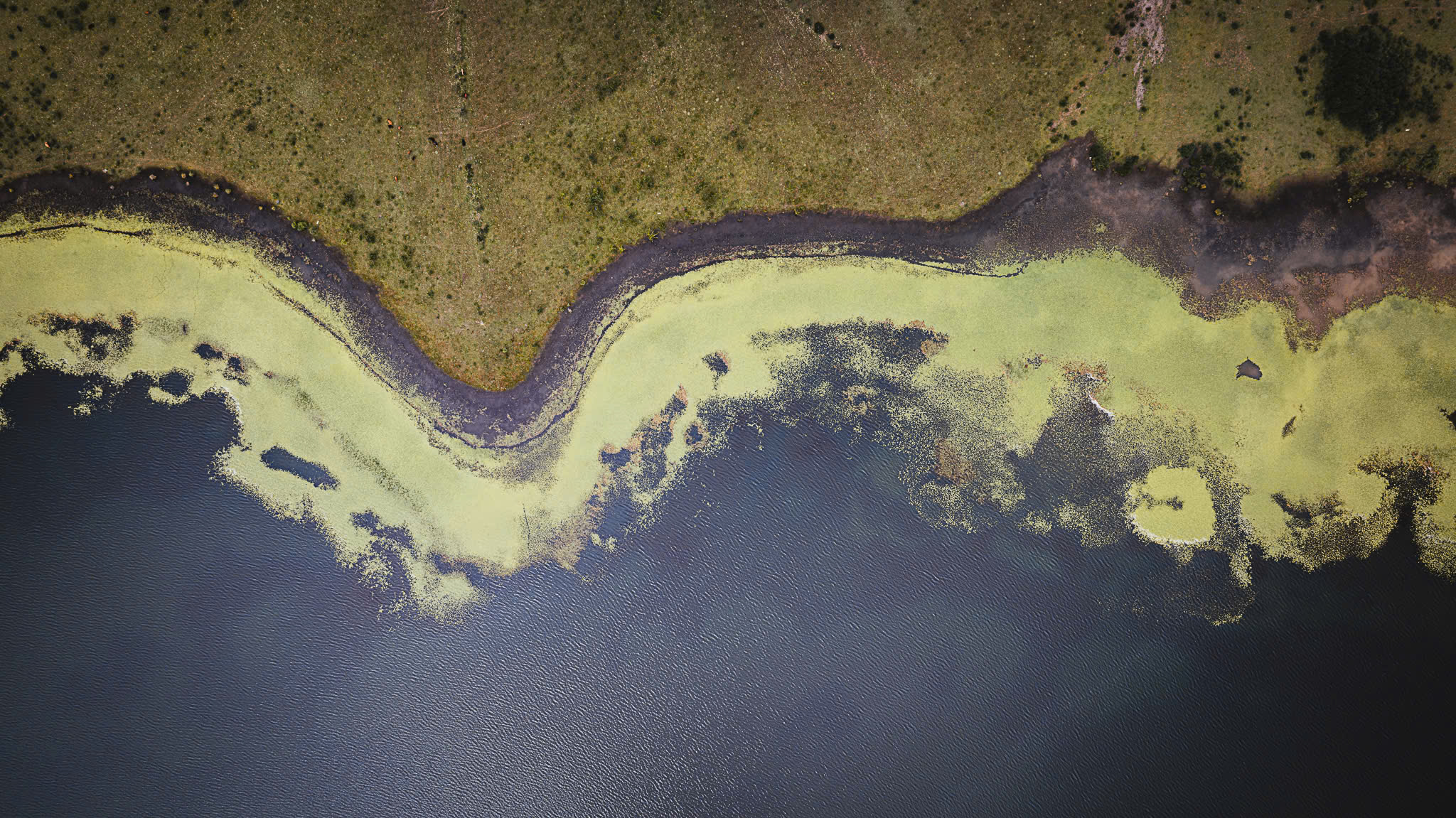
Interestingly, Hoàng Lê Giang’s photographs truly exist in the Middleworld: not entirely photography, nor entirely painting, but a convergence of two worlds, between reality and perception, between the moment and the idea. Specifically, the photographic art Giang pursues is not merely capturing images. When applying for the exhibition license, although it was a photography exhibition, it was approved as a painting exhibition. His photos contain many layers of ideas, creating the feeling of gazing at abstract paintings. There is no main character, no caption. Only space and light serve as a void for viewers to step in and feel.
“Abstract” and “silent” were the first words that came to mind when I first viewed Giang’s work. I lingered for a long time in front of a photograph taken in Norway, near Tromsø – the largest city in northern Norway, located within the Arctic Circle. There is a magical light there in March and April. When the sun is just a thin line on the horizon, every shadow stretches long, lively, and poetic. The thin trees on the edge resemble diligent weavers, and their shadows look like delicate blue threads weaving a soft carpet. The river also participates, revealing a unique composition of layers: dark rocks, translucent and cloudy ice. All combine to create a mystical world, veiled by a curtain of blue shadows.

That scene contained ruggedness, solitude, yet warmth and vitality. I wondered how many times he had returned and how he conversed with nature to capture that vitality. Giang shared that he does not photograph to preserve beauty, but to record truth, fragile, radiant, and silent moments. Before pressing the shutter, he stands still, observes, breathes deeply, completely silent. Not hunting for images. Just waiting. If the moment comes, he captures it. Once. No second chance.
It sounds simple, but in vast nature, how does one know where to anchor oneself? Giang says that when revisiting a location, he listens to what the scene wants to tell him. It is his wordless dialogue, through presence alone.
Photography differs from painting in that it records reality. A beautiful scene emerges, and the photographer captures it among thousands of fleeting moments. Painting is where the artist embeds the self into the work. What appears on canvas is not necessarily reality, but emotion, ideas, the artist’s perception. Giang’s captured moments create a blurred boundary: both photo and painting, answering questions for him while offering viewers space to dialogue with themselves.
Questions That Keep Us Grounded
Middleworld is where ideas are not separated by fixed boundaries. Talking with Hoàng Lê Giang, I noticed the natural convergence of his roles: photographer, travel blogger, tourism service provider. They coexist, developing side by side, inseparable.
His journey of exploring the world began with questions: “Who am I?”, “Why am I here?”, “What is the meaning of what happens to me?” After more than a decade traveling through wild and unfamiliar lands, he has found clear answers. Yet now, the greatest question is how to balance the roles of an artist and a regular human being who must survive in this world.
Once, through a drone’s view, Giang stood before a scene filled with light and color. In that moment, he recognized an order he had long sought. His life had been a series of disconnected colors, seemingly unrelated. But this work suggested that from that viewpoint, the bands of life and passion (emerald green), of waiting (earth brown), and of culmination after hardship (salt white) do not conflict. They exist side by side, blending, each layer contributing to a harmonious whole.
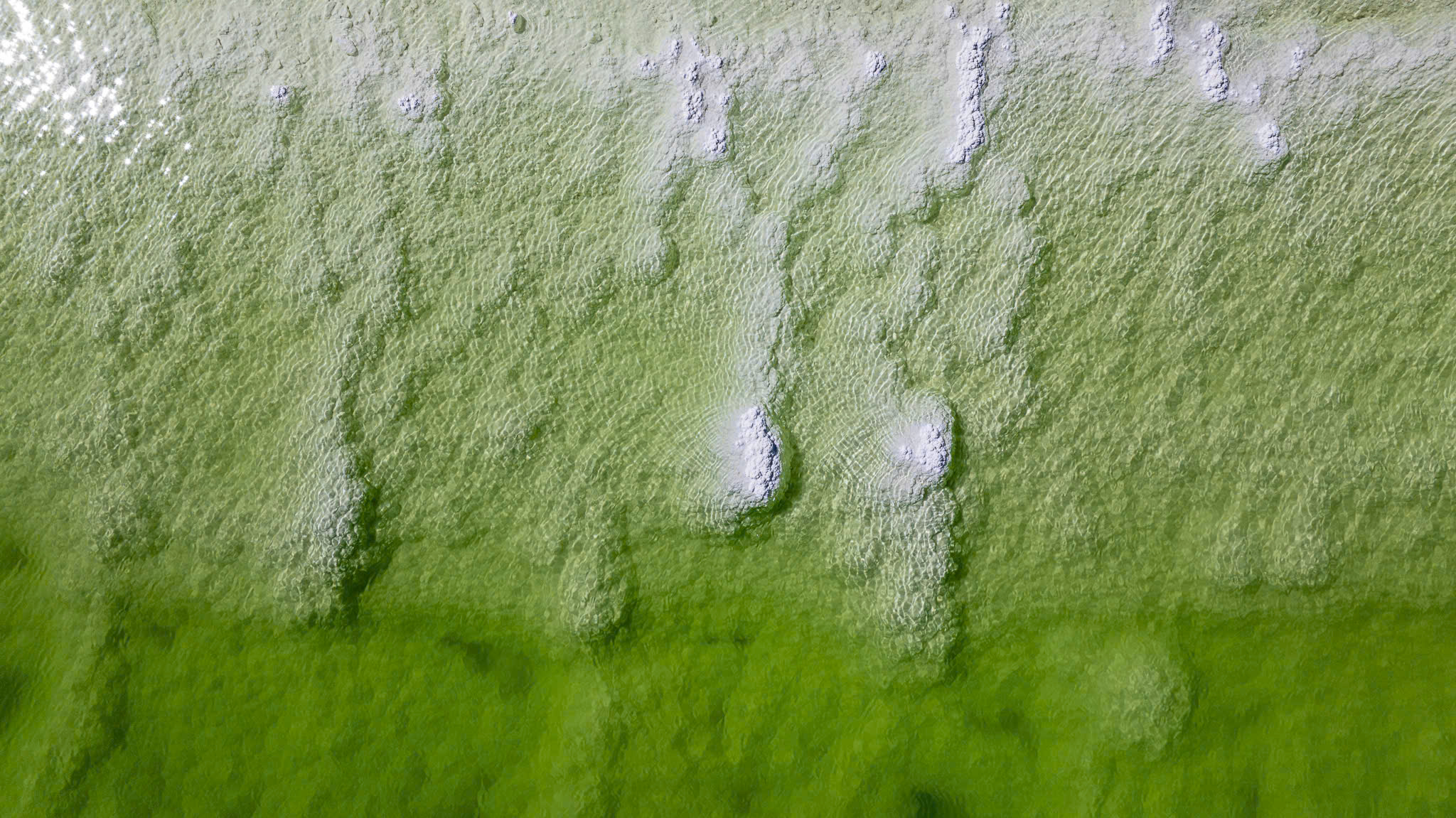
For Giang, it is all perhaps a process of random arrangement. The artist’s task is to continue steadfastly. When looking back, the composition of life becomes clear, each difficulty or turning point naturally holding its own meaning. I greatly appreciate Giang’s reflections. He shares that they often occur alongside photographing. They are not only about the universe, nature, and humanity, but also evoke small, intimate moments he calls the “origin of life”: first school days, tentative steps in a career, a work of art, a love.
A question that follows Hoàng Lê Giang on every journey is: “What was my original purpose?” Looking back, he has played many roles, made mistakes, sometimes caught in the grind of survival just to keep pursuing what he loves, forgetting his starting reason. Each pause reminds him: “I want to do photography, I want to pursue photography.” That conviction sustains him on his chosen path.
Whether as a travel blogger or running a tourism company, Giang remains faithful to the answer he has found. Thus, when sharing travel experiences, he seldom talks about beautiful locations, delicious food, or travel tips, instead using his experiences to clarify why he chose that place. He believes that if people understand his reasons, they can also discover their own answers for why they wish to visit a particular place.
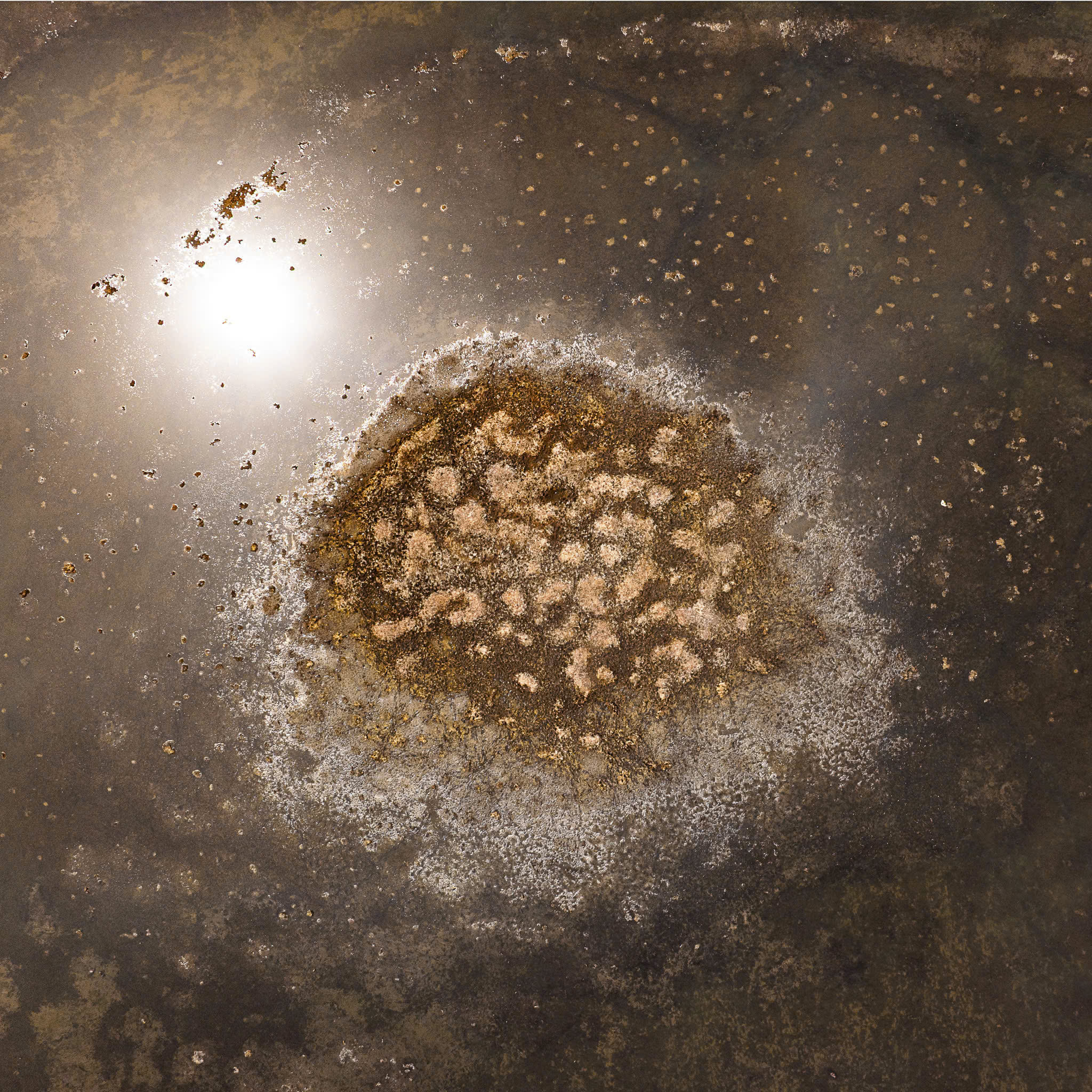
Another photograph left a deep impression: at the border between desert and salt lake in Iran. Amid chaotic swirls and unfinished beginnings, a single unbroken line appears. Giang calls it the uninterrupted path. The wheel mark on the ground reminds that every successful journey is the result of a silent dialogue between willpower and grace. Not one or the other, but both coexisting, supporting, and opening a way forward.
Questions, curiosity about the world and oneself, and answers to those questions serve as a compass, keeping Hoàng Lê Giang grounded, not drifting between choices, not lost among desires. “Walking on the ground” is not only the act of a traveler exploring distant lands, feeling each layer of earth and breath of nature. It is also a metaphor for living realistically, taking concrete steps to realize dreams. Whether on Arctic snow or in the Iranian desert, questions and answers carry a clear awareness of life’s journey. Hoàng Lê Giang lives fully with passion, recklessness, balance, and the blurred lines that life demands one experience.
Hoàng Lê Giang, born in 1988, graduated in Business Administration in Sweden, and works in advertising and technology. Known as an adventurous explorer, he has traveled to the Arctic, participated in ultra marathons and triathlons in harsh lands. Behind the conqueror image lies a deep passion for photography, guiding him on every journey.
The exhibition is a collaboration between Hoàng Lê Giang and Noirfoto, carefully selected from hundreds of thousands of images captured over 15 years worldwide. It is Giang’s first solo exhibition and the first special award-winning work of the Noirfotocontest. Bardo also marks the first time a photography exhibition was held at Lotus Gallery, one of Ho Chi Minh City’s oldest and most prestigious art spaces, a fitting venue for a meaningful debut.
Originally published in Travellive Magazine
Photography: Hoàng Lê Giang