Viết Trực Giác – Tay viết tâm an: Listening to Yourself, One Word at a Time
Writers often think they lack ideas, when what they really lack is sharpness of the senses.
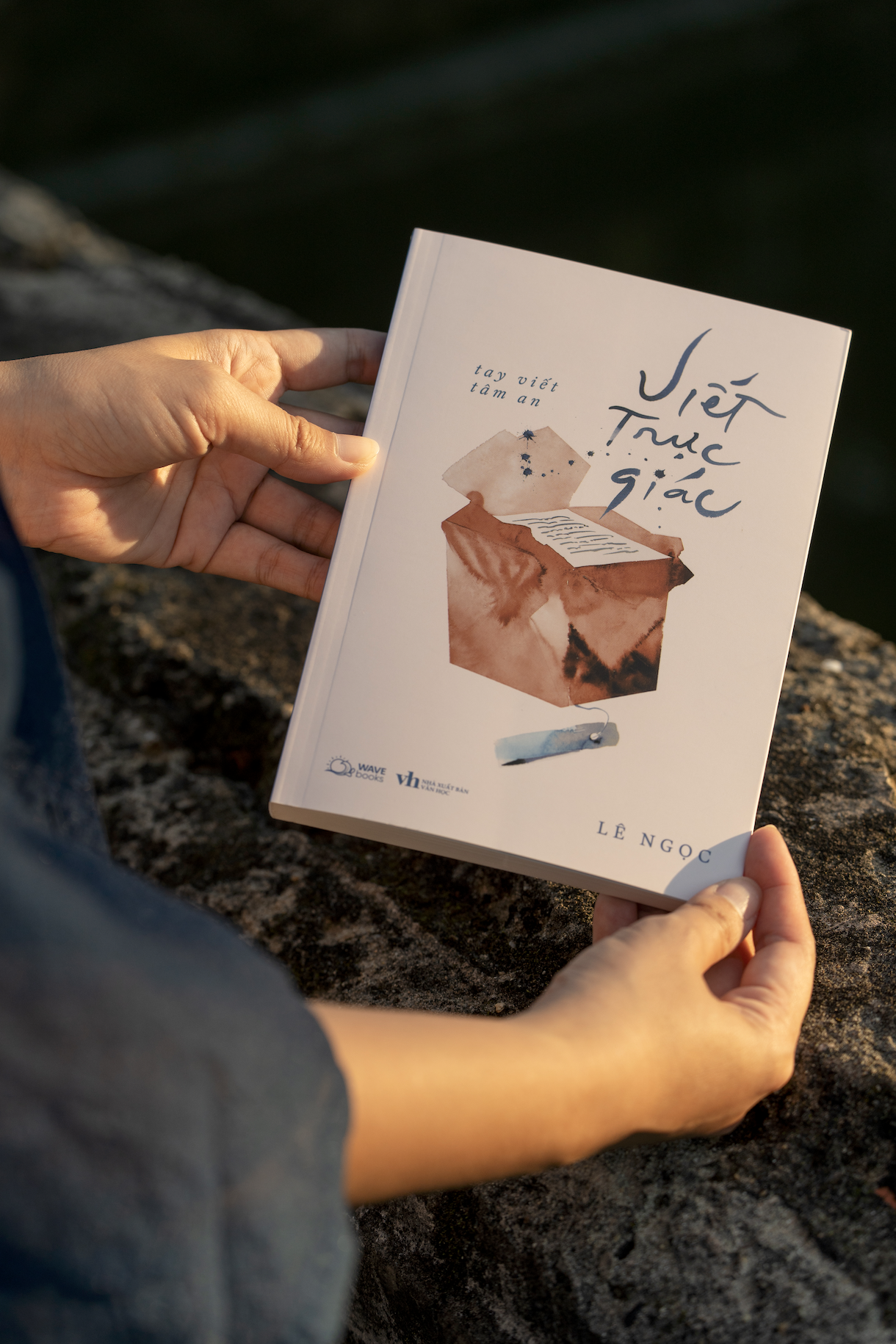
“Viết trực giác – Tay viết tâm an” (Intuitive Writing – Writing Hands, Peaceful Mind) is the title of my book, released just a few days ago. I spent three years writing it. Those years let me look deeply into my own writing journey – from a teenage contributor to a youth magazine who adored writing yet never chose a literary career, to a writer working across many fields, with more than ten years of carrying my pen through poetry, prose, journalism and brand storytelling.
The brief from the publisher was to distil the book into around 45,000 words, so it would be just the right thickness: easy to read, easy to understand, easy to carry around and easy to put into practice. So many “easys” turned out to be hard. I wrote a first draft, felt the path I had taken wasn’t quite right, and decided to rebuild the book’s structure and start again from scratch. At the end of the book, I wrote: “I will never ‘graduate’ from this craft of writing, and this book will never be the best or most complete version. But I am content with it. My intuition tells me this is enough for one stretch of the road. Enough for someone to begin learning to write, or for a professional writer hoping to rediscover inspiration.”
You could say that is the very spirit of writing by intuition.
Put simply, intuitive writing means using your intuition to write. In traditional writing, the writer builds a structure in advance, then applies techniques and chooses words to say what they intend. In intuitive writing, inspiration can come from anywhere, at any moment, and the writer simply receives it calmly and writes it down. At first, that was all I knew about my own way of writing, so I kept digging to understand exactly how I use intuition when I write.
After years of practising intuitive writing, I came to realise this: our material comes from experiencing life through the senses. The senses are the “gateway” through which the world enters us. Writers often think they lack ideas, when what they really lack is sharpness of the senses. Once the senses are awakened, every experience becomes material: a sound can open a flashback, a scent can lead you back to a corner of memory, a touch can bring a whole story to life, a quality of light can become a beautiful passage. Deepening our ability to perceive through the senses helps us see what others overlook, hear what others don’t notice, and feel the deeper layers that others only skim. And it is precisely those deeper layers that make each page original, honest and full of weight. So when we train ourselves to perceive with all our senses, we expand not only our experience of life but also the range of our creativity. Ideas no longer arrive by chance; they appear as naturally as breathing. Writing is no longer an effort; it becomes a flow. That is when a writer reaches the state of “writing hands, peaceful mind”.
I spoke of the “capacity” to perceive. A capacity, not a “skill”. When we first begin building a habit, we usually have to focus on each small step and keep reminding ourselves. At that stage it is a skill, formed through practice and conscious effort. But over time, once it becomes familiar, every action turns natural, needing no thought or strain, and that skill gradually transforms into a capacity. Only then can we perceive freely and gently, anytime and anywhere, and carry what we perceive into words.
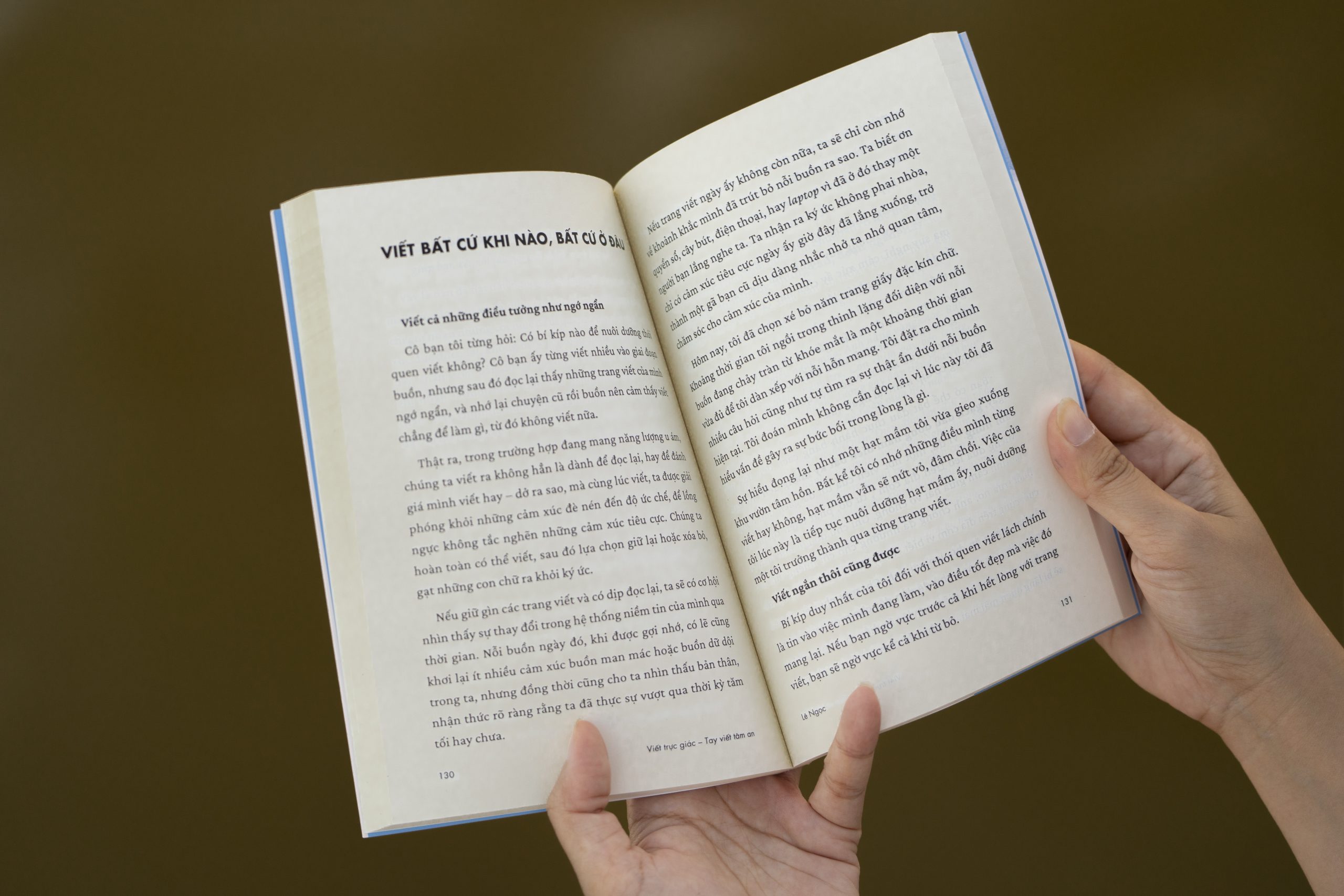
The book has three chapters:
Chapter 1 – Intuition That Heals explores what intuition and intuitive writing are, why you and I turn to writing, and the true meaning that words bring to each of us.
Chapter 2 – Writing Hands, Peaceful Mind is an invitation to slow down with me, to breathe, and to connect deeply with body, heart and mind – to understand how the body and mind hold us up, and to learn to respect them; in other words, to respect yourself as a way of building a writer’s core self-belief.
Chapter 3 – Practising Intuitive Writing guides you deep into practice: sharpening sensory perception, loosening up and connecting with your emotions, building the habit of writing anytime and anywhere, and exploring methods for crafting a good piece. Each section includes an introduction, concrete examples and small exercises to help you get familiar with intuitive writing, step by step.
And sharpening sensory perception is the heart of it all.
Why do I devote a full third of the book to connecting with emotions and deepening our ability to perceive life’s beauty, rather than focusing only on methods to improve your writing?
Because I want to show you that writing has opened my inner world wider. I believe writing will open your inner world too. Opening the inner world also means expanding the heart’s capacity – becoming more compassionate, loving this life more, and sensing beauty in many dimensions – and from there, finding more joy in recording that beauty and carrying it further in your own words.
While I’m here, I’d also like to congratulate you if writing is a calling you cannot refuse, or if you are just beginning your love affair with words. I believe that love will keep growing, because once a writer begins, there is no such thing as becoming “the best writer” and then stopping. Writing is a path on which we know for certain we can always grow. As the writer Tô Hoài once noted in his writing handbook Sổ tay viết văn: “One must always believe that the work we keep dreaming of, the one we are still preparing, is the best.”
Thank you for reading this far. Once again, I’d like to share with you the joy of holding my new book in my hands. Perhaps calling this kind of joy small or great isn’t quite right. For an author, writing a book asks me to spend more time nurturing ideas and living inside the book’s atmosphere, so that joy both spreads gently outward, enough to brighten the world it touches, and seeps into every corner of the soul, quietly growing little by little.
I hope these thoughts carry within them a sense of kinship with fellow readers and writers.