Photographer Ngọc Trần
For many years devoted to photography, Ngọc Trần has been passionate about preserving moments of everyday cultural life. She is also well loved as the author of three books on food and cuisine, and regularly hosts cooking classes for foreigners in the warm, welcoming space of her own home. Every time I meet her, I feel a sense of joy radiating outward—sparked by her bright smile and an abundant energy, like early morning sunlight dancing through a garden.
A Kitchen Without Limits
The townhouse where she lives is tucked away in a small alley near Bà Chiểu Market. With a spacious courtyard and lush greenery, the house feels quietly secluded from its surroundings. Yet, being located near a bustling market, it also seems infused with a certain liveliness, wrapped in the familiar sounds of everyday life.
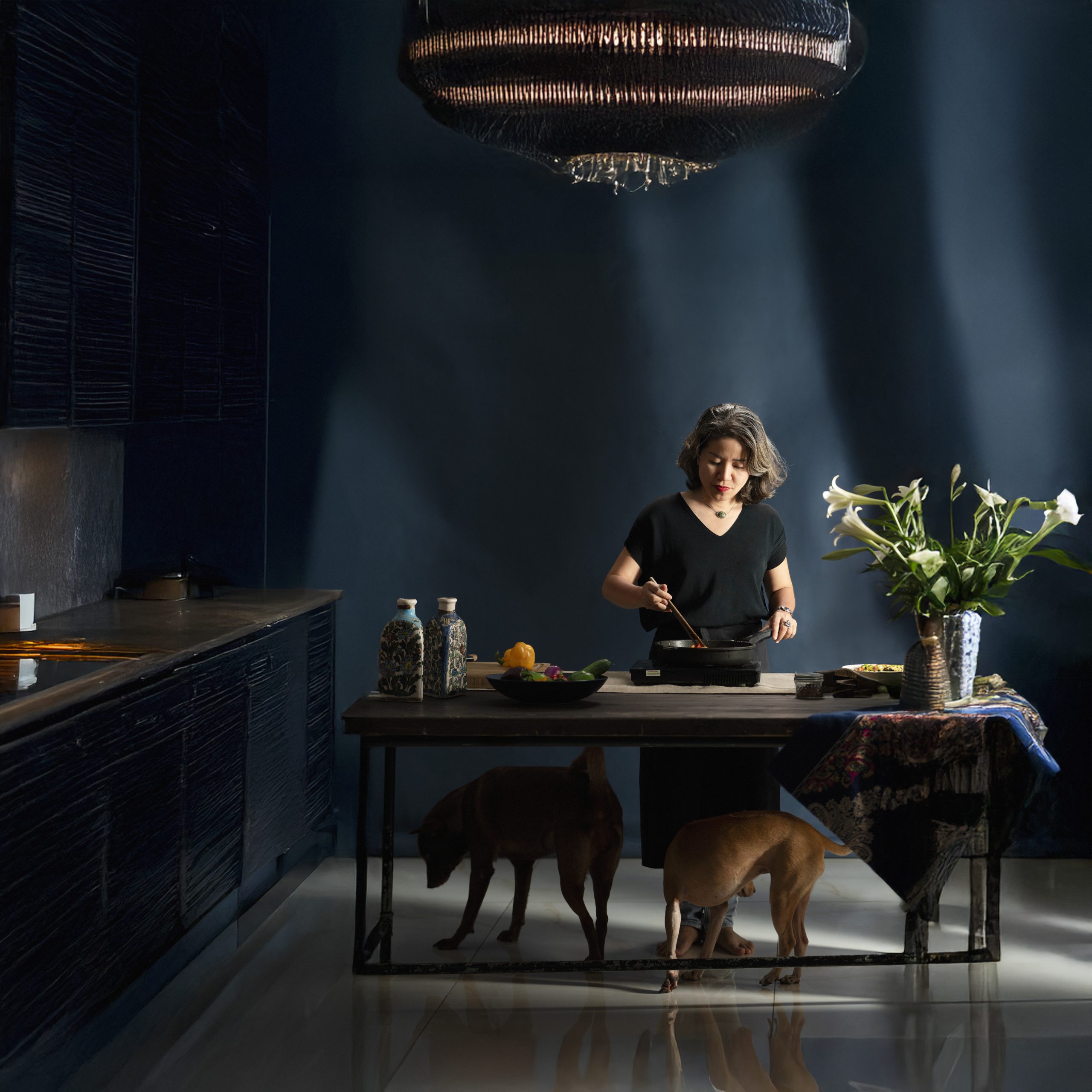
This space reflects her cheerful personality and her free-spirited, open way of living. The kitchen is large and fully equipped, separated from the rest of the house by a glass partition. But whenever she cooks, she often improvises new kitchen spaces—sometimes in the living room, sometimes in the garden—using nothing more than a small table, a gas stove, and a few basic tools, depending on her mood and the number of guests visiting that day.
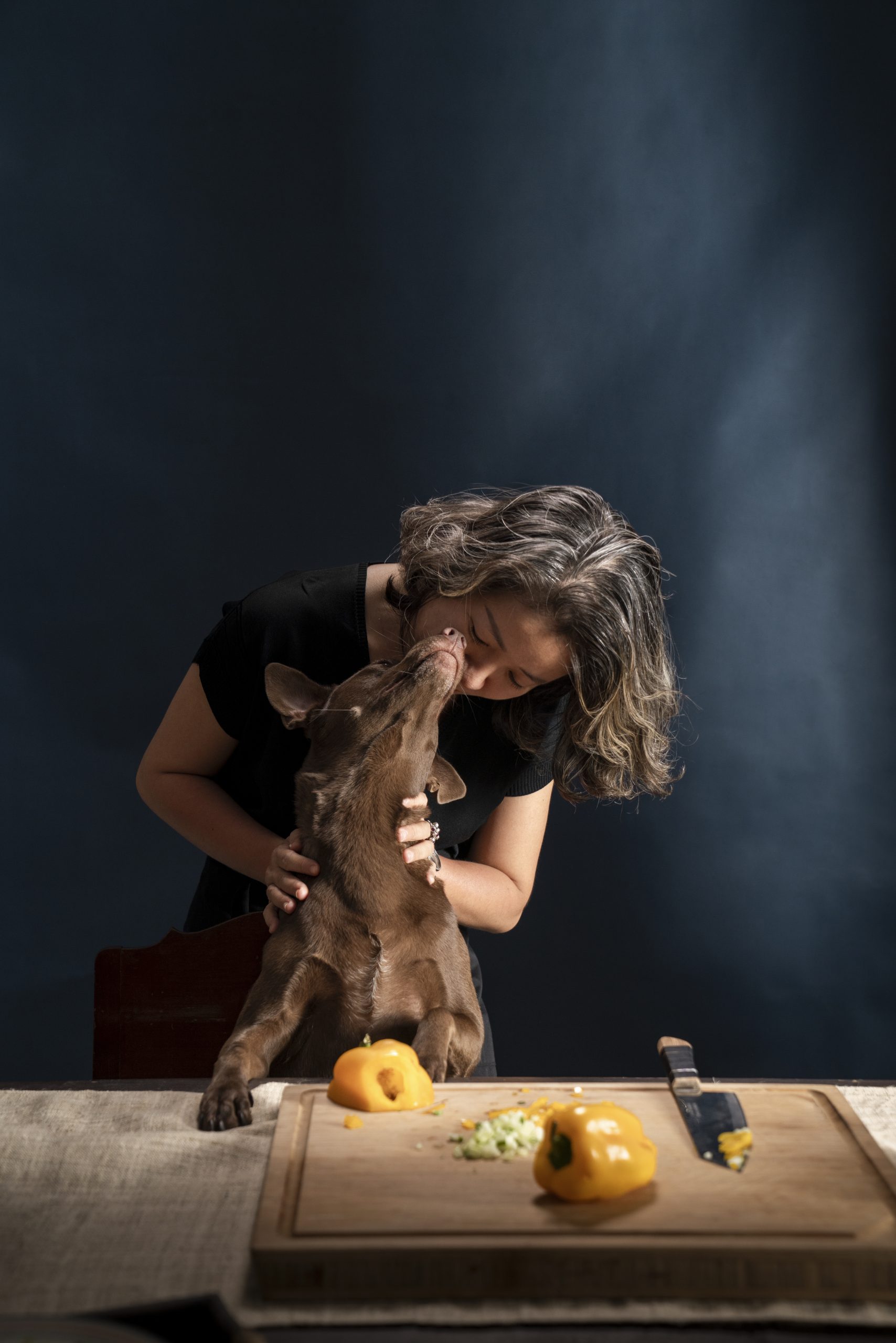
Two dogs, Si Cu La and Gừng, welcomed us enthusiastically and took part in every stage of the process, from cooking and setting the table to tasting the food. Si Cu La, with her glossy brown coat reminiscent of chocolate, has a gentle temperament. She loves being photographed and often strikes an adorable pose to… beg for treats. Gừng is more shy, usually hiding under the table and staying close to Ngọc.
Ngọc recounts the story of adopting the two dogs with great humor: “At first, I used to visit a friend and borrow Gừng to play with, because I’ve always loved dogs. But since my work requires frequent travel, I was afraid I wouldn’t be able to take proper care of one. After borrowing her a few times, I became… addicted, so I ended up ‘importing’ her into my own home. Then I worried Gừng might feel lonely, so I brought Si Cu La home to keep her company. Life as a devoted pet parent can be tiring—but it’s joyful.”
Ngọc Trần cooks with remarkable skill, speed, and dedication to every detail. From the way she prepares ingredients to how she presents them on beautiful plates, everything carries the spirit of an artist. For her, food is the fastest way to understand a place—not through museums, not with tour guides, but simply at a dining table, with bowls and plates, and a soul that loves good food, armed with enough curiosity to be ready… to taste. That is all it takes.
That is why, wherever she goes, she immerses herself in local cuisine, the stories behind it, and ways to recreate those flavors and emotions once she returns home. As she greeted us at the gate, she said, “Tonight I’m making a Turkish Meze spread. They eat appetizers from seven in the evening until eleven and still aren’t done, so we’ll have to sit together late into the night!” She then burst into hearty laughter.
Tereyağlı Karides – One Bite, and You’re Under Istanbul’s Spell
Ngọc Trần shared that she once spent an entire month wandering through Istanbul, purely for pleasure. Yet during that trip, she “happened” to roam into one corner after another, even finding her way into local homes to enjoy home-cooked meals, and “casually” took countless photos of landscapes, people, and food. So when she returned home, she also “casually” ended up writing a book about that journey.
Istanbul encouraged her love of food with the most unforgettable welcome: a Meze table filled with small, charming dishes of every color and flavor. Wrinkled black olives, rich and intense. Cheese as soft as clouds. Charred-edged grilled eggplant, deeply aromatic. Falafel so crisp it crackles with every bite.
Meze is known to be an essential part of Turkish culinary culture, often enjoyed during main meals or served as appetizers at social gatherings. Turks can eat Meze at any time of day, but it is most common in the evening or at dinner parties, where people gather to share a variety of small dishes. Meze is also frequently served at outdoor meals or in traditional restaurants.
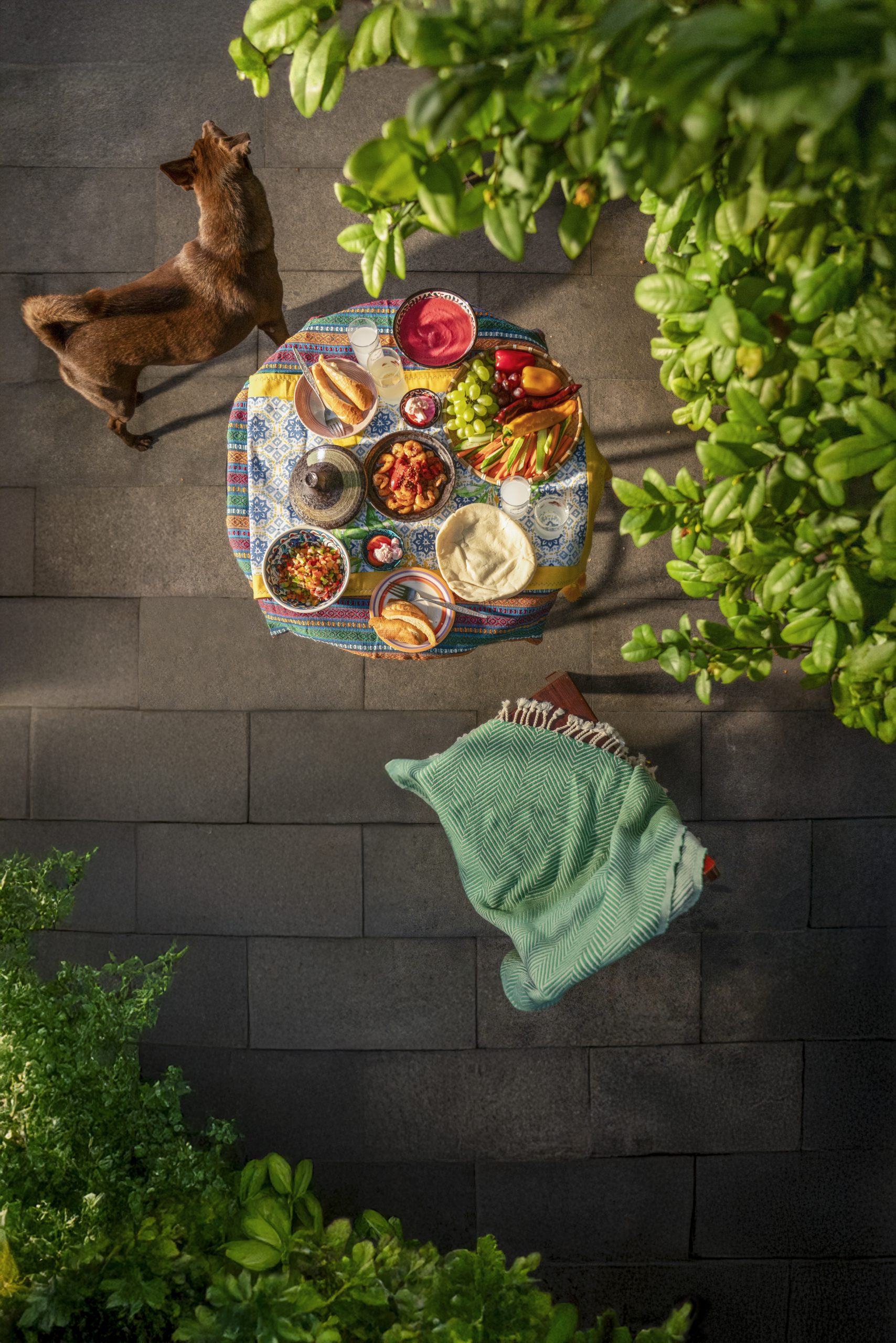
Common dishes include white cheese (beyaz peynir) paired with sweet ripe melon (kavun), spicy pepper and walnut spread (acılı ezme), and thick yogurt blended with herbs (haydari). Other popular options such as chilled eggplant salad (patlıcan salatası), yogurt mixed with cucumber and garlic (cacık), crispy fried calamari (kalamar tava), and richly seasoned stuffed mussels (midye dolma) all bring fresh sensations to the palate. Additionally, dishes like grape leaves stuffed with rice (dolma or sarma), cold liver (arnavut ciğeri), octopus salad, and raw meatballs with bulgur (çiğ köfte) are also common features of an abundant Meze spread. Each Meze dish is like a small story, and all one needs to do is open up and listen with the senses of taste.
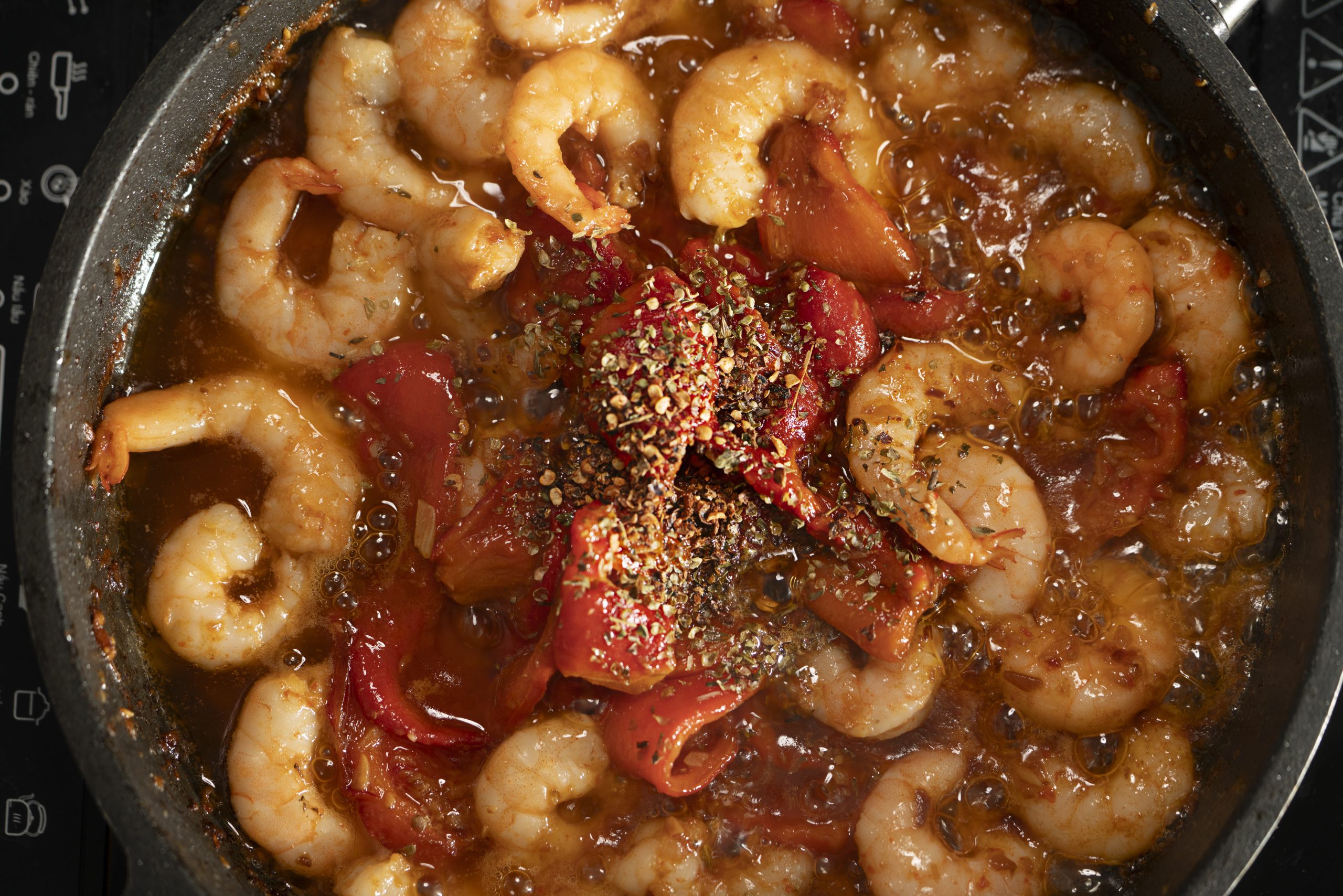
Then came the dish that truly bewitched her: Tereyağlı Karides—shrimp in garlic butter sauce. A small, unpretentious, steaming bowl was set down. The rich aroma of butter mingled with hot garlic froze her in place at the very first whiff. The shrimp were cooked just right—tender, plump, naturally sweet. Nestled in a glossy golden sauce, accented with inviting red bell pepper and sprinkled with dried oregano, everything exploded in flavor from the very first bite.
“I remember not saying a single word for several minutes,” she recalled. “I just focused on chewing—and remembering. Because I knew this flavor would follow me home. And it did. When I returned to Vietnam, a friend from Istanbul who lives in Saigon taught me how to make it. Later on, sometimes I followed the Turkish way exactly, sometimes I tweaked it to make it my own—adding fish sauce, changing the butter, squeezing in some lime. But that aroma, that buttery richness—every time it rises, I feel as if I’m transported back to that radiant, mesmerizing Istanbul sunset.” Ngọc Trần told us this with her usual cheerful tone and glowing smile.
And on a Meze table, there is one indispensable presence: Raki—the anise-flavored spirit made from grapes or raisins. When diluted with water or ice, Raki turns a cloudy white, like milk, which is why Turks affectionately call it “lion’s milk.” Strong, sweet, spicy, gentle—all these sensations intertwine and linger with each sip. Ngọc Trần spoke enthusiastically about Raki because it surprised her both in flavor and potency. She thought she had tried every kind of alcohol and considered herself quite a good drinker, until two glasses of Raki made her… “lose her way home” right by the shores of the Golden Horn.
In Turkey, people do not simply drink Raki—they live with it. For her, Meze must come with Raki, and Meze must include Tereyağlı Karides. That dish is like a visa into Turkey itself—intimate, vivid, and full of flavor. Turks do not eat Meze to feel full. They eat to talk, to listen, to be companions to one another. A proper Meze meal can last all night—sipping, toasting, then ordering a few more small plates. And when the second round of Raki is poured, the conversation opens up once again, as if no one wants to leave the table.
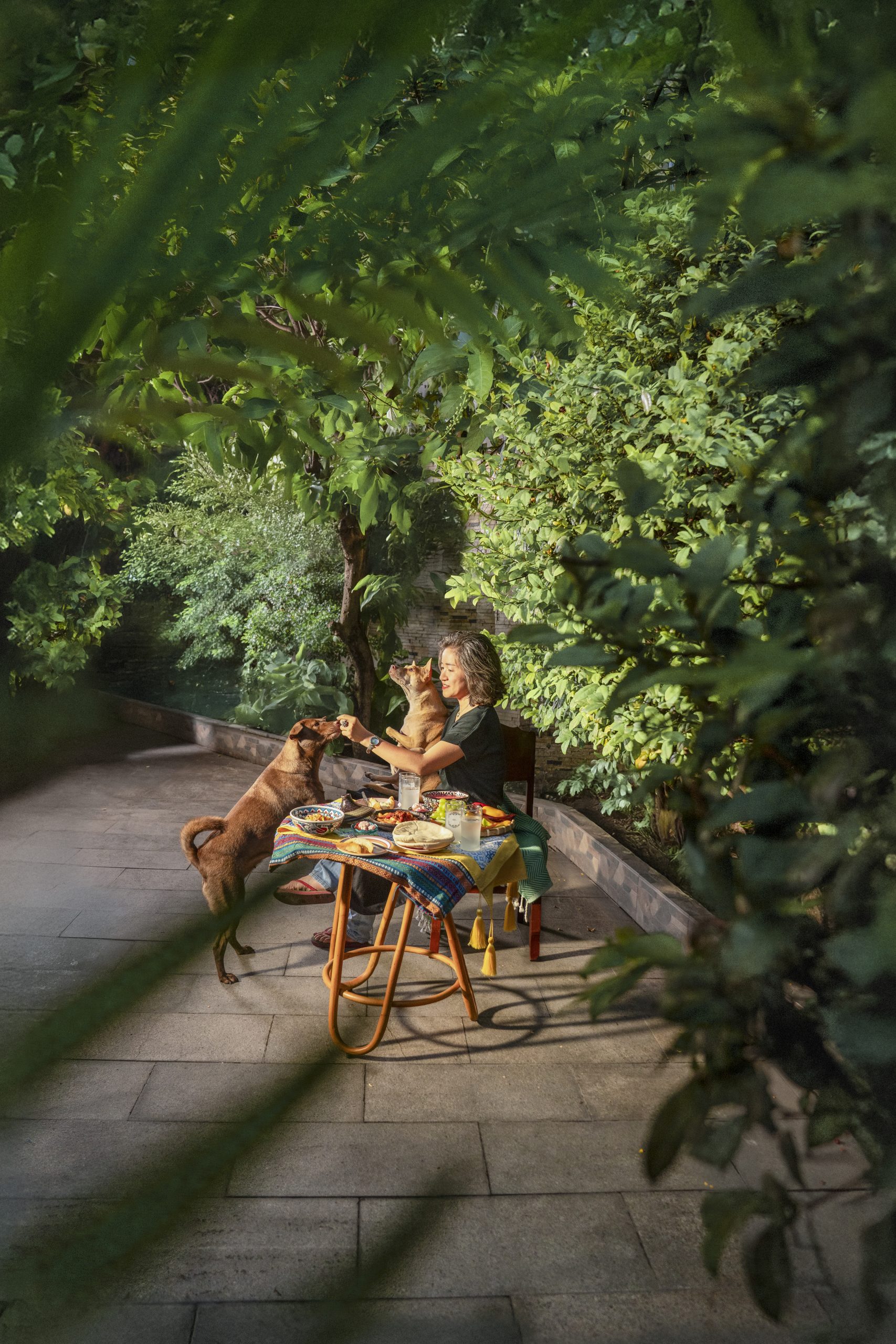
Indeed, that day at her home, the Meze was laid out on a small bamboo table covered with a vibrant patterned tablecloth, placed in a corner of the courtyard beneath a flowering apricot tree. The dishes were served in bowls and plates adorned with bold Turkish motifs that she had carefully collected. In the late afternoon, the sunset light shimmered, a few raindrops fell here and there—just poetic and joyful enough to make us linger, unwilling to leave.

Tereyağlı Karides
Ingredients:
– 300 g shrimp meat, or for a more elaborate version, glass shrimp
– 1 red bell pepper
– 2 tablespoons unsalted butter
– 2 cloves garlic (finely chopped or thinly sliced, depending on your love for garlic)
– ½ teaspoon chili flakes
– ½ teaspoon dried oregano
– Salt, to taste
– 1 tablespoon lime juice
– A little olive oil
Procedure:
– Clean the shrimp, drain well, and remove the veins.
– Roast the bell pepper at 180°C for 15 minutes until the skin wrinkles. Peel off the skin, remove the seeds, and cut into 8–10 pieces.
– Heat a cast-iron pan. Melt the butter over medium heat. You may add one spoon of olive oil to prevent the butter from burning and to enhance the aroma. When the butter melts, add the garlic and stir gently until fragrant. Add the bell pepper and sauté lightly for 2 minutes. Add the shrimp, season with salt, and stir well. Shrimp cook quickly—about 2–3 minutes on each side. When they turn pink-orange and curl slightly, they are done.
– Sprinkle in the chili flakes and oregano, stirring quickly so the butter absorbs the flavors and creates an appealing golden-red color.
– Add lime juice for freshness. Give one final gentle stir so the sauce coats the shrimp evenly.
– Serve the shrimp on a plate (or keep them in the hot cast-iron pan). Enjoy with crusty bread to soak up the sauce—and if you have Raki, even better. This dish must be eaten hot, steaming and fragrant; it cannot wait.
Photography and Food Both Require Connection
If I had to choose one keyword to describe the multi-talented Ngọc Trần, it would be “connection,” because that quality runs powerfully through who she is. Not everyone has an aptitude for photography, cooking, or writing—and even if they do, those abilities do not always coexist harmoniously. But Ngọc Trần has connected her existing skills and potential, nurturing them tirelessly and weaving them together into a person with a richly layered inner life.
She shared, “Before becoming a photographer, I worked as a graphic designer. That foundation helped me develop the concept of ‘Interactive Creatives’—a term commonly used in media and advertising to describe creative content or design that interacts with its audience. I believe that meaningful interaction, when you are fully present, leads to understanding, trust, and the most wonderful outcomes. You can see that in the images I create.”
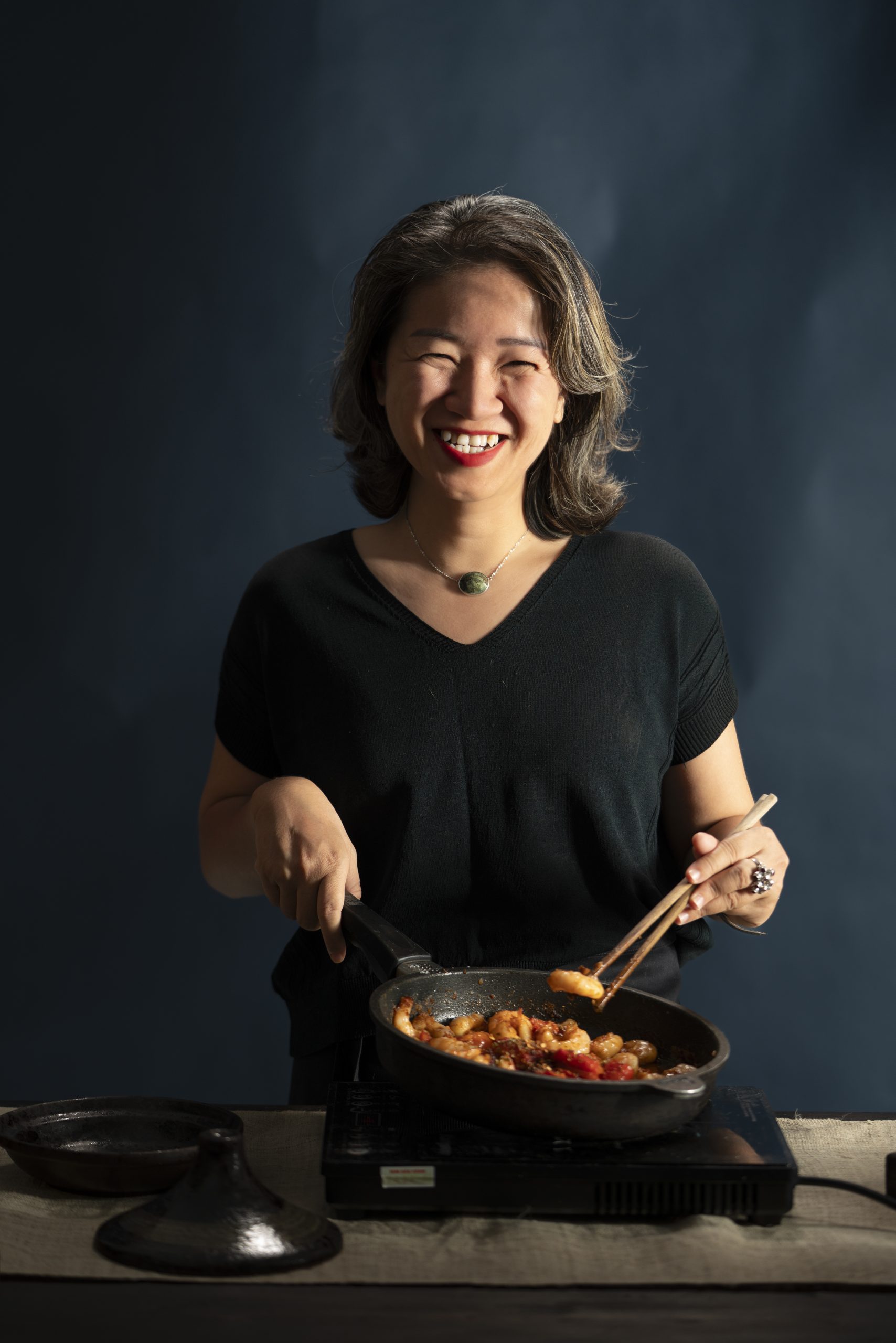
Ngọc Trần calls herself a “street hunter” because she deeply loves seeking out beautiful moments of everyday life and preserving them through her lens. She is willing to visit the same market for decades, simply to observe its rhythms, to connect with vendors, and to truly understand their personalities—the microcosm of society within that market—so she can capture the authentic beauty of every corner and every person in her photographs. She even makes the effort to find people she has photographed by chance, just to gift them their portraits.
She approaches food in the same way. When she arrives in a new place, she always takes time to connect with its landscapes, its people, its stories, and its culture—so that she not only tastes the food, but also listens to the stories behind it: the joys and sorrows of those who cook and of those who gather around the table to share the meal. During that trip to Istanbul, she even befriended stray cats along the way.
It is this remarkable sense of connection that allows stories to exist not only in memory or on the pages of books, but to remain alive, as if still unfolding. That magic happens when she recreates the dishes she learned from locals and shares them with friends.
Books published by photographer Ngọc Trần as part of the project “The Lifestyle and the Food”:
– HANOI THE LIFESTYLE & THE FOOD (2022)
– EASY TO COOK: 40 DELICIOUS VIETNAMESE DISHES AS LISTED BY CNN (2023)
– SAIGON THE LIFESTYLE & THE FOOD (2024)
Upcoming publication: ISTANBUL THE LIFESTYLE & THE FOOD
Originally published in Đẹp Magazine, Issue No. 296
Words and images: Nhà Có Hai Người