
Spice the Love No.7
Why Do We Hope?
Dear friends,
We get to “meet” again every Thursday through our “Spice the Love” newsletter ☺️
In this week’s letter, I’d like to send you an essay I wrote on a topic that perhaps feels especially fitting at this moment of transition from the old year to the new. That topic is: Why do we hope? I was commissioned by a magazine to write this piece while I was traveling in Huế with my close friend. The moment I saw the editor’s message, I turned to her and asked: Why do we hope? Throughout the trip, we didn’t directly discuss this question, but we talked about many things—past and present alike—just as we have for more than twenty years. It was precisely the feeling of realizing that each of us has gone through so many stages, lost many things, and gained many things as well, that was enough to sow hope for the future ahead. Perhaps the answer to the question Why do we hope? can never be a single, linear answer with one sole reason, given at one fixed moment, but rather a multi-layered answer that continues to expand over time and through our lived experiences.
I’m sending you the full, unedited piece, representing my own answer at this point in time. Even today’s answer is itself a stitching together of many fragmented thoughts I’ve had over the past four years.

The Sweet Orange Tree Rooted in our Hearts
Who says adults don’t cry?
I’ve just returned from a trip to Huế with my best friend. She lives in Australia and hadn’t been back to Vietnam for eight years. When we were 27, we once traveled to Phú Quốc together—swimming in the sea by day, drinking ourselves drunk at night, sometimes until three in the morning, unable to find the hotel entrance and having to rent a room across the street just to sleep. But in truth, we hardly slept at all; the two of us held each other and cried. This time, at 35, we returned to our room before 10 p.m. every night, slipped under the blankets to read, spent our days visiting royal tombs and pagodas, soaking in a jacuzzi to relax. This wasn’t my first time in Huế, but it was the first time I felt its beauty flowing by at a slow pace, in harmony with my own inner rhythm.
We also spent a long time sitting together in a small café, savoring Hoàng Mai tea—a tea scented from wild ancient shan tuyết tea trees, 500–600 years old, on Tây Côn Lĩnh Mountain in Hà Giang, blended with the yellow apricot blossoms of Huế. Finding a kindred spirit with whom you can sit side by side, drinking eight or ten rounds of tea throughout an entire evening in a quiet space, is no easy thing. And this time, we didn’t cry; instead, we felt an unusual sense of peace. After all the effort it took to get through the days before we could sit together again, and to agree that there were many things we felt we hadn’t done well—but had done the best we could at the time—we came to see that the present is, in fact, a gentle reply to the past.
But a few days before the trip, when I first saw her again, I cried a great deal. I cried upon realizing how many hardships my childhood friend had endured to build a life in a foreign land from the ages of eighteen and twenty; while I myself, caught in the feverish yet hazy atmosphere of youth, had been struggling with my own problems, unable to be by her side or help her in any way. Back then, we were like fledgling birds facing a vast world. Each of us needed many years to learn how to stand firm and walk our own paths.
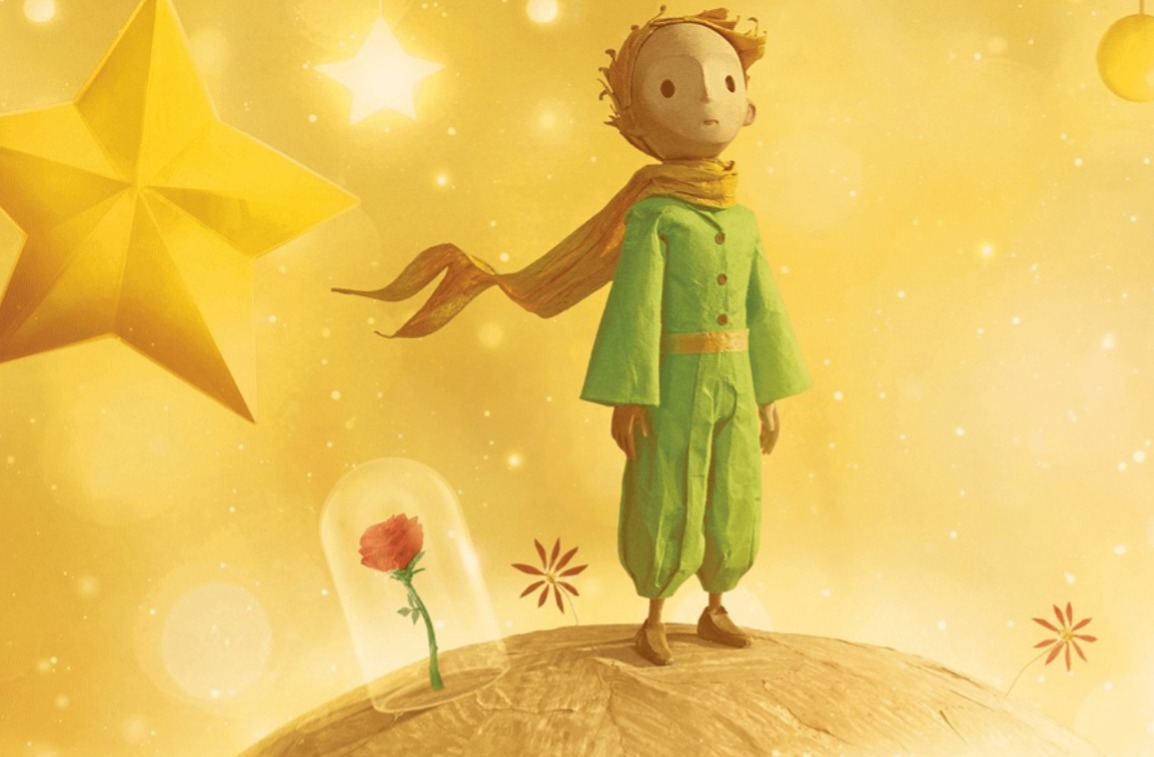
I cried freely like a child, like Anne in Anne of Green Gables crying when Gilbert Blythe teased her with the nickname “Carrots,” like Jo March in Little Women crying after arguing with Amy and Meg, like the Little Prince crying when he speaks of the rose on his asteroid B612, like any one of us who sometimes cries simply because we need to. There are moments when the heart feels so heavy that no words can ease it. Then, crying becomes a natural sedative. Each tear that falls seems to carry away tension and lingering sorrow, leaving lightness in the soul. Crying is not weakness, but a way for the body and mind to regain balance. After crying like a downpour, we feel calmer, as if cleansed, as if stepping out of the rain to breathe fresh air again.
There Is No Absolute Pain
On this trip as well, I found myself thinking back to my student years—a period when almost everyone nurtures countless hopes for the future. Looking back, the thing that caused me the most pain then was a broken love. I once didn’t believe I could ever love again or be loved again. Yet reality proved otherwise: not long after, I met the love of my life and have now been in a happy marriage for nearly thirteen years. I once dropped my hope, but it was my current husband who placed hope back into my hands.
Once, I told an older sister that as we grow up, the pain of love is no longer the ultimate pain, because there are harsher pains beyond it. She replied, “Pain hurts the same at any age.” Later, she went through a midlife crisis at forty, separated from her husband, failed in business, and then the pandemic struck. That once-strong woman suddenly wanted to let everything go. The only thing that kept her moving forward was hope for a better future.
After my own episode of “suffering for love,” my life gradually became stable and comfortable. Then came a series of deaths: my two grandmothers, a friend who had walked through youth with me, my assistant of ten years, and the dog we loved dearly. All of them left without warning.
In theory, everyone knows we must accept death. I once thought of it simply, like a flower blooming and then withering, a cloud turning into rain and disappearing, a school of salmon migrating to the sea and then returning to their source to spawn and die where they were born. But when loss came one after another, I truly lost hope, thinking that if we all die anyway, why struggle to cling to this life?
I remember crying a great deal; even when my husband was right there beside me, trying to share all those emotions, I still couldn’t truly get past it. And I realized that the price of growing up is that we can no longer separate sorrow from joy. I still feel joy in my own small achievements, when I see a girl sleeping soundly on the back of the man she loves, when I hear a beautiful piece of music, when I learn that someone has achieved what they longed for… Yet sadness still invades. This time, I understood that the one who must give me hope is myself.
Everyone Drops Hope at Some Point
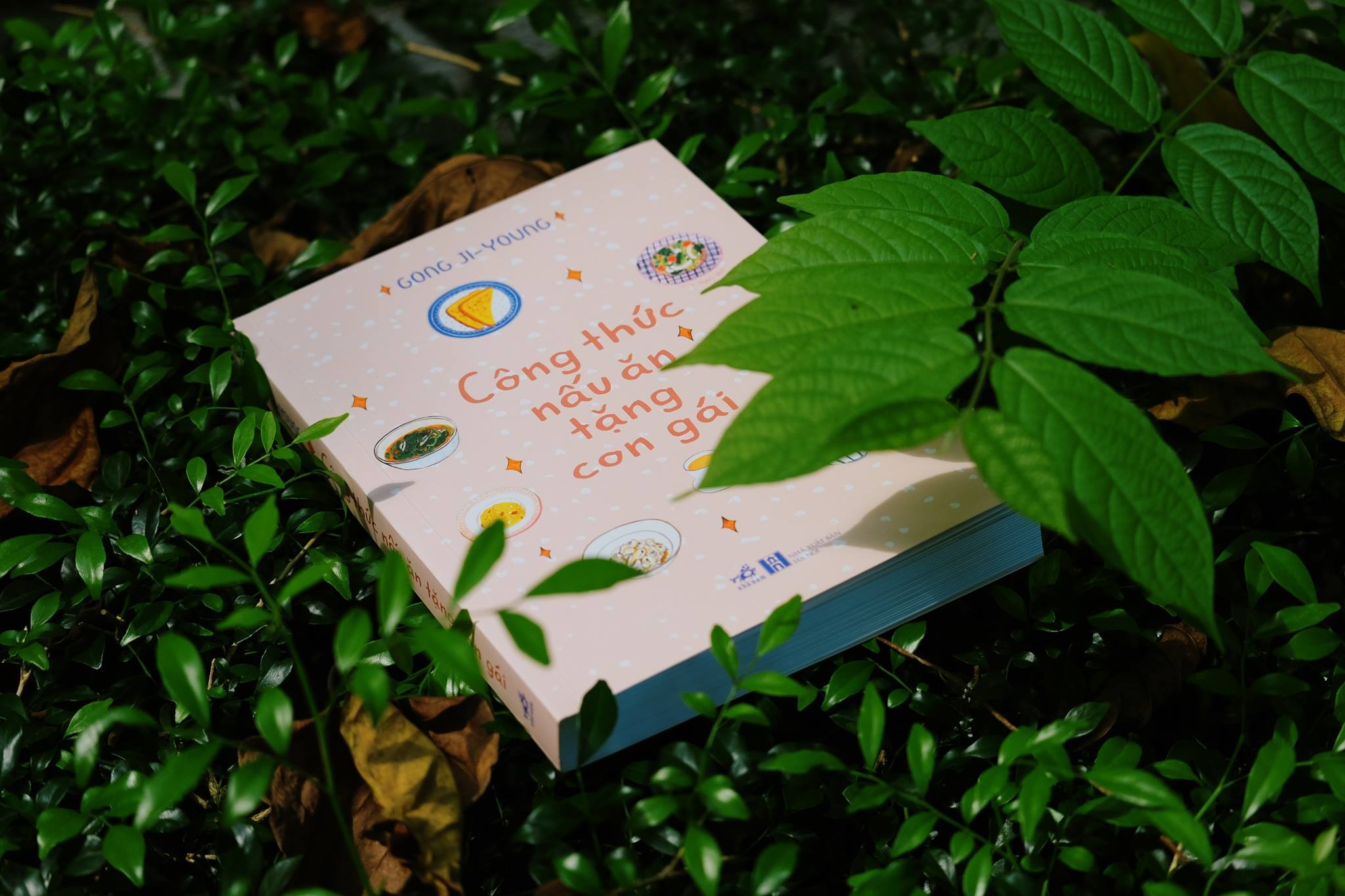
“There are days when hope falls away” is the first recipe in Recipes for My Daughter by Gong Ji-young. It opens gently: “There are always days like that. Days when you suddenly lose your balance because of a careless remark.” The mother comforts her daughter with deep empathy, acknowledging that everyone must go through days when “every door of hope slams shut in front of them.” Then, she slowly guides her daughter in making a spinach salad:
… “First, wash the spinach thoroughly. Then arrange it nicely on a slightly large plate.”
… “If there are too many leaves, you can pinch off some of the stems.”
… “Sprinkle Parmesan cheese until your anger is satisfied.”
During the period when I was trying to find hope again for myself, I loved cooking and would often smile to myself when remembering that book and thinking of my mother. Every mother seems to have her own way of teaching profound philosophies through the most ordinary acts of life. “The crux of the matter is that your troubles all stem from mental issues, so why not take a slight detour and try solving them through your body?”—move a little by going for a run, cook in the kitchen, pour another glass of wine, take a warm shower when you start to feel tipsy, drip some lavender essential oil onto your hands, mix it with body lotion and apply it behind your ears to relax, and when you’re done, lie down and write a journal entry about today. If it were you, would you feel soothed, at least a little? I would!
I think of Man’s Search for Meaning by Viktor Frankl—a psychiatrist who survived the Auschwitz concentration camp. He affirmed that humans can endure any suffering if they find a meaning to live for. In the harshest circumstances, when everything is stripped away, the only thing that remains is inner freedom: the freedom to choose one’s attitude toward pain. Frankl shows us that hope is not an illusion, but a force that helps us stand firm amid loss. For him, the memory of his wife was his spiritual resource. Each time he thought of her face, he found renewed strength to endure and overcome.
Reading those pages, I realized that suffering and the loss of hope are profoundly human states, for we are born with the full range of joy, anger, love, and sorrow. Anyone can fall into situations that leave them shaken. But I believe there is no pain that is absolute, and no hope that is lost forever. Even in the deepest darkness, hope remains a spiritual anchor—the one light we can still hold onto.
Do you remember the boy Zezé in My Sweet Orange Tree? A poor, mischievous yet sensitive child who found in a small orange tree a confidant. For Zezé, the tree was not merely a game or a patch of shade, but a refuge for sorrow and childhood dreams. It became a symbol of imaginary friendship, of the comfort that a tender soul longs for amid a harsh world.
Hope, therefore, does not necessarily have to come from external reality. It can be nurtured from an image, a memory, a love kept in the heart. Each of us has had our own “sweet orange tree,” given an affectionate name, called with all our tenderness. And even knowing that one day we must part with that childhood sky, its sweetness is always kept in a corner of the heart, as proof that hope has never truly disappeared.
Why do we hope?
What is your own answer?

P.S: If you’ve finished this letter and still want to read more, I’d like to suggest this article about Chương Đặng and his warmly flavored dishes HERE.
With love,
Lê Ngọc (Nhà Có Hai Người)
If this letter resonates with you or brings you something meaningful, feel free to share or forward it to friends and loved ones.
All stories are available in Vietnamese. You can switch languages directly on our website.
You are also welcome to share your own stories or send feedback to help us improve the “Spice the Love” newsletter. Write to us at: imeo@nhacohainguoi.com
Image source: The Little Prince (2015 film), Nhã Nam


