
Spice the Love No.8

A Myriad of Flavors, All Life Itself
Dear friends,
Another week’s flown by, hasn’t it? Last week, a close friend texted me: “I just saw your letter—reminded me I left the previous one sitting there, haven’t gotten to it yet.” I told her: “No worries, take your time. Reading, above all, needs time.” I subscribe to several newsletters from favorite sites and writers too. Sometimes I’m mid-read when something interrupts—I set it aside, come back another day to finish. Sometimes I save up a stack of unread letters for one sitting. Reading leisurely brings this sense of ease, as if countless windows in our minds swing open onto fields, mountaintops, rivers, starlit skies… Each time we close a letter or turn a page, we step from one door to the next.
For over ten days now, I’ve been under the weather (seems I get sick once or twice a year). Apart from handling urgent work, I’ve spent most of my time lying in bed, sleeping, and reading. Actually, being sick gave me the perfect excuse to read at leisure—I imagined myself a tiny mushroom sprouting after rain, tucked beneath the canopy of a forest of words. That comparison feels right because books are such wonderful places to… escape to, to slip away from aches and fatigue, to take in the landscape of someone else’s world while engaging with the one inside yourself.
I’ve been slowly making my way through several books, including “All Flavors Are Life” by Feng Zikai—truly wonderful—I’d love you all to read it. The book is divided into five chapters: The Flavor of People, The Flavor of Time, The Flavor of Solitude, The Flavor of Art, The Flavor of Life. Feng Zikai is a celebrated Chinese essayist and painter. His prose lives up to the front-flap description: unadorned, forthright yet profound, rich in meaning.
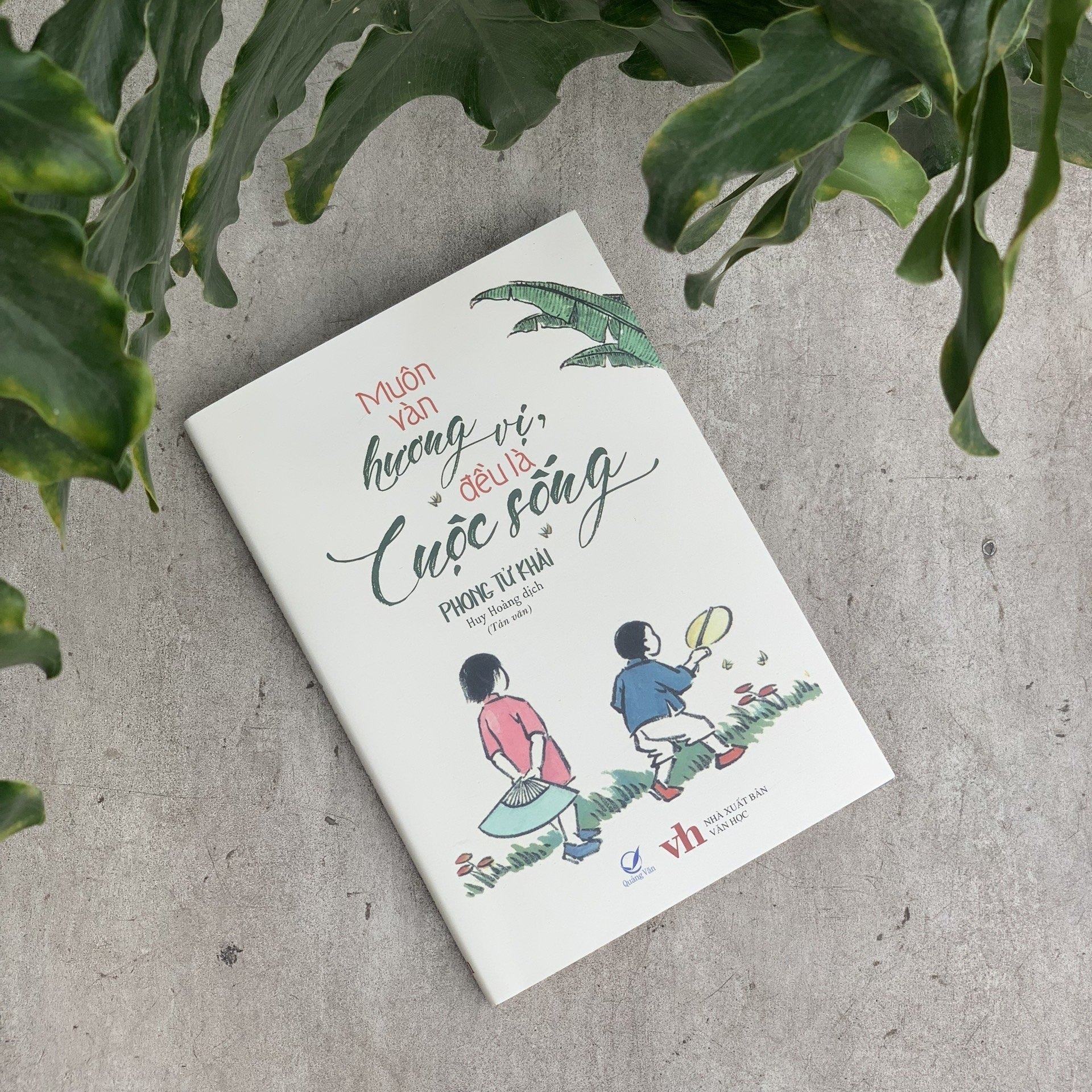
Take this passage where he describes A-Mi, his cat: “Among visitors to our home, some are rather dull and flavorless. They come for business or personal matters or simply out of obligation—some too serious in conversation, some too talkative, some utterly bland, running out of things to say after discussing the weather. But since A-Mi arrived, our conversations have gained content, rhythm, and both host and guest feel considerably more at ease. One visitor came on serious business, speaking at length, when A-Mi strolled in slowly. The guest immediately shifted attention to the cat, stopped talking, didn’t even respond when I asked questions. Another guest was unburdening himself about some troublesome matter, going in circles—exhausting even for the listener. Midway through, A-Mi leaped over and plopped right in front of me. The guest, who’d been speaking heatedly, turned anger into delight, stopped complaining said, ‘What a delightful cat!’, and began admiring and petting it—a few moments of rest and adjustment.”
I laughed out loud at this, thinking of Ta, our tabby cat. While I escape into books, Ta usually lies beside me or on the armchair across from me. Sometimes she watches me for the longest time. Sometimes she nods off, curled up, deep in blissful sleep. Tired of watching, tired of sleeping,she’ll find a toy, bat it around with her front paws, then chase after it. A cat’s presence brings the whole house to life. The empty spaces—between things, between things and people, even between people themselves—all filled in.
Then there’s the passage about a morning when father and son observed an ant colony working together, dividing roles, coordinating seamlessly to carry food back to their nest. Suddenly, someone walked into the yard. Just as he was about to step on them—like a mountain about to crash down—the father quickly grabbed the man’s hand, pulled him back sharply: “Don’t step! Don’t step!” The man, startled, froze like a statue, on tiptoes, motionless. The child breathed a sigh of relief: “That was close, that was close!” The man also patted his chest, saying: “That was close, that was close!” Afterward, the father told his son: “That worker has no qualms about killing—he eats meat, even knows how to butcher chickens. But I could tell when he said ‘that was close,’ he genuinely worried for the ants, and when he said ‘so lucky,’ he genuinely felt glad for them. That’s the discovery of empathy, the most precious aspect of human nature. Killing ants breaks no laws, takes no effort, and no one will seek revenge. But seeing their natural drive to survive, their spirit of unity and struggle, their wholehearted effort—who could feel no sympathy, who wouldn’t want to protect these tiny creatures?”
The philosophy Feng Zikai draws from this utterly ordinary, trivial story truly moves me: “What we preserve isn’t the ants’ lives, but humanity’s capacity for empathy.” How can a single sentence be so beautiful, capturing the essence of human existence so completely? I’m not fond of ants—just thinking about them crawling makes my skin crawl. But I was once moved by these lines from poet Lâm Vũ Thao: “Then one afternoon without clouds passing / The girl in blue dropped her hair clip / From a place where stars don’t grow / Ants crawled through the rest of the day.” I read those lines when I was running a small café. There, the designer had hung a wooden ant colony on the wall. The image of “ants crawling through the rest of the day” in the poem and “ants crawling through the yard” in Feng Zikai’s story share something—namely, there’s nothing special about them, unless someone pays attention, observes, and records it.

Feng Zikai also wrote a wonderful essay on “gradualness.” He believes we manage to live in this world because day gradually turns to night, spring gradually shifts to summer, fall, winter, children gradually change, grow up, mature, leave their parents. I love this idea—that ‘gradualness’ ‘conceals the traces of time passing’—otherwise, we humans would “certainly be shocked, moved, saddened, or pained by life’s impermanence, unable to feel joy anymore.” I laughed when I read this. Right? If I blinked once and went from young girl to old woman without that gradual transformation—now that would be tragic! This ‘gradualness’ carries a nurturing spirit, that all good things require patience to come to fruition. Conversely, less fortunate things—like someone squandering everything into ruin—also undergo this same “gradual” process; recognizing it in time means there’s still a chance to correct course and avoid tragedy.
I first read a few pages of this book when I stopped by Hue Book and Culture Space at 25 Le Loi, Hue. I loved the author’s style so much that once back in Saigon, I immediately sought out a copy. During my Hue trip, I regretted not having more time to linger in that comfortable reading nook, but no matter—as I said at the start, reading needs to be unhurried, so each word and sentence can “gradually” open one (or many) new doors within us. I’ll leave it here. See you all next Thursday 🤗
Link to order the book for anyone interested: https://s.shopee.vn/5Amak6S1gQ
With love,
Lê Ngọc (Nhà Có Hai Người)
If this letter resonates with you or brings you something meaningful, feel free to share or forward it to friends and loved ones.
All stories are available in Vietnamese. You can switch languages directly on our website.
You are also welcome to share your own stories or send feedback to help us improve the “Spice the Love” newsletter. Write to us at: imeo@nhacohainguoi.com
Image source: FAHASA, Prabir Kashyap
*** All book quotes are my rough translations


