
Hnub – a storyteller through brocade
“Hnub” in the H’Mông language means “the Sun” — a tender name given by her family to Chấu Thị Nung, a young H’Mông designer. Nung is also the founder of Hnubflower, a fashion label dedicated to garments inspired by the culture of her own ethnic community.
Fashion Rooted in Identity
Hnub is like a flower blooming in the mountains, carrying the colors and fragrance of H’Mông culture into the wider world. Looking at Hnub’s designs, one senses a journey back to vivid brocade patterns, meticulous hand-stitching, and the lively echo of the khèn flute during spring festivals.
In Hnub’s hands, old indigo-dyed fabrics and time-worn brocade pieces are given new life, transformed into corsets, voluminous skirts, long coats, or runway-inspired ensembles.
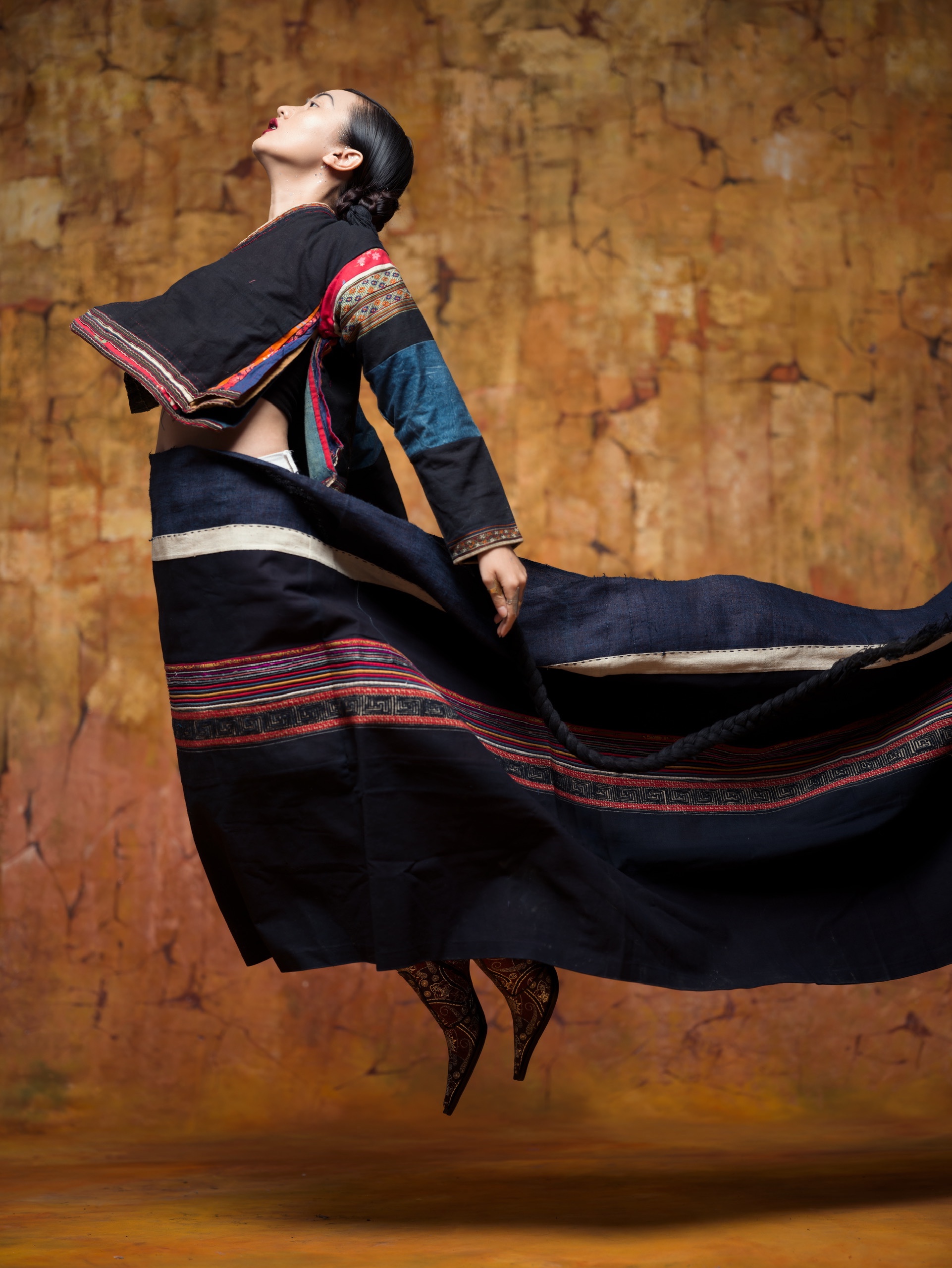
Her designs preserve the soul of cultural identity, while opening up space for the wearer to tell a new story.
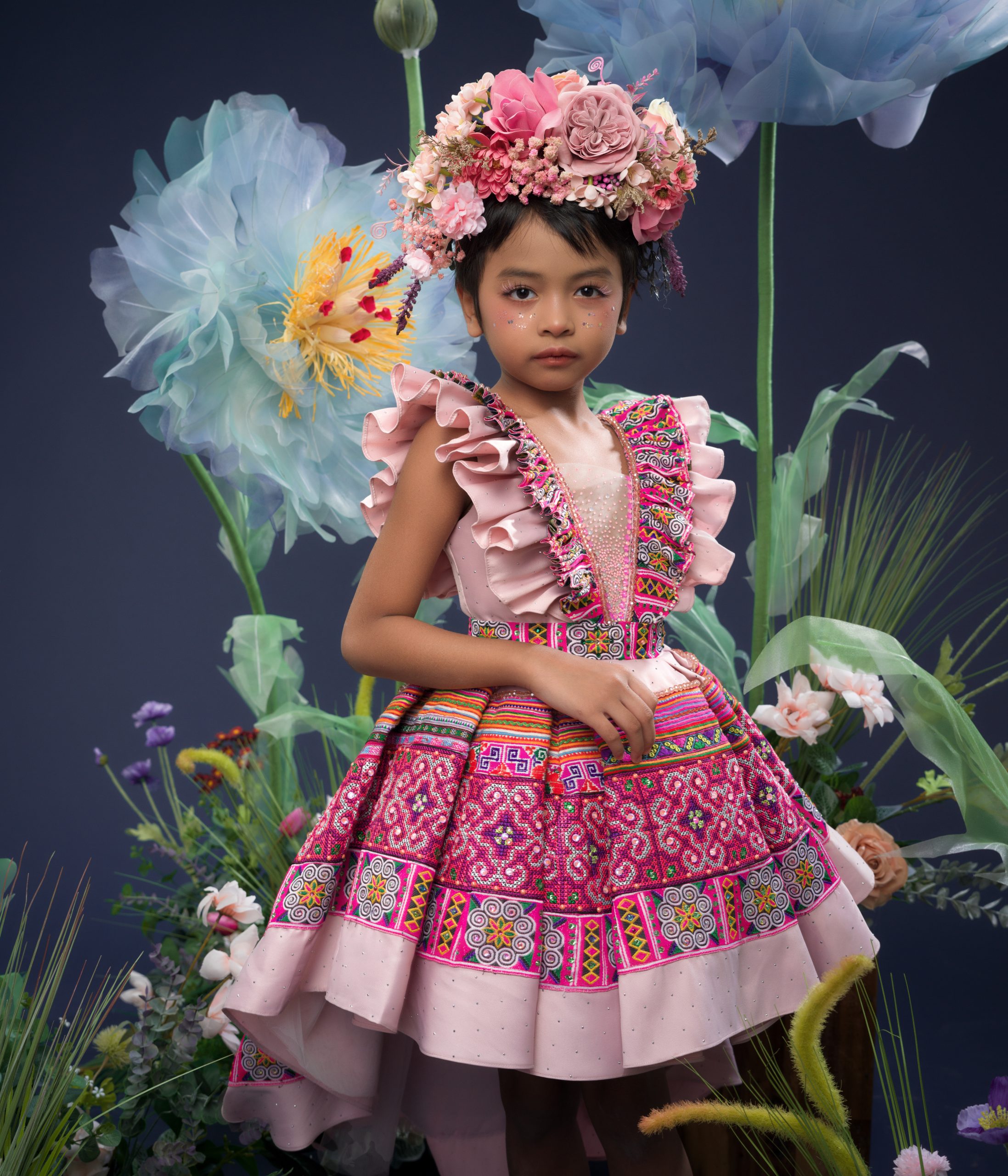
A young woman can wear a tiered skirt in shades of pink and orange in a modern city, walking with the confidence of someone who knows exactly who she is. A model can slip into an intricately hand-embroidered dress under studio lights, allowing the photograph to become a portrait that feels both traditional and contemporary.
Hnub is not only a fashion designer, but also a keeper and renewer of memory. Each piece begins with handwoven fabric, with beeswax-drawn motifs, with the labor of women in the villages.
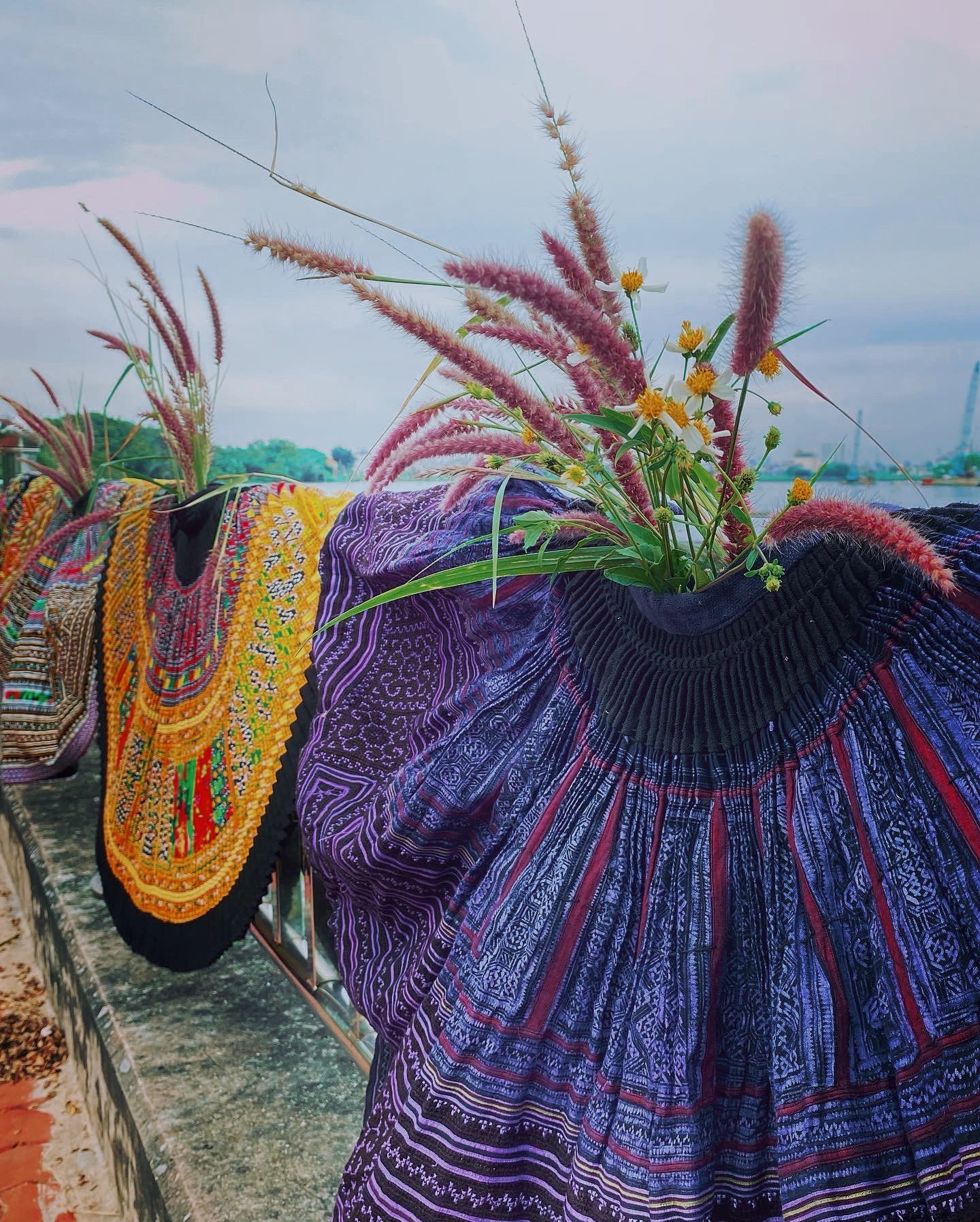
Once removed from the loom, these textiles are reimagined into entirely new designs with modern silhouettes, refined details, and unexpected combinations of traditional colors and contemporary cuts. This is how Hnub proves that heritage is never outdated — it can be vibrant, fashionable, and irresistibly alive.
Hnub shares that she has always regarded brocade as a form of art rather than a utilitarian object. For that reason, she honors its origins first, then draws inspiration to create something new. She also pays close attention to the journey behind each garment. Dresses and tops carry with them the scent of mountains, indigo, and the sweat of artisans. It is this very essence that allows the wearer to feel a connection — not only to fashion, but to the culture that lives behind it.
“Right now, whenever I finish designing or collect a new piece, I create a photo series and tell the story attached to that garment. Or I gather multiple designs into a complete project to tell a deeper narrative. People know me through imagery, fashion, and photography. That is also how I tell cultural stories. I am trying to maintain and develop this path seriously,” Hnub shares.

Decoding Memory
Hnub is like a decoder of brocade memory. She believes that within every piece of brocade lies a story, a soul belonging to H’Mông women.
In winter, women in the highlands gather around the fire, embroidering while sharing stories; even while tending buffalo, they stitch whenever they can. The motifs, therefore, are not merely decorative — they hold sorrow, dreams, and the resilience of women.
“When I hold a piece of brocade in my hands, I think of my mother. Through her image, I understand the emotions and inner world of the woman who created that fabric,” Hnub says.
In this way, each textile becomes a doorway back to origins — where there are a mother’s hands, unspoken emotions, and quiet love. Hnub’s earliest understanding of brocade culture and H’Mông heritage was passed down from her mother.
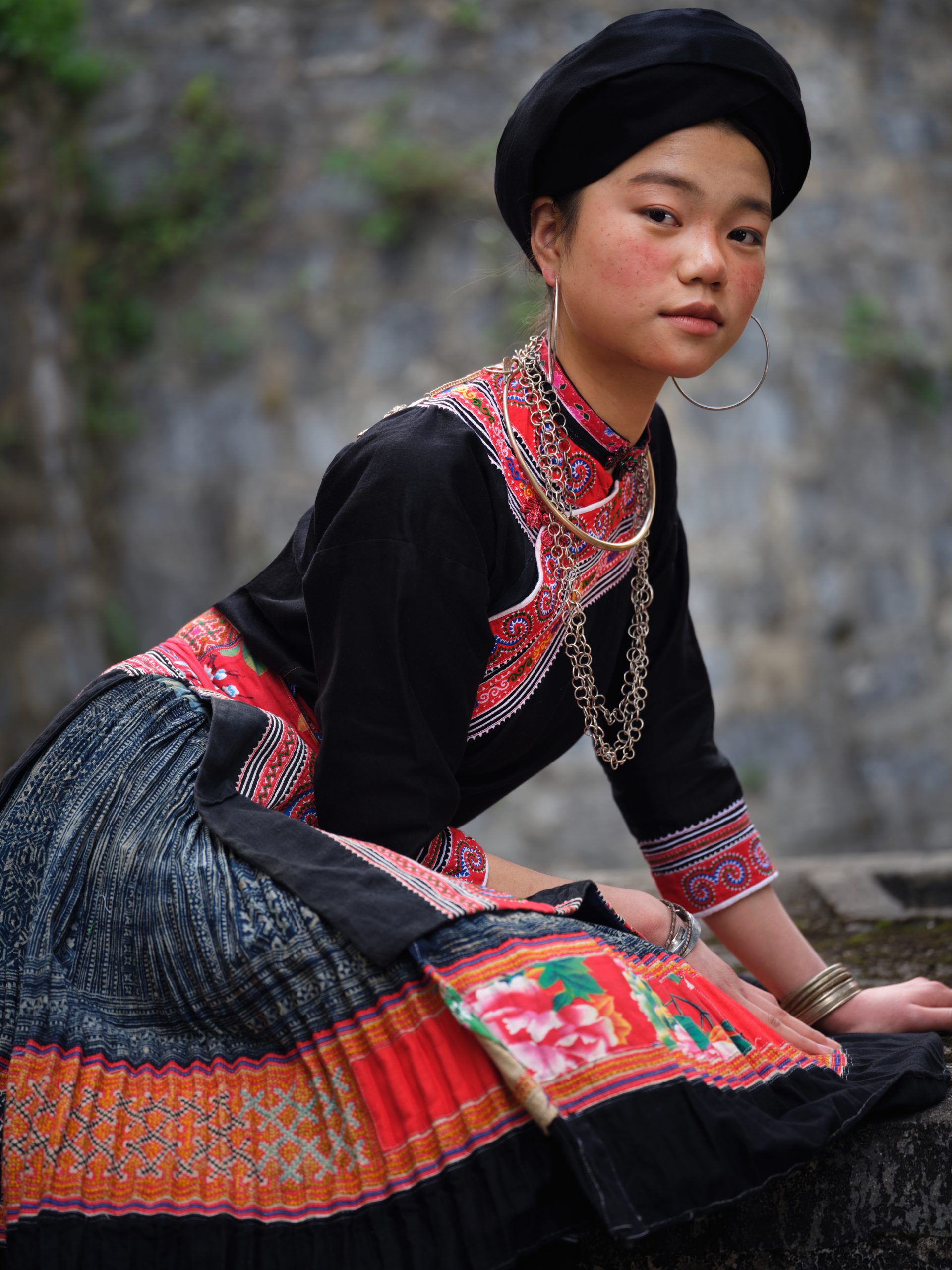
For the H’Mông people, hemp fabric is indispensable. It is used not only for clothing, but also as the white cloth that guides the deceased back to their ancestors. Indigo plants used for dyeing are also imbued with spiritual meaning, believed to ward off evil.
Brocade patterns often feature two prominent symbols: spirals and diamonds. “The diamond shape resembles ceremonial paper offerings used during Lunar New Year, acting like a protective charm. Most H’Mông garments have layered structures — inner and outer layers — with red and yellow accents as highlights.”
She adds, “Today, H’Mông people are more open and influenced by modern fashion. But in my creations, I always maintain a sense of refinement to honor identity, to renew tradition without making it feel jarring or inappropriate.”
Hnub dreams of relearning the entire craft process and opening a small studio or exhibition space in her hometown — a place for connection, preservation, and the sharing of cultural values, where people can join workshops and experience traditional textile techniques firsthand.
Currently, Hnub is pursuing advanced studies in design, preparing for a clear future direction: dedicating herself to reinterpreting and revitalizing H’Mông dress within the flow of contemporary life.
Hnub is doing something both romantic and courageous: bringing ethnic identity into the light of contemporary fashion. Looking at her designs, one sees more than clothing. One sees a bridge — between past and present, mountains and cities, memory and dreams.
Originally published in Đà Nẵng News


