
Red Through the Lens of Photographer Tín Phùng
Tín Phùng, a photographer born in 1987 in Saigon, began holding a camera in 2008 and quickly made a mark with his vibrant, energetic visual language. He captures everyday moments with bright colors and an optimistic spirit. In the exhibition “ĐỎ,” held from November 12 to 23, 2025, at 224 Space, the red in Tín Phùng’s photographs flows like a stream of positive energy, inviting viewers into cultural slices where the art of Hát Bội is documented through the lens of someone who loves the imperfect beauty of life.

A Photographer’s Camera is a Writer’s Pen
The red Tín Phùng presents in “ĐỎ” is not just a color, but the vivid, expressive red of Hát Bội – a red that has soaked into every mask, every costume, and even the fading cultural memories of modern life.
One photograph sent a shiver down the photographer’s spine because of the beauty of the moment: two artists almost facing each other, with the stage curtain behind them slightly parted. The backstage space is not as radiant as the spotlight before the audience, yet their half-closed eyes and bowed heads before the performance exude a quiet emotion. Another photo shows a young child of a troupe actor hiding behind the stage curtain, intently watching the performers. The child’s gaze is full of passion, absorbing a living heritage. Although Hát Bội is no longer as vibrant or widespread as before, that moment reminds us that there are still young enthusiasts keeping the tradition alive.
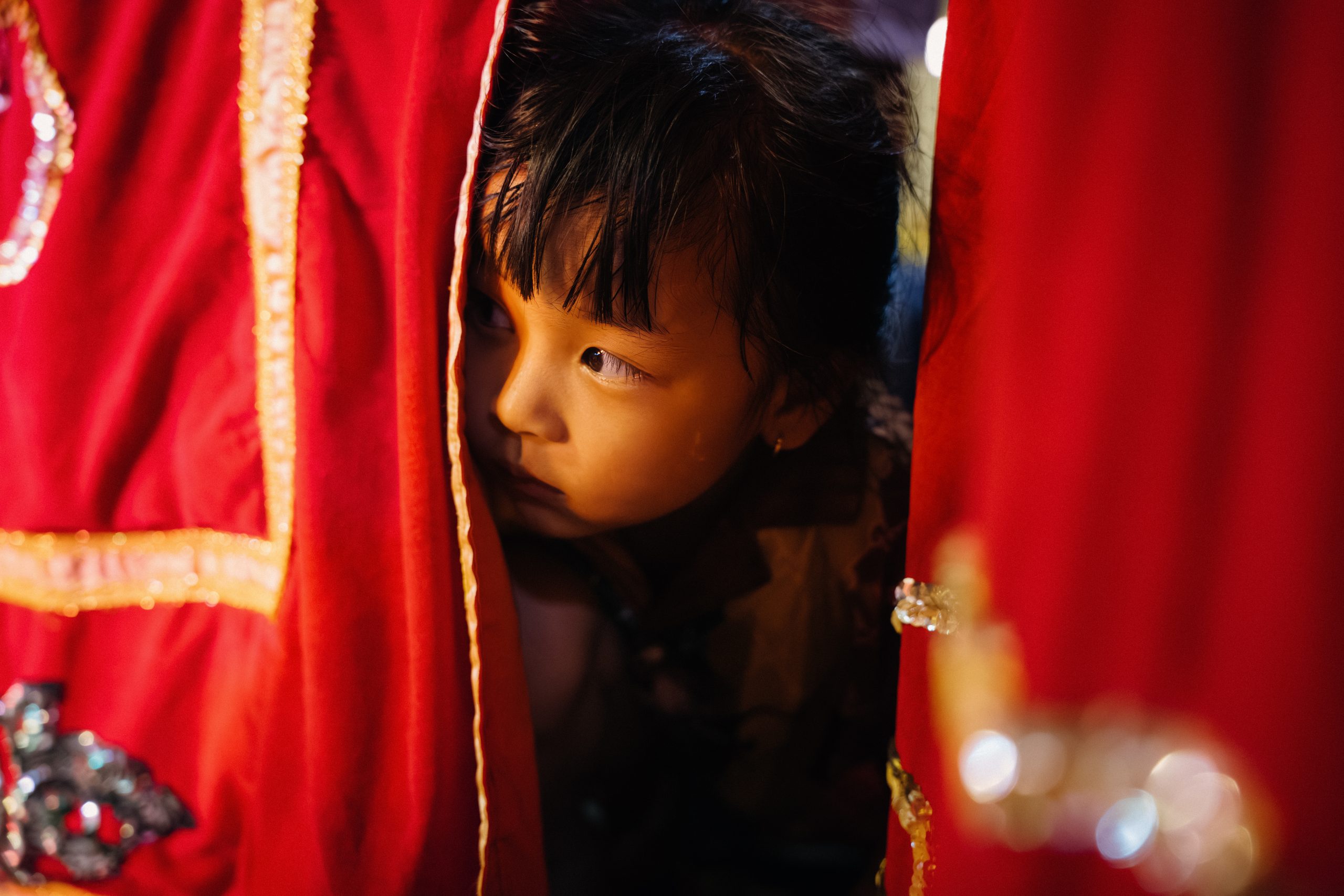
Tín Phùng chose Hát Bội for the “ĐỎ” exhibition for two reasons. First, he has a deep affection for traditional cultural activities, where Hát Bội stands out as a distinctive art form rich in identity. Second, Hát Bội has strong visual elements, especially the prominent red, which suits the exhibition’s central spirit.
When he first began photographing Hát Bội, what moved Tín Phùng most was the intimacy, as this art form is linked to his childhood memories. His mother loved Cải Lương, and in their small home, a single television allowed the whole family to watch performances together. That early connection naturally instilled his love for traditional art. Later, as he pursued photography, Tín Phùng realized that Hát Bội and Cải Lương were gradually being forgotten. He wanted to capture their value, not only so future generations could understand and appreciate them, but also so contemporaries could see the beauty of their cultural heritage.

For Tín Phùng, photography is a tool to convey images, like a writer’s pen. Through color, light, and moment, photographs can convey the aura and beauty of Hát Bội: from makeup, expressions, to the performance space. He believes photography can help preserve and transmit the values of traditional culture that are fading.
Perfection Lies in the Imperfect
Looking at Tín Phùng’s works, one quickly notices his interest in capturing messy, everyday scenes that are easily overlooked. A wall in front of a few plastic chairs, a chicken coop nearby, a plastic bag with small swimming fish, a roof corner blocked by a utility pole and tangled wires. The colors in his photos often feature high contrast, creating strong visual effects while reflecting a subtle psychological depth: someone reserved and humble chooses to tell dramatic, emotional stories through images.

He describes himself as introverted, tending to observe and listen more than show off. That quietness draws him to perspectives “behind life’s stage,” where there is no spotlight, no glitter, yet real and profound stories unfold. This quiet observation sharpens his sensitivity, allowing him to perceive the interplay of light and shadow, the contrast between stage brilliance and ordinary life.
For Tín Phùng, perfection lies in imperfection. Facing a chaotic scene, he does not rush to shoot. He takes time to observe, searching for a detail that moves him. Only when an emotion arises from a moment in life does he decide to capture it, preserving beauty within disorder, truth within randomness.
He does not pursue a “perfect ten” photography philosophy but prefers the incomplete, perhaps an eight or nine. He believes that this imperfection creates a sense of continuation, motivating viewers to strive for more. If everything were perfect, there would be no reason to try. This philosophy drives him back to his camera, continuing his exploration, discovering small, meaningful details that help him tell stories and present authentic slices of life.

Following the Hát Bội Troupe
Red in Tín Phùng’s photos often appears naturally. He explains, “Red is linked to the cultural roots of East Asia, a color of luck, vitality, intensity, and power. It is also the symbol of Hát Bội stage.”
When engaging closely with Hát Bội, Tín Phùng is captivated by many aspects: the makeup provides a visual insight into characters, and backstage rituals like offering homage and seeking blessings carry spiritual significance. During his work, he became curious about emerging details and situations, prompting him to delve deeper to understand Hát Bội. This research revealed interesting elements, which he incorporated to add depth and documentary value to his photos, rather than merely capturing fleeting impressions of light or color.

He also pays attention to the personal stories of performers. He shares, “Hát Bội artists today have fewer opportunities, and most continue for passion. They take on multiple jobs to survive while pursuing Hát Bội. Some sell lottery tickets, others work as laborers or freelancers.” To him, this is a poignant sacrifice, yet also proof of enduring love for art. These observations motivated him to document, providing viewers a fuller, compelling picture of this art form. Through his lens, the Hát Bội stage shines again. His goal is to create documentary-style photographs, carefully composing each stage process and portrait for a comprehensive understanding of the art.
I personally favor the photo of two Hát Bội artists resting backstage. It subtly portrays the everyday beauty of stage art. Though vibrant in color, it evokes the quietness of the moment. The natural, unposed composition, with figures lying and sitting among hanging costumes, adds spatial depth and a sense of underlying movement. Viewers feel transported to a backstage world where art and life intersect. The artists’ bright costumes amidst a modest space highlight the contrast between stage and life, symbol and human, emphasizing the humanity and quiet sacrifices of traditional performers.

Hát Bội is a traditional stage art form of vivid, expressive beauty, from makeup and costumes to every gesture. Yet, over time and with modern entertainment habits, Hát Bội is fading, becoming a faint memory for many. In this context, Tín Phùng’s documentary photography not only carefully records a quietly surviving art form but also seeks to preserve the essence of national culture. Through each frame, he reconstructs a stage world both vibrant and fragile, where passion, memory, and reality intersect, allowing viewers to feel, understand, and appreciate the value of Hát Bội today.
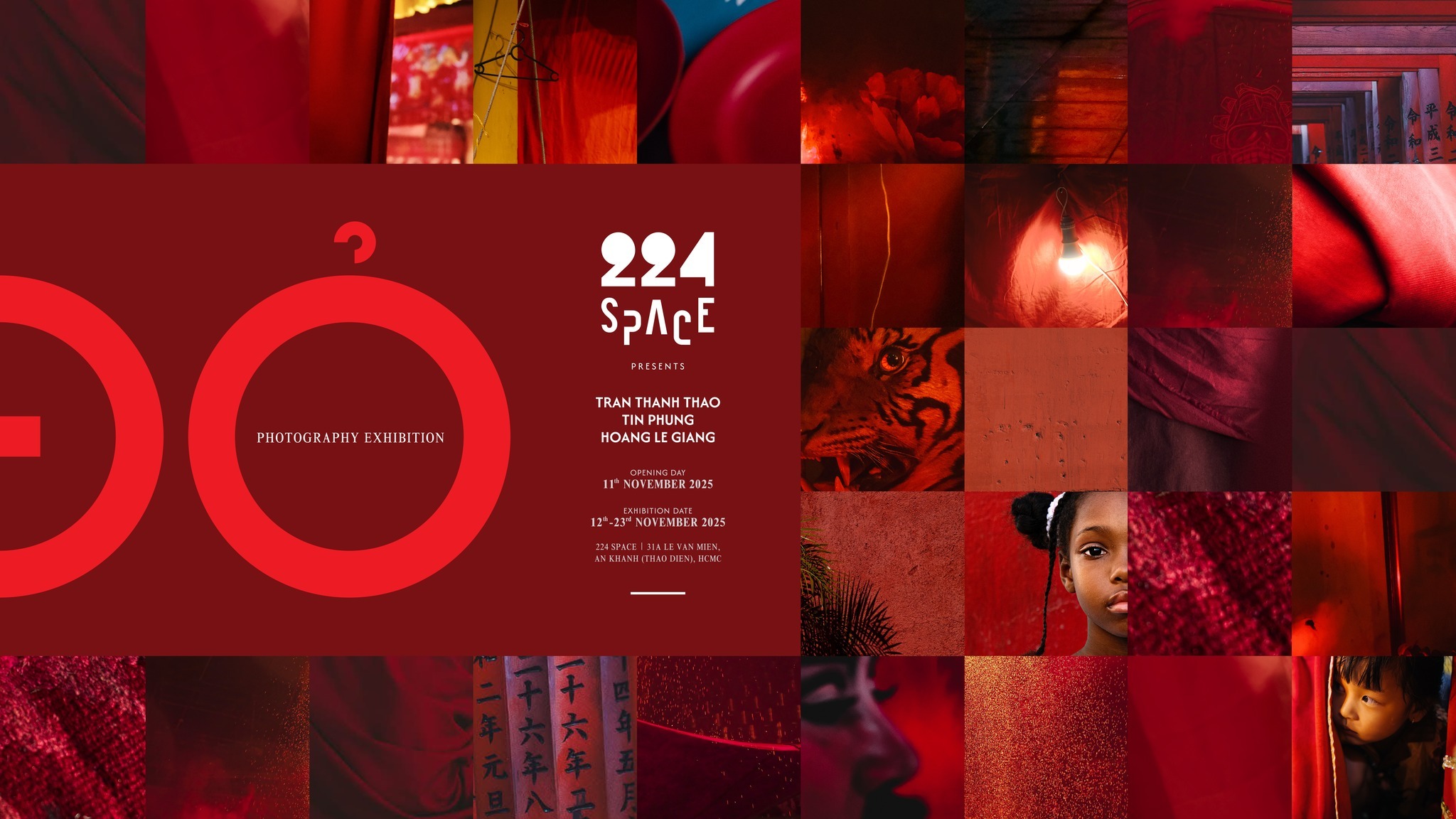
With the message “UNLIMITED RED,” the photography exhibition ĐỎ, featuring three photographic perspectives by Trần Thanh Thảo, Tín Phùng, and Hoàng Lê Giang, runs from November 12 to 23, 2025. It opens a visual journey where red is more than a color—it is a symbol of emotion, memory, aspiration, and the connection between humans and the world around them.
- Photography Exhibition: ĐỎ – UNLIMITED RED
- Venue: 224 SPACE, 31A Lê Văn Miến, P. An Khánh (Thảo Điền), Ho Chi Minh City
- Premiere Day: November 11, 2025 (for invited guests)
- Opening Hours: November 12–23, 2025
- 9:00 AM – 6:00 PM (Sunday–Thursday)
- 9:00 AM – 8:00 PM (Friday–Saturday)
- Participating Artists: Trần Thanh Thảo, Tín Phùng, Hoàng Lê Giang
- Main Activities:
- Photography exhibition by the three artists
- Interactive zone for visitors: photo area, decoration, surveys, and more
- Photography and creative workshops
Originally published in Travellive Magazine
Photography: Tín Phùng


