The Flavours of Texas
Set foot in Texas and you’ll be showered with advice from the locals: you absolutely must try Texas BBQ. But you need time to roam the Wild West at leisure to get a real sense of how diverse its food is. Texas is a vast state, so its cuisine is influenced by many cultures, including Tejano/Mexican, Native American, Creole/Cajun, African American, German, Czech, Southern and other European American communities. Let’s take a look at a few of its standout flavours!
Texas BBQ

If you have watched season 7 of the documentary series Chef’s Table, you were surely struck by Tootsie Tomanetz, pitmaster at Snow’s BBQ in Lexington, Texas, known as the queen of BBQ. During the week, Tootsie Tomanetz works as a custodian at Giddings High School, so Snow’s BBQ only opens on Saturdays.
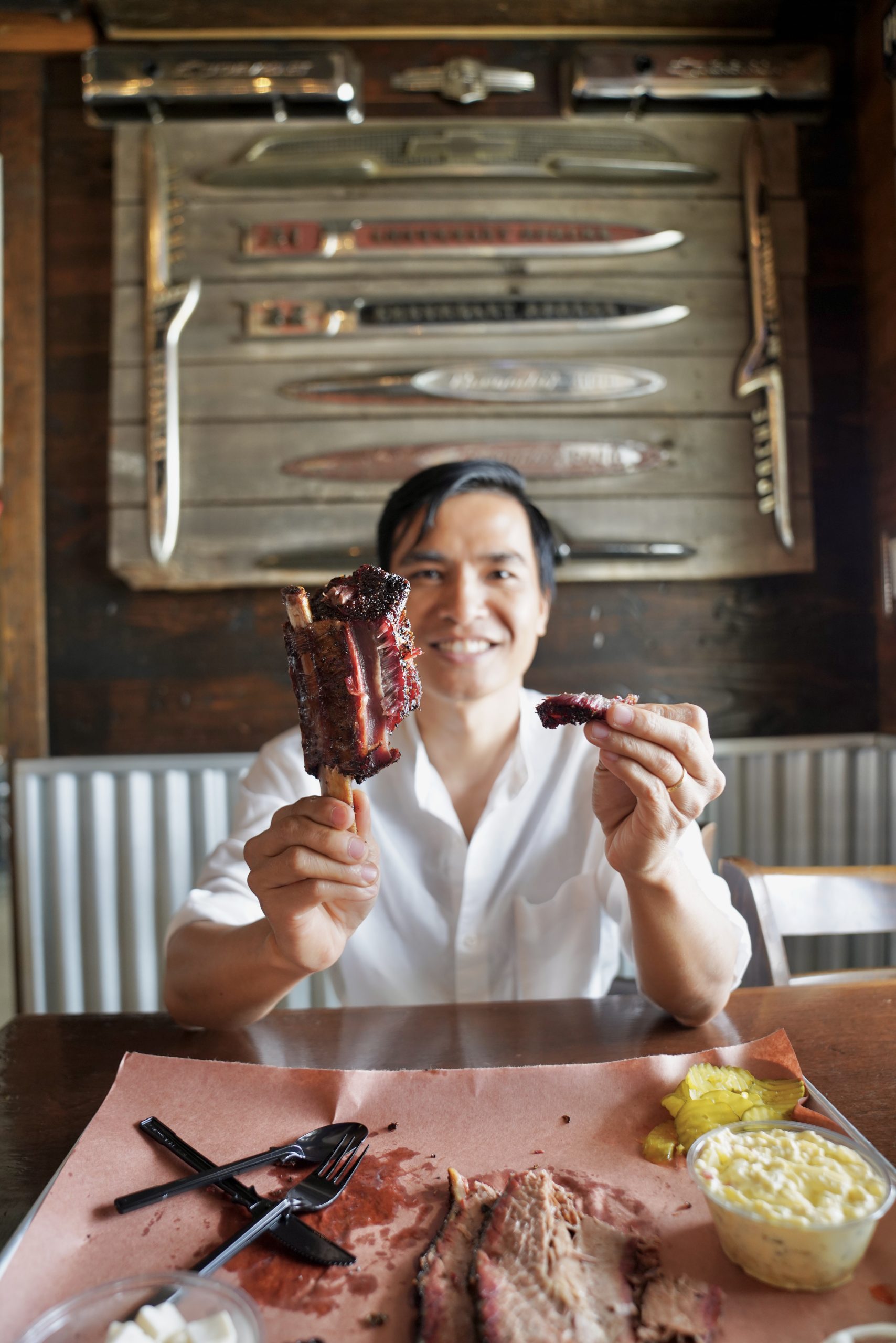
The footage of Snow’s BBQ brought us closer to BBQ culture. The European tradition of smoking meat was brought to Central Texas by German and Czech settlers in the mid-19th century, and BBQ has since become the signature dish of Texan cuisine. Today, countless BBQ joints dot Texas, serving BBQ as everyday food and drawing crowds of families and friends at weekends. Most are American-style wooden houses with sturdy, rugged furniture and fittings (true to the smoky, rough-and-ready nature of grilled food).

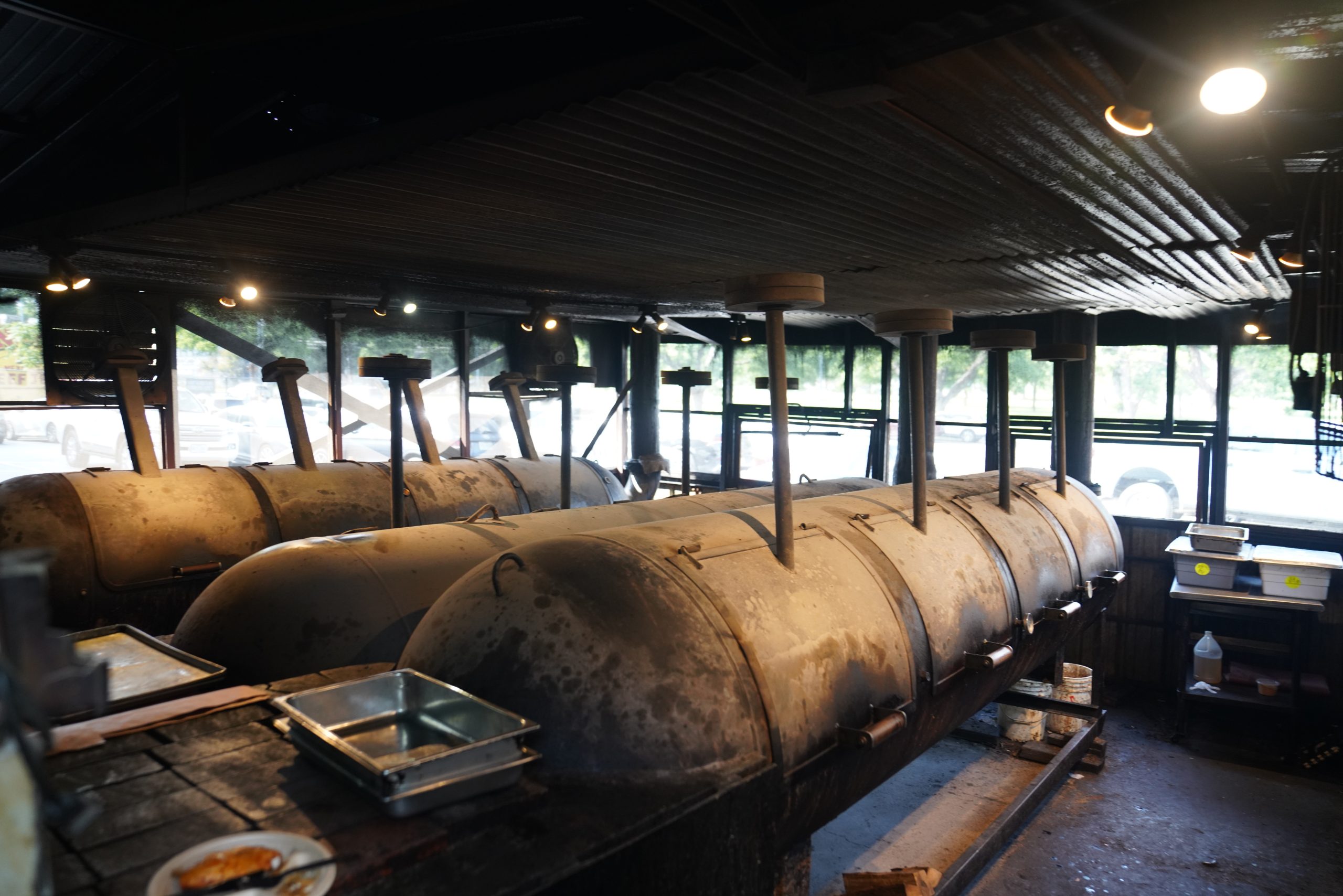
What makes it special is that slabs of pork, beef or chicken are coated in a thick layer of kosher salt and black pepper, left for hours (sometimes overnight), then slow-cooked in big wood-fired smokers for 5–10 hours, so the meat cooks evenly and becomes as tender as a stew, yet richly smoky. Depending on the wood used, the meat in each place has its own distinct flavour.

The most popular and must-try cut is beef brisket (layers of lean, point and fat that are tender, slightly chewy and melting without being greasy). Every BBQ joint will ask how you want it: 1) sliced, in thin pieces, or 2) chopped, minced almost like a sauce. I prefer the first, as the meat keeps enough thickness to feel every fibre melt in your mouth. Smoked meat is usually sold by weight. Sides like salad, mashed potatoes and pickles can be ordered separately to taste.


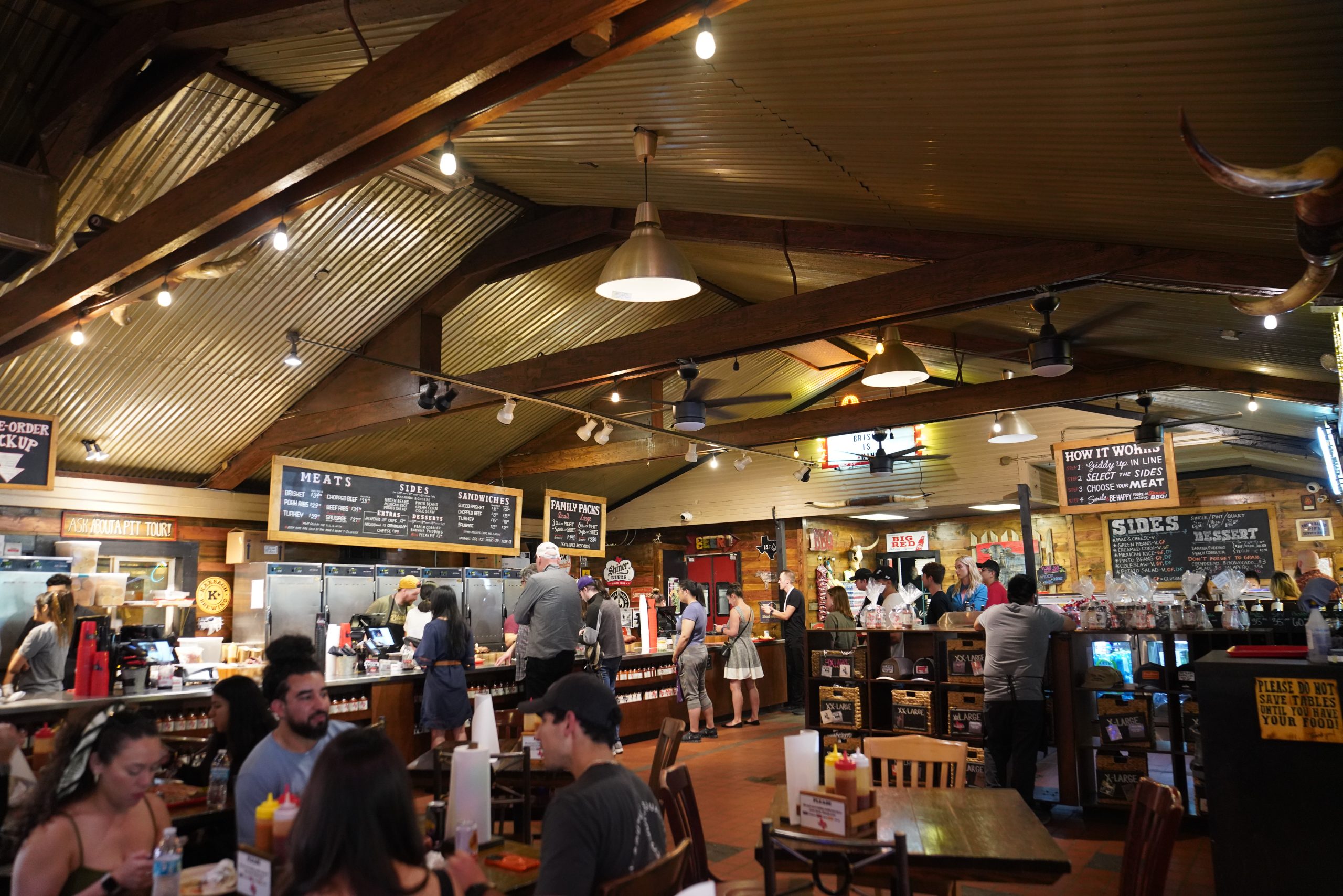
We were gutted not to be able to make it to Snow’s BBQ on a Saturday, but out of love for Texas BBQ, we ate it four times during our two weeks roaming Texas, at four different places, each with its own character and mouth-watering BBQ. At one, the pitmaster was incredibly friendly and invited us to see the smoking area; another was decorated all over with hunting trophies; another’s main building looked ramshackle but had a big, lush garden; and another was so famous and busy it also sold bags, hats and cups with its logo. If you ever visit Texas, look up these names: 2M Smokehouse (San Antonio), Hays Co Bar-B-Que (San Marcos), Bar-B-Q Station (San Antonio) and Terry Black’s BBQ (Austin).
Texas steak

We were curious what a Texas-style steak looked like, as we had heard steak is also closely tied to Texan cuisine. My best friend and her husband (who live in Texas) took us to a proper steakhouse where locals gather with family and friends at weekends. Inside the wooden house, the atmosphere was as lively as a festival. The customers were pure Texas, just like in American films: tall and big, casually dressed (mostly jeans and T-shirts), with loud voices and booming laughs.
The Wild West is famous for its cowboys raising cattle on vast ranches. So it is no surprise that Texas has many cattle auction centres supplying dairy and beef cattle to the surrounding areas. At cattle auctions, people sit in the stands as if watching a show. Beef dishes naturally hold an important place throughout Texas’s long history. Many Texas-style restaurants decorate with antlers, bull heads and other wild animals to create their own character, and you’ll often see staff dressed as cowboys.
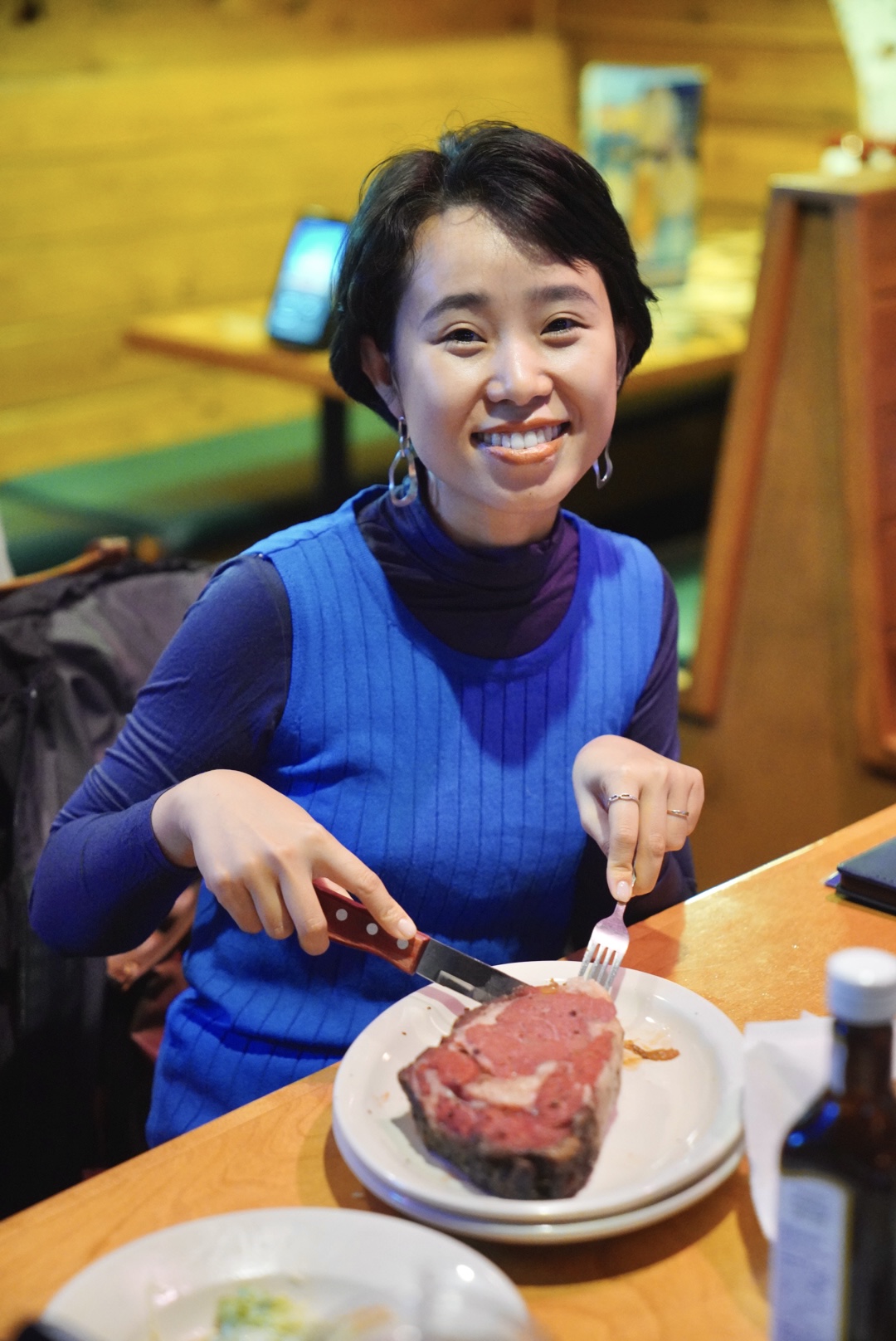
There is a saying, “Everything is Bigger in Texas”, and it’s true. Texas is huge, so roads, ranches and houses are more spacious than in many other places, and food and drink are no exception. Walking into Texas Roadhouse, we were amazed by the enormous single portion that two small Asians like us couldn’t finish even when sharing. A steak here is as big as two hands, weighing 14–16 oz (about 400 g), served with a baked potato. We ate lunch while chatting away, soaking up the festive atmosphere and writing a memorable experience into our travel diary.
Crawfish
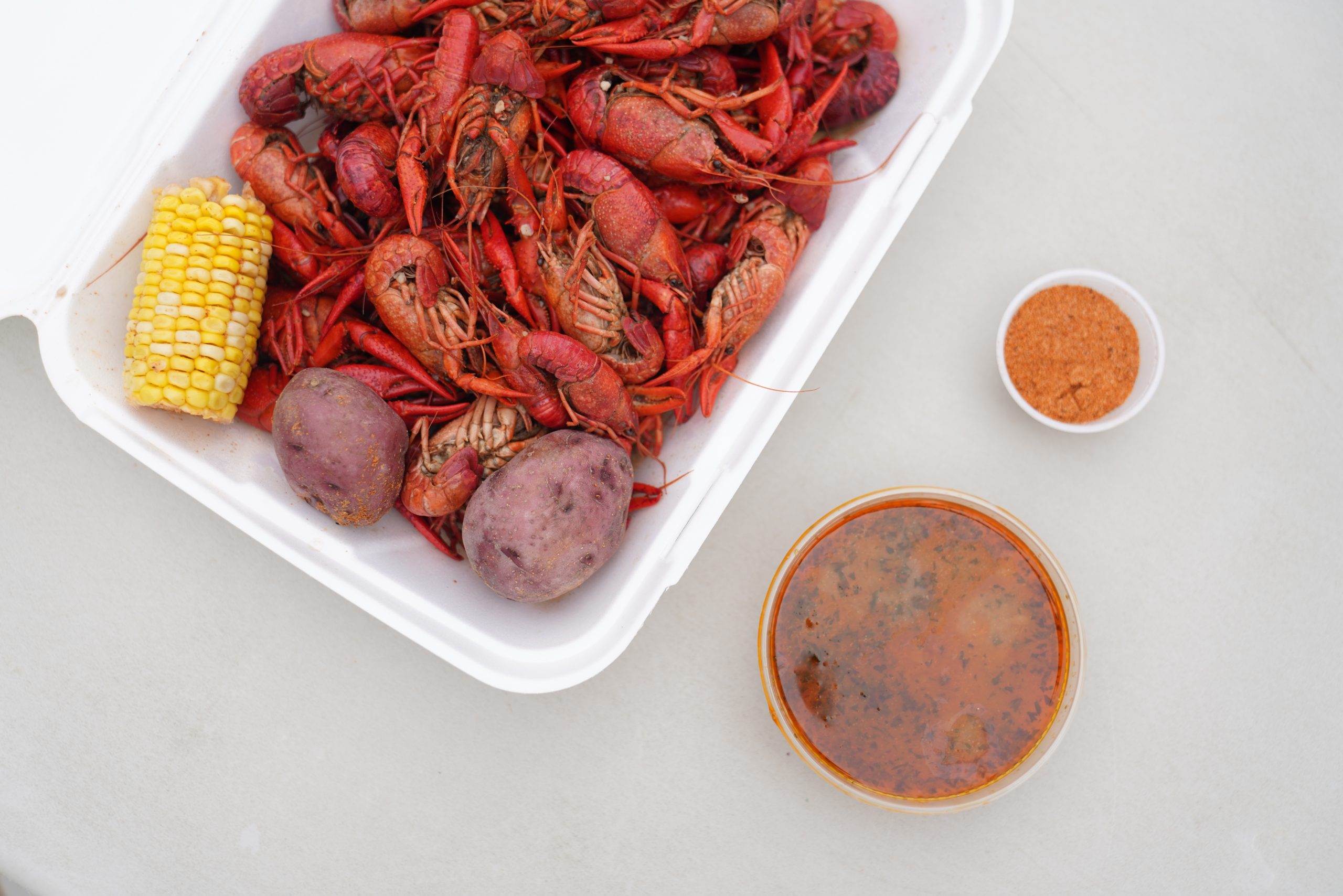
The first time I tried crawfish in Cajun sauce was from an online food shop, back when few people in Vietnam even knew whether crawfish was a prawn or a fish. The dish had crawfish, sausage, American corn, and crab, mussels, prawns or other seafood (to choose). The rich butter, the sweetness of the seafood, the gentle heat of chilli powder and the pungency of garlic had me hooked.
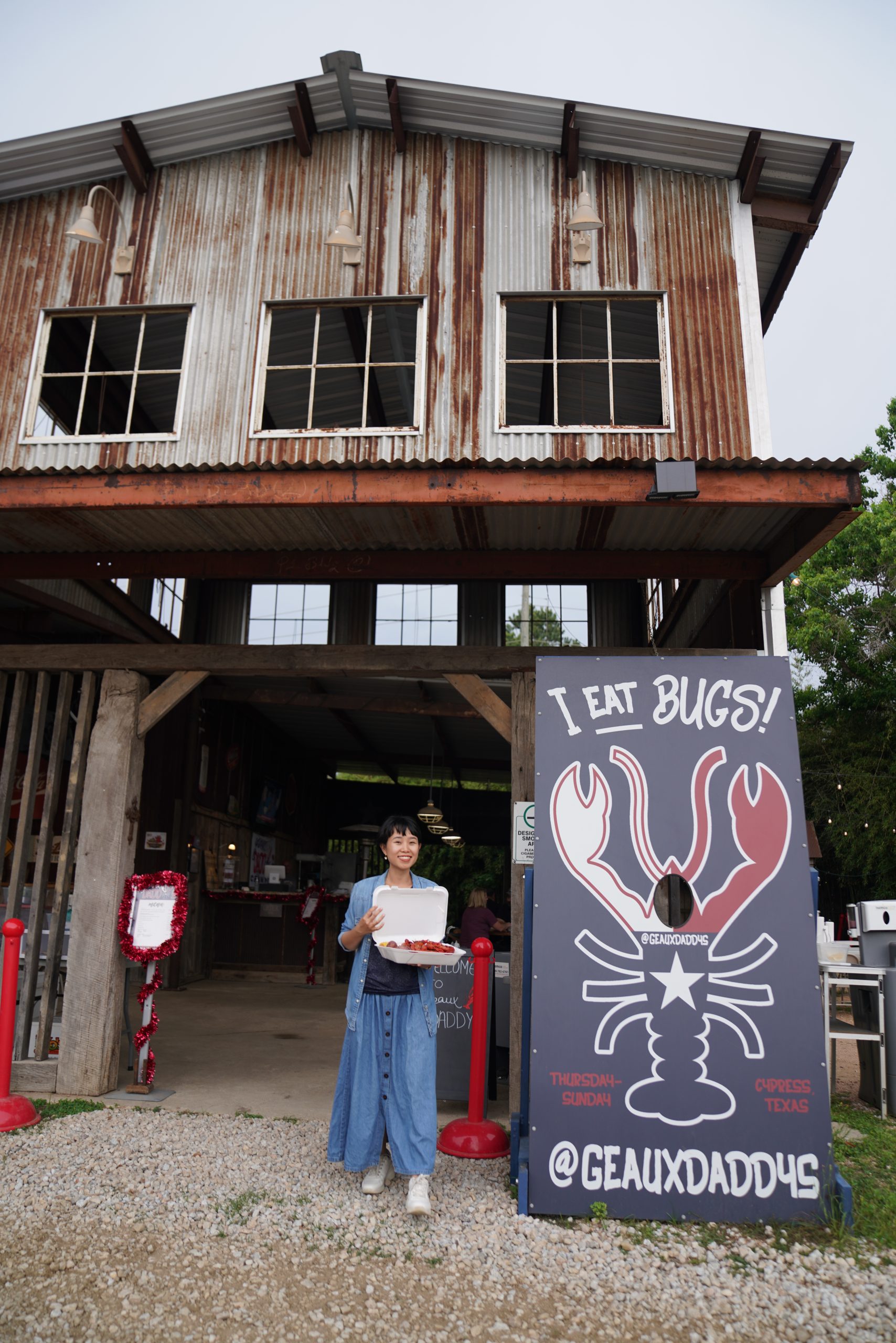
In Texas – known as crawfish heaven – we simply had to try it. He searched on Google Maps and found Geaux Daddy’s Crawfish, a crawfish specialist in Cypress (in the Texas suburbs). It sits in large grounds with a lush green lawn. It opens only three days a week – Friday, Saturday and Sunday – mainly serving locals. The weather was lovely, so we chose a table out on the grass.
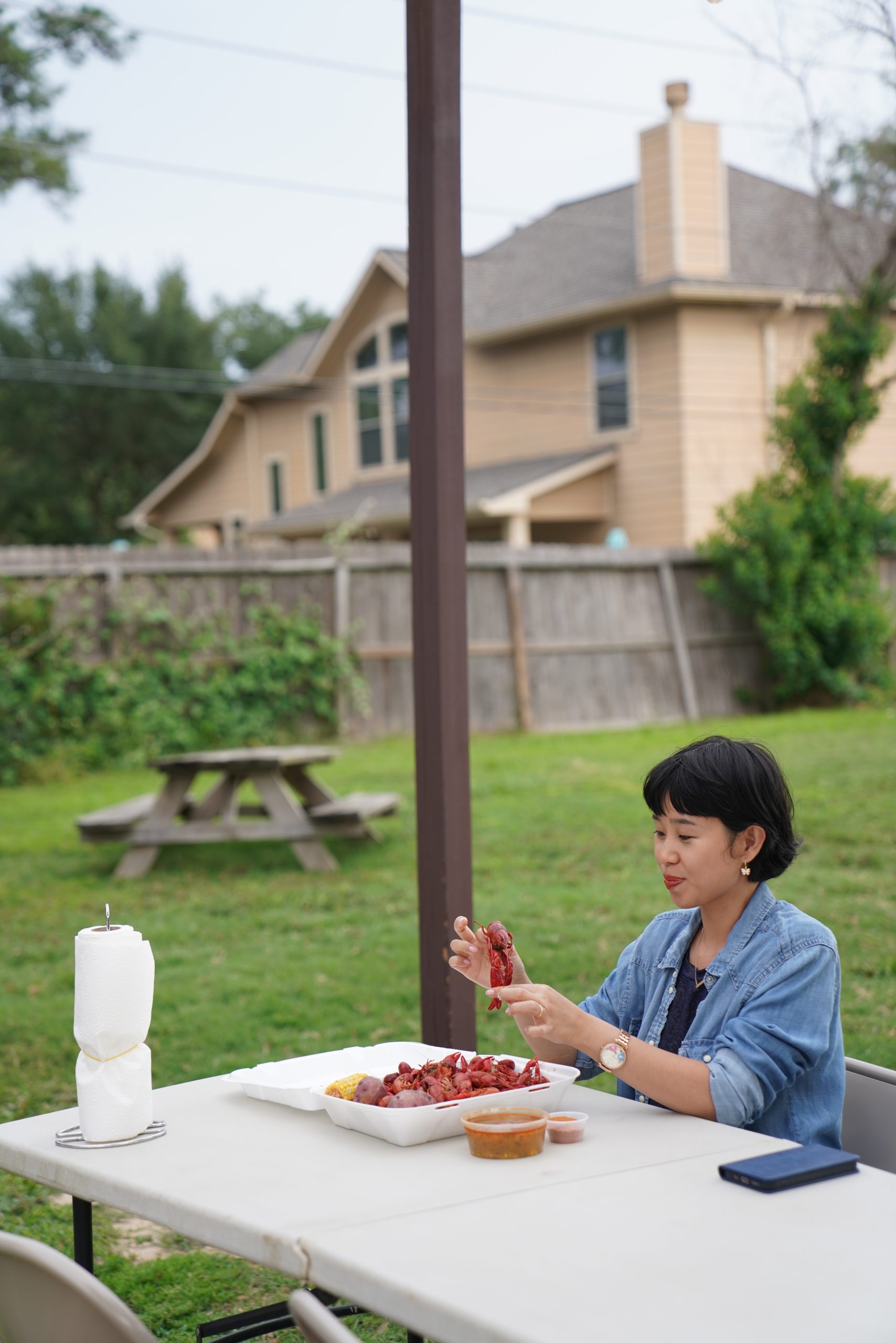
Quite unlike most crawfish places in Vietnam and a crawfish restaurant we tried in California, here the Cajun sauce is a soup you order separately if you like. The crawfish itself is flavoured only with butter, garlic and chilli, and the strongest note of all is salt. At first we stuck our tongues out because it was saltier than we expected, but after a while our tongues adjusted, and tasting that saltiness more clearly, we found it delicious. If you love food and enjoy learning about ingredients, you surely know there are many kinds of salt, each with a different saltiness. The salt here is the pure saltiness of the ocean, and with the briny smell of the crawfish shells, you feel as if you are sitting by the sea rather than 50 miles from the coast.
Cactus tacos
In Big Bend National Park, Texas, on the way from town to Santa Elena Canyon, we sat wide-eyed in the back seat listening to our guide introduce the desert plants. Honestly, my English is more than enough, but even I was lost hearing the names of the plant species here because they were so unfamiliar. Not to mention she told us this one makes delicious tea, that similar one over there has medicinal uses, so I couldn’t keep up with all the information at once.
When we heard about a cactus that Mexicans in the border region cook as food, we winked at each other: we must try it! Actually, I had eaten cactus salad on a trip to Tam Kỳ, Quảng Nam, where a chef made that unusual dish at a cooking demonstration. Shredded cactus has a texture and taste rather like rau tiến vua (a crunchy dried vegetable). In Texas, the cactus is diced and used as a filling for tacos – the traditional Mexican dish of a flat tortilla wrapped around meat and vegetables.
Big Bend National Park sits right on the US–Mexico border, so there are many Mexican-owned restaurants serving traditional Mexican food. We were recommended Taqueria El Milagro, a humble spot in the middle of a ghost town. It turns out some cacti have long been a common ingredient in Mexican meals. The one we tasted that day was nopalito, from the prickly pear cactus. Its English name contains “pear” because the cactus bears fruit shaped like a pear, but covered in spines. The cactus itself has no particular flavour, it is quite bland and a little slimy, so it needs seasoning to become appealing. Besides tacos, they also serve skirt steak (a cut that needs slow cooking to become tender) topped with cheese, grilled onions, chillies and cactus.