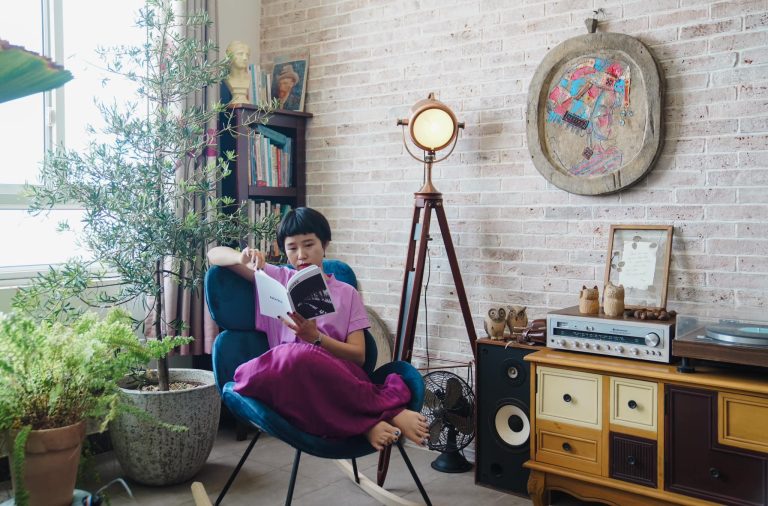
Chung Thúy Linh – Sweet Fruit for the Future
Chung Thúy Linh is a woman who is not afraid of hard work. Nơ Xanh (Blue Ribbon), the organisation she founded in 2021, has become one of the pioneers in running education campaigns and supporting communities in caring for uterine health. Linh embodies a new generation of social activists. She helped us tell the difference between charity and creating social impact, and understand that anyone persistent enough can choose this as a lifelong career.
A new generation of social activist
Every year, as many as 5,000 women are diagnosed with cervical cancer, and 90% of women suffer gynaecological conditions due to a lack of knowledge. With extensive experience in prenatal and postnatal care, Chung Thúy Linh came up with the idea of founding Nơ Xanh. Since 2021, Nơ Xanh has run many activities, such as working with obstetricians and gynaecologists to counsel, examine and share knowledge with women; donating Nơ Xanh medicine cabinets to local health stations; and organising a Unitour to advise on reproductive health and raise awareness of sexual abuse…
Being a new-generation social activist, by Linh’s definition, means not shying away from commerce: “An organisation can only operate if it has financial resources”. Linh also makes use of the power of media and aims for creative activities that go beyond the usual medical framework.

One of Nơ Xanh’s standout projects is emotional care and recovery for cancer patients who have had a hysterectomy or their ovaries removed. After surgery, they often face problems with family, their sex lives and their social lives. Nơ Xanh offers these patients therapies such as connecting with and loving themselves, and emotional care through painting, flower arranging…
Nơ Xanh’s activities change flexibly each year to maximise their impact on the community. For example, in 2023 Nơ Xanh visited women in Nam Trà My (Quảng Nam). At first, the aim was to share knowledge about gynaecological conditions. However, as most women there are from ethnic minorities, the programme could not convey much information. This year, with real data in hand, Nơ Xanh carried out cervical cancer screening for 400 women in this mountainous district.
Narrowing the gaps in society
Speaking of the challenges, Thúy Linh mentions language and cultural barriers, as well as content approval for awareness materials and administrative procedures in each locality. Urban women already have some understanding of gynaecological issues, so programmes must be designed differently and be appealing enough to attract them. For women in remote areas, everything is new, so it must be conveyed as simply and clearly as possible.
The highland women listen to the information with remarkable seriousness. Linh recalls that the first time the team came to Nam Trà My, the commune chairman was astonished: “Donors usually bring rice, fish sauce, salt, money and clothes. I’ve never seen a group give sanitary pads, underwear and feminine wash. How strange! Do women here even need them?”. After persuading him, Nơ Xanh held a knowledge-sharing and gift-giving session that succeeded beyond expectations. 400 women arrived at 7 a.m. and sat listening attentively to how to use underwear and sanitary pads until noon. Some had walked from very far away. One woman held a pair of underwear in her hands and said she wanted to save it for her children and grandchildren, because she was so poor that it seemed incredibly precious.
Also in Nam Trà My, Linh met Hiếu, a Xơ Đăng nurse. Many years ago, she saved a baby from the custom of being buried alive when its mother died, and then adopted the child. Hiếu is still wholeheartedly devoted to her work. Here, each health station has only one nurse. Some villages are very far from the station, so women giving birth at home and cutting the umbilical cord themselves, leading to the loss of the baby, happens quite often. Hiếu has to go from place to place raising awareness about reproductive health, despite extremely difficult roads. In Thúy Linh’s eyes, Hiếu represents ethnic minority women with progressive thinking who truly want to change their lives.
A lifelong career
“I know many people who devote themselves to organisations on very low salaries and have to take on several jobs to support themselves. What do you think about improving the lives of those who work in the social sector?”, I asked.
Thúy Linh answered without hesitation: “We have many volunteers. Like me, everyone tries to contribute to the organisation as much as they can. From this year, I have decided to work full-time at Nơ Xanh. I made this commitment so my colleagues can trust and stay with me. Instead of raising outside funds through fundraising campaigns, I want to build some commercial activities for Nơ Xanh to create a stable cash flow, so we can improve everyone’s lives.”
She also shared how Nơ Xanh passes its energy on to the younger generation: “If young people get involved in social work now, their generation will keep growing, developing and working in social organisations. In the future, when everyone is aware of who their work affects, or what they have improved for society, that will be the sweet fruit of the seeds we are sowing.”
_Published in Đẹp magazine issue 291
Mark Twain is often quoted as saying: “Kindness is the language which the deaf can hear and the blind can see.” It means that goodness and kindness are universal values that can cross every barrier of language and body. Step into a dance class for deaf people or a health class for highland women, talk with an artist or a social activist, and you can easily understand this saying both literally and figuratively. What these people share is an open, compassionate heart and projects that reach out to future generations.